<!-- Meta Pixel Code --> <!-- 结束元像素代码 -->

How LED UV Curing Supports Inline Finishing in Modern Label Presses

How LED UV Curing Supports Inline Finishing in Modern Label Presses

The label printing industry is in constant evolution. Manufacturers seek efficiency, speed, and enhanced capabilities. Modern label presses are embracing inline finishing to streamline production. A key technology enabling this shift is LED UV curing. It offers significant advantages over traditional methods.

The Rise of Inline Finishing

Inline finishing means completing multiple production steps in a single pass. This can include printing, coating, die-cutting, slitting, and more. Performing these tasks consecutively reduces handling, minimizes waste, and speeds up delivery times. It’s a move towards a more integrated and efficient workflow.

Understanding UV Curing

UV curing uses ultraviolet light to instantly dry or “cure” inks, coatings, and adhesives. This process works through a photochemical reaction. Special photoinitiators in the ink absorb UV light and trigger polymerization. This rapidly transforms the liquid ink into a solid, durable film.

Traditional UV curing often relied on mercury vapor lamps. These lamps generate a broad spectrum of UV light. They also produce significant heat and ozone. This can limit substrate choices and impact the working environment.

Enter LED UV Curing

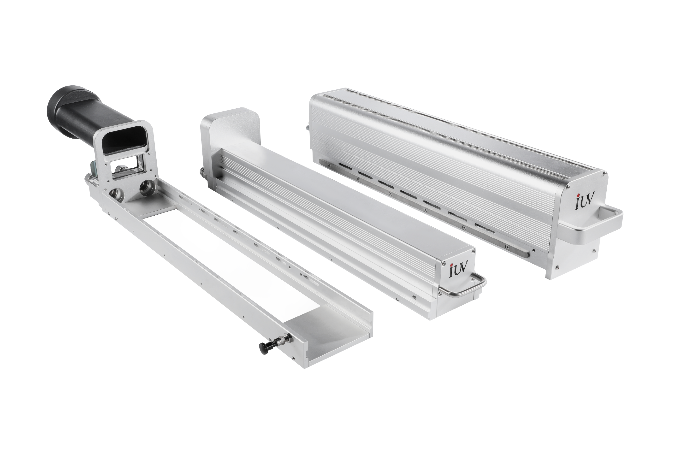
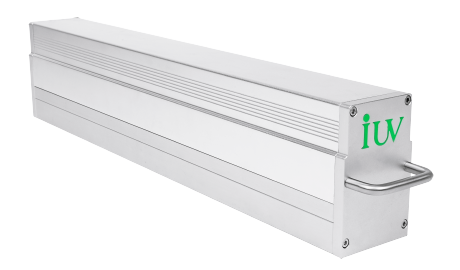
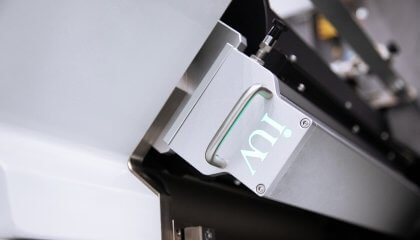
LED (Light Emitting Diode) UV curing represents a significant advancement. LEDs emit UV light at specific wavelengths. This targeted emission is highly efficient. It generates much less heat compared to mercury lamps.

The benefits of LED UV curing are substantial:

  • Energy Efficiency: LEDs consume considerably less power. This lowers operating costs and reduces the carbon footprint.
  • Longer Lifespan: LED lamps have an operational life measured in tens of thousands of hours. This contrasts sharply with mercury lamps, which need frequent replacement.
  • Instant On/Off: LEDs can be switched on and off instantly. This saves energy when not actively curing. It also prevents premature degradation of heat-sensitive materials.
  • Lower Heat Emission: The reduced heat output is a major advantage. It allows for printing on a wider range of delicate substrates. This includes thin films and heat-sensitive papers.
  • No Ozone Production: Unlike mercury lamps, LEDs do not produce ozone. This improves workplace safety and reduces the need for exhaust systems.
  • Consistent Output: LEDs offer a stable and consistent UV output throughout their lifespan. This leads to more predictable and repeatable curing results.

LED UV Curing and Narrow Web Presses

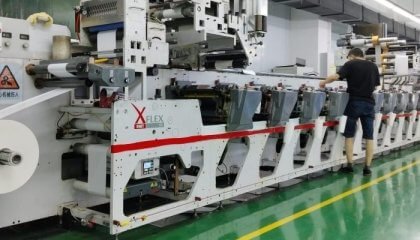
Narrow web presses are standard for label and flexible packaging production. They are designed for high-speed, short-run jobs. The integration of LED UV curing onto these presses is a perfect match.

  • Speed and Throughput: Narrow web presses operate at high speeds. LED UV curing’s instant drying capability keeps pace with these speeds. This ensures that each printed layer cures before the next is applied or processed.
  • Substrate Versatility: Labels are printed on diverse materials. These range from paper and various plastics to foils. The low heat of LED UV allows for printing on nearly all of them. This expands the range of labels a printer can produce.
  • Ink Compatibility: Modern UV-curable inks are formulated for LED curing. These inks contain photoinitiators sensitive to the specific wavelengths emitted by LEDs. This ensures optimal cure depth and surface tack.

Applications in Flexographic Printing

Flexography is a dominant printing process for labels. Its flexible printing plates make it ideal for various surfaces.

  • High-Speed Curing: In flexo, multiple colors are often printed in quick succession. LED UV curing between each station ensures each color is fully cured. This prevents ink transfer or smudging.
  • Specialty Coatings: Inline finishing allows for the application of special effects. This includes high-gloss varnishes, matte coatings, and textured finishes. LED UV curing dries these instantly. It locks in the desired aesthetic and protective properties.
  • Adhesive Applications: For certain label constructions, adhesives are applied inline. LED UV-curable adhesives can be cured rapidly. This allows for immediate lamination or assembly.

Applications in Offset (Lithographic) Printing

While flexography is prevalent, offset printing also plays a role in label production, especially for longer runs or specific quality requirements.

  • Sheet-fed to Roll-to-Roll: Integrating LED UV curing allows offset presses to handle label stock more efficiently. It facilitates the transition from sheet-fed to roll-to-roll operations common in label printing.
  • Overprint Varnishes: Applying overprint varnishes (OPVs) is a common step. LED UV curing provides a fast and effective way to apply these. It enhances durability and visual appeal of the finished label.
  • Color Consistency: The consistent output of LED UV lamps aids in achieving predictable color reproduction, crucial for brand consistency.

Enabling Advanced Inline Finishing Techniques

The reliability and efficiency of LED UV curing open doors to more sophisticated inline finishing.

  • Digital Embellishments: Integrating digital embellishment units, such as digital foiling or spot varnishing, becomes more feasible. LED UV curing ensures these effects are perfectly cured immediately after application.
  • Multi-Layer Coatings: Printers can apply multiple functional coatings inline. Examples include scratch-resistant layers, anti-static coatings, or barrier coatings. LED UV curing allows for the sequential curing of these layers without compromising speed.
  • Fast Prototyping: For label designers and brand owners, the ability to produce finished samples quickly is invaluable. Inline finishing with LED UV curing dramatically shortens the proofing cycle.

Considerations for Implementation

When transitioning to or optimizing LED UV curing for inline finishing, several factors are important.

  • Wavelength Specificity: Ensure the LED UV lamps match the spectral sensitivity of the inks and coatings being used. Different LED systems emit light at different peak wavelengths (e.g., 365nm, 395nm).
  • Power Density: The power density of the LED system needs to be adequate for the required curing speed and ink formulation. Higher power density leads to faster curing.
  • Substrate Compatibility: While LEDs are cooler, always test new substrates to confirm their behavior under UV exposure, especially for prolonged or intense curing.
  • Ink and Coating Formulation: Working with ink and coating suppliers is key. They can provide products specifically designed for LED UV curing. This ensures optimal performance and cure.
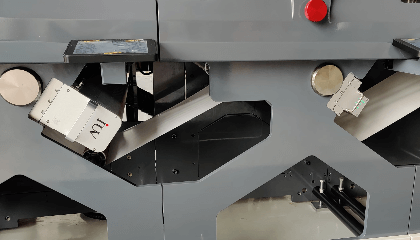
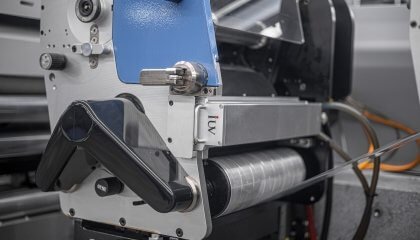
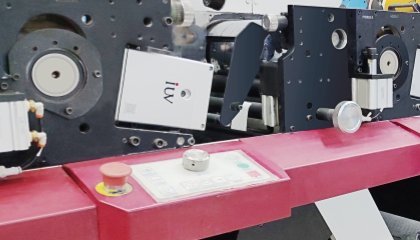
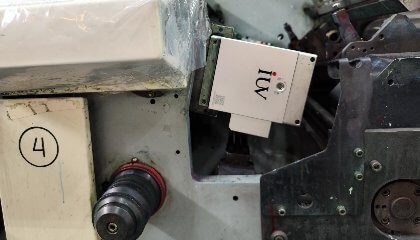
  • Press Integration: Proper integration of the LED UV curing units onto the press is vital. This includes airflow, power supply, and control systems.

The Future of Label Printing

LED UV curing is not just a technology; it’s an enabler. It is driving the trend towards more efficient, versatile, and high-quality label production. For narrow web presses, its role in inline finishing is paramount. It allows printers to meet evolving market demands for speed, customization, and unique finishes.

As technology advances, we can expect even more innovative applications of LED UV curing. This will continue to push the boundaries of what’s possible in label printing. The pursuit of faster, greener, and more cost-effective production methods strongly favors this technology.

Contact IUV Curing Experts

滚动至顶部