<!-- Meta Pixel Code --> <!-- 结束元像素代码 -->

How LED UV Curing Supports Cold Printing on Heat-Sensitive Label Stocks

How LED UV Curing Supports Cold Printing on Heat-Sensitive Label Stocks

The narrow-web printing industry is undergoing a fundamental shift in how energy reaches the substrate. For decades, mercury vapor lamps served as the standard for UV curing. While effective at polymerizing inks, these lamps generate massive amounts of infrared (IR) radiation. This heat often becomes a liability when working with modern, thin-gauge films and specialty thermal papers. LED UV curing has emerged as the definitive solution to this thermal challenge, providing a “cold” curing environment that protects the integrity of delicate label stocks.

The Thermal Conflict in Narrow-Web Printing

Modern label converters face a dual pressure: increase production speeds while reducing material costs. Reducing costs often involves moving toward thinner substrates, such as 15-micron films or ultra-thin BOPP (Biaxially Oriented Polypropylene). These materials possess a low glass transition temperature. When exposed to the intense heat of a traditional UV lamp, they stretch, warp, or even melt.

Mercury lamps operate by creating a plasma arc that emits a broad spectrum of light. Only a small fraction of this output is the UV-A energy required for ink curing. The rest is wasted as heat. In a narrow-web flexo or offset press, this heat accumulates on the rollers and the web itself. If the press stops even for a second, the heat concentrated at the curing station can instantly destroy the web.

The Science of “Cold” Curing with LED UV

LED UV technology differs fundamentally from arc lamps. Instead of a broad-spectrum discharge, LEDs use semiconductors to emit light in a very narrow band, typically centered at 385nm or 395nm. This specific wavelength matches the photoinitiators in UV-LED inks perfectly.

Because the spectrum is so narrow, LED arrays do not emit IR radiation. The substrate remains near room temperature throughout the curing process. Engineers refer to this as “cold curing.” The lack of heat transfer allows printers to run heat-sensitive stocks at maximum press speeds without the risk of substrate deformation. For a production manager, this means the mechanical properties of the label stock remain unchanged from the unwind to the rewind.

Optimizing Flexo Printing for Thin Films

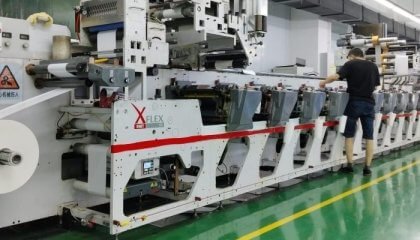
Flexography is the workhorse of the label industry. In narrow-web flexo applications, maintaining consistent tension is vital for registration accuracy. Heat is the enemy of tension. When a film substrate gets hot, it becomes more elastic. This elasticity leads to “web wander” and registration shifts between color stations.

By integrating LED UV systems into flexo presses, converters eliminate the thermal expansion of the web. The result is superior registration on PE (Polyethylene) and shrink sleeve materials. Shrink films are particularly sensitive; they are designed to react to heat. Curing these films with traditional UV lamps often triggers premature shrinkage during the print run. LED UV prevents this, ensuring the film stays flat and stable until it reaches the intentional heat-shrink tunnel.

Precision in Offset and Hybrid Printing

Offset printing on labels requires a delicate balance of ink and water chemistry. Traditional UV lamps can heat the press frames and the ink fountain, changing the viscosity of the ink and the behavior of the dampening solution. This thermal instability leads to color drifting and requires frequent operator intervention.

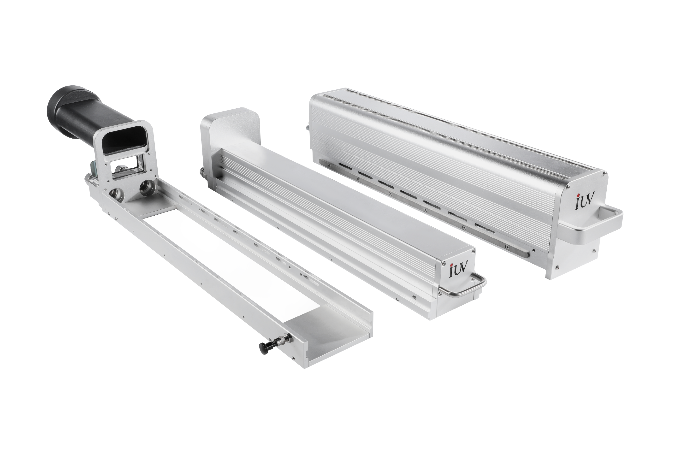
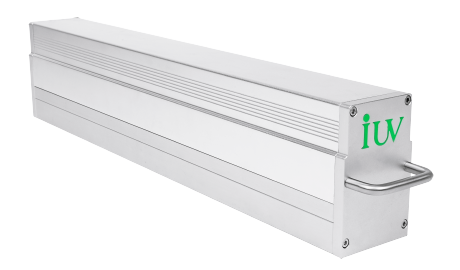
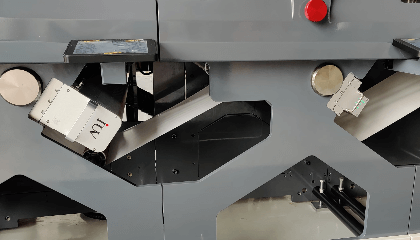
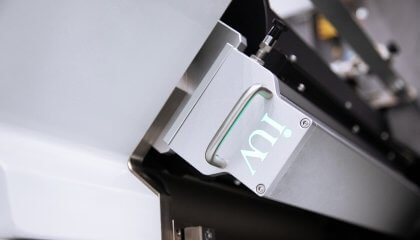
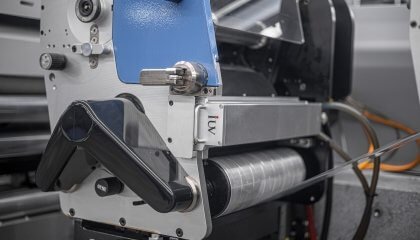
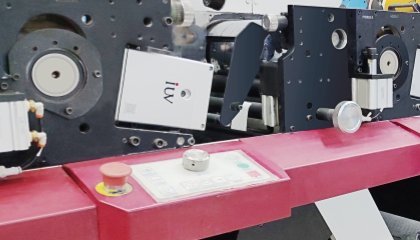
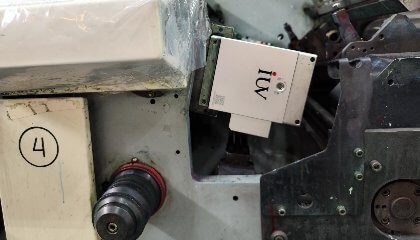
LED UV curing keeps the entire offset press at a stable operating temperature. In high-end cosmetic or wine label production, where color consistency is paramount, the “cold” nature of LED UV ensures that the first label looks exactly like the ten-thousandth label. Furthermore, narrow-web offset presses benefit from the compact size of LED heads, which fit easily into tight spaces between printing units where traditional, bulky lamp housings would cause mechanical interference.

Expanding Substrate Portfolios: Thermal Paper and Beyond

Thermal paper is perhaps the most heat-sensitive stock in the industry. It is chemically treated to change color when exposed to heat, which is how barcode printers and receipt printers function. Printing UV-cured graphics on thermal paper using mercury lamps is notoriously difficult. The IR output often “pre-activates” the thermal coating, leading to graying or ghosting on the stock.

LED UV curing solves this problem entirely. The curing energy is delivered so precisely and with such little thermal impact that the thermal coating remains unaffected. This allows label converters to offer high-quality, multi-color UV printing on direct thermal stocks, opening up new markets in logistics, retail, and pharmaceutical labeling.

Energy Efficiency and Operational Stability

Beyond substrate compatibility, the transition to LED UV impacts the bottom line through energy management. Traditional UV systems require a “warm-up” and “cool-down” period. They stay on even when the press is not idling, wasting energy and contributing to the ambient heat in the pressroom.

LED systems feature instant on/off capabilities. They only consume power when the press is moving and the sensors detect the web. This reduces energy consumption by up to 70% in some narrow-web configurations. Additionally, the lifespan of an LED array is typically over 20,000 hours, compared to the 1,000 to 2,000 hours provided by mercury bulbs. For the maintenance engineer, this means less downtime and no more dealing with the hazardous waste of mercury-filled glass.

Enhancing Ink Adhesion and Through-Curing

A common concern with “cold” printing is whether the ink will cure as deeply as it does with mercury lamps. Modern UV-LED ink formulations are highly reactive. Because LED light is monochromatic and intense, it penetrates through thick ink layers and opaque whites more effectively than the scattered light of an arc lamp.

This deep penetration, known as through-curing, is essential for high-shrink applications and durable labels used in industrial environments. When the ink is fully polymerized from the surface down to the substrate interface, the bond is much stronger. This reduces the risk of ink flaking or “picking,” which can happen if the bottom of the ink layer remains tacky due to insufficient UV penetration.

Sustainability and the Future of Labeling

The label market is moving toward a circular economy. Brands are demanding thinner liners and face stocks to reduce plastic waste. As materials become thinner, the margin for thermal error disappears. LED UV is not just a technological preference; it is a necessity for the next generation of sustainable packaging.

By removing heat from the equation, printers can adopt bio-based films and compostable substrates that would otherwise melt under traditional lamps. The removal of ozone emissions—a byproduct of mercury lamps—also creates a safer, cleaner environment for press operators.

Technical Implementation: The Integrated Approach

Transitioning to LED UV curing requires a holistic view of the printing process. It is not simply a matter of swapping a lamp. It involves:

  1. Ink Selection: Ensuring the photoinitiators are tuned to the 385nm or 395nm peak.
  2. Web Path Optimization: Taking advantage of the smaller footprint of LED units to shorten the web path, which reduces waste during setup.
  3. Cooling Systems: While the light is cold, the LED chips themselves generate heat at the back of the array. High-performance water-cooling or air-cooling systems are necessary to maintain the longevity of the diodes.

When these elements are aligned, the result is a robust, high-speed production line capable of handling the most challenging heat-sensitive stocks in the world.

Conclusion

The integration of LED UV curing into narrow-web flexo and offset printing has solved the industry’s oldest conflict: the need for high-intensity curing energy versus the thermal fragility of modern substrates. By providing a “cold” curing solution, LED technology allows for faster speeds, better registration, and the use of ultra-thin or thermal-sensitive materials. For the professional label converter, this shift represents more than just an equipment upgrade; it is a gateway to higher versatility and increased profitability in a competitive market.

Contact IUV Curing Experts

滚动至顶部