<!-- Meta Pixel Code --> <!-- 结束元像素代码 -->

How LED UV Curing Improves Registration and Color Consistency in Label Printing

How LED UV Curing Improves Registration and Color Consistency in Label Printing

Precision in Every Print: LED UV Curing’s Impact on Label Registration and Color

The world of label printing demands a high degree of accuracy. Every detail matters, from the crispness of fine text to the vibrancy of brand colors. Achieving consistent registration and impeccable color fidelity across print runs is a constant challenge. Fortunately, advancements in curing technology, specifically LED UV curing, are revolutionizing how label printers tackle these critical aspects.

The Foundation: Understanding Registration and Color in Label Printing

Before diving into LED UV curing, let’s quickly recap why registration and color consistency are paramount.

Registration refers to the precise alignment of different ink colors on the substrate. In multi-color printing, each color plate must overlap perfectly to create the intended image. Misregistration leads to blurry graphics, halos around text, and an overall unprofessional appearance.

Color Consistency ensures that the printed colors are identical from the first label to the last, and from one production run to the next. Variations in color can significantly impact brand recognition and perception. Achieving this requires stable ink film weights, consistent drying, and predictable color reproduction.

Traditional Curing Methods and Their Limitations

For years, conventional UV curing systems and heatset drying have been the workhorses of the printing industry. While effective, they come with inherent limitations that can affect registration and color.

Conventional UV Curing: This method uses mercury vapor lamps to emit UV light. These lamps generate significant heat. This heat can cause the substrate to expand or contract unpredictably during the printing process. Such dimensional instability makes it harder to maintain precise registration. Furthermore, the heat can affect ink viscosity, leading to color shifts.

Heatset Drying: Primarily used in web offset printing, heatset dryers use heated air to evaporate solvents from the ink. This process also introduces considerable heat. The prolonged exposure to heat can be detrimental to delicate substrates and contribute to registration issues due to thermal expansion and contraction. Achieving consistent ink drying across the entire web is also a challenge, impacting color uniformity.

Enter LED UV Curing: A Cooler, More Controlled Approach

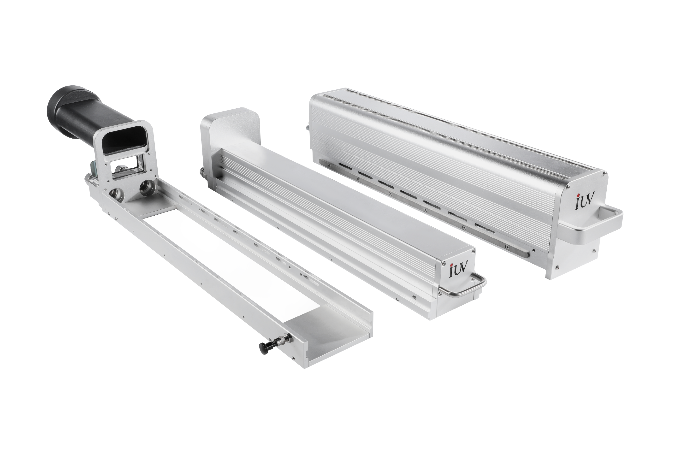
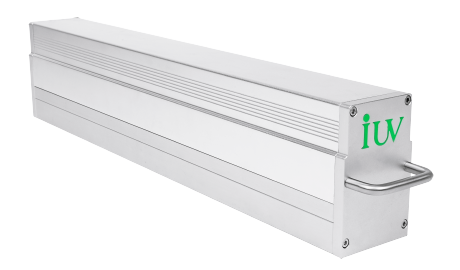
LED UV curing systems represent a significant leap forward. Instead of broad-spectrum mercury lamps, they use light-emitting diodes (LEDs) that emit UV light at specific wavelengths. This targeted approach brings several advantages that directly benefit registration and color consistency.

Reduced Heat Generation: This is arguably the most significant advantage. LEDs produce very little infrared radiation, meaning they generate far less heat compared to traditional UV lamps. This cooler curing process minimizes substrate expansion and contraction. Less thermal distortion means the web stays dimensionally stable throughout the print process. This stability is crucial for maintaining tight registration, especially in high-speed printing environments like narrow-web flexo and offset presses.

Instant and Precise Curing: LED UV curing is an on-demand technology. The lamps can be switched on and off instantaneously. This precise control over curing means that the ink is cured exactly when and where it’s needed. This rapid, focused curing process locks down the ink film immediately, preventing any potential for ink spread or movement that could compromise registration.

Consistent Energy Output: LEDs offer a stable and consistent energy output throughout their lifespan. Unlike mercury lamps, which can degrade over time and require frequent replacement, LED output remains remarkably uniform. This consistent energy delivery ensures that the ink cures to the same degree every time, leading to predictable ink film properties and, consequently, more stable color reproduction.

How LED UV Curing Enhances Registration

The benefits of reduced heat and precise control translate directly into superior registration.

  • Stable Substrate Dimensions: As mentioned, minimal heat means less substrate movement. This is vital for multi-color jobs where even a fraction of a millimeter shift can be noticeable. Presses equipped with LED UV curing can hold tighter tolerances, ensuring that each color station lays down ink in the exact intended position.
  • Faster Printing Speeds: The instant curing capability of LEDs allows for faster press speeds without compromising quality. Higher speeds often exacerbate registration challenges due to increased web tension and potential for vibration. However, with LED UV, the ink is cured so rapidly that it remains perfectly in place, even at elevated speeds.
  • Reduced Dot Gain and Ink Spread: The focused, efficient curing process minimizes ink spread and dot gain. This results in sharper images and cleaner edges for fine details and halftones, contributing to overall registration accuracy.

Boosting Color Consistency with LED UV

Color is king in the label industry, and LED UV curing is a powerful ally in achieving consistent, vibrant results.

  • Predictable Ink Film Properties: Consistent curing means consistent ink film properties. The ink cures fully and uniformly, leading to a predictable level of gloss, color density, and opacity. This predictability is the bedrock of reliable color matching and reproduction.
  • Wider Color Gamut and Vibrant Hues: Many LED UV inks are formulated to cure optimally under specific LED wavelengths. This formulation can lead to brighter, more saturated colors and a wider printable color gamut. The consistent curing ensures that these colors are reproduced faithfully run after run.
  • Elimination of Drying Variations: In heatset or conventional UV systems, variations in drying across the web can lead to subtle color differences. LED UV curing is localized and instantaneous, eliminating these drying inconsistencies and ensuring uniform color across the entire label.
  • Process Stability: The inherent stability of LED systems means fewer variables to manage. Once set, the energy output remains consistent, allowing press operators to focus on other critical aspects of the print job, rather than constantly monitoring and adjusting for curing fluctuations. This process stability directly contributes to repeatable color results.

LED UV in Different Printing Processes

The advantages of LED UV curing are applicable across various label printing technologies:

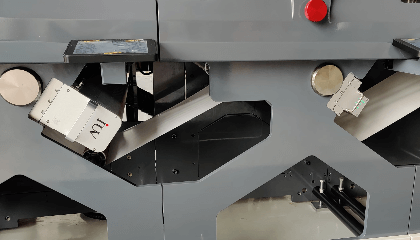
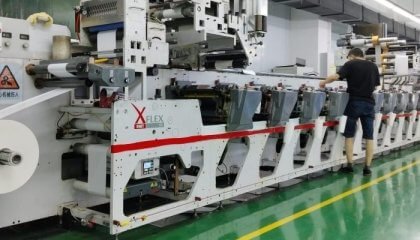
  • Narrow Web Flexographic Printing: This is where LED UV has seen some of its most significant adoption. Flexo presses often run at high speeds and handle a wide variety of substrates. The reduced heat and instant curing of LEDs are ideal for maintaining registration and color vibrancy on everything from film to paper.
  • Narrow Web Offset Printing (Sheetfed and Web): Offset printing, particularly for labels, also benefits greatly. LED UV allows for faster job changeovers and consistent color reproduction on challenging stocks, all while maintaining precise registration.
  • Digital Printing: While digital printing technologies have their own curing mechanisms, UV-LED curing is increasingly integrated into digital presses, offering similar benefits of controlled, efficient curing for high-quality, consistent output.

The Future is Bright (and Consistently Colored)

The transition to LED UV curing is not just about adopting new technology; it’s about unlocking new levels of precision and consistency in label printing. For printers focused on delivering impeccable registration and unwavering color fidelity, LED UV curing is no longer a luxury—it’s a cornerstone of competitive, high-quality production. The ability to print faster, with less waste, and with superior visual results makes it an indispensable tool for today’s demanding label market.

Contact IUV Curing Experts

滚动至顶部