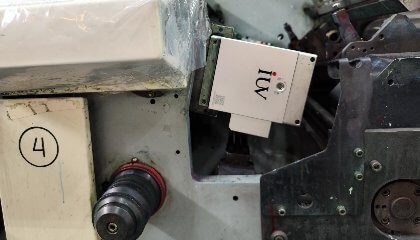
Maintaining unwavering color stability across thousands, or even millions, of printed labels is a cornerstone of brand integrity. For converters in the narrow-web, flexographic, and offset printing sectors, achieving this consistency, especially during long print runs, has historically presented significant challenges. The advent of high-intensity LED UV curing technology, however, is revolutionizing this landscape, offering a more controlled, efficient, and reliable method for achieving superior color fidelity from the first label to the last.
The Color Stability Conundrum in Traditional Curing
Traditional UV curing methods, often employing mercury vapor lamps, have been the industry standard for decades. While effective at drying inks, these systems come with inherent limitations that can impact color stability during extended print runs.
One primary concern is the heat generated by mercury lamps. This heat can cause variations in the ink film and the substrate itself. Even slight temperature fluctuations can alter the way pigments are dispersed and light is reflected, leading to noticeable shifts in color. Over a long print run, these small variations can accumulate, resulting in unacceptable deviations from the target color.
Furthermore, mercury lamps emit a broad spectrum of UV light, including wavelengths that are not always optimal for curing specific ink formulations. This can lead to incomplete curing or over-curing in certain areas, both of which can affect the final appearance and durability of the print, including its color. The spectral output of mercury lamps also degrades over time, meaning their performance changes, further complicating consistent color reproduction.
Understanding High-Intensity LED UV Curing
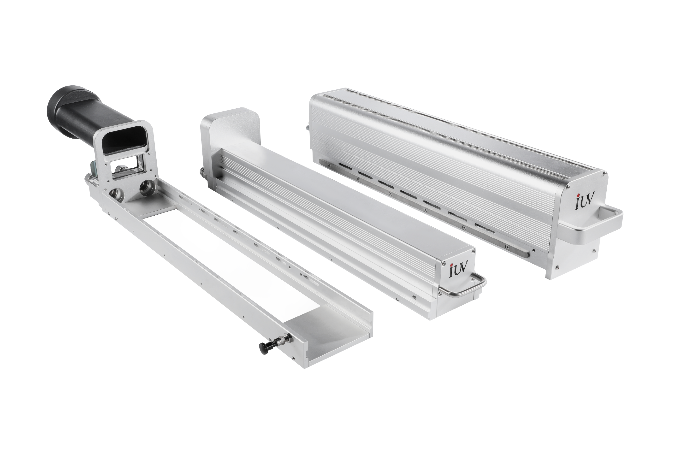
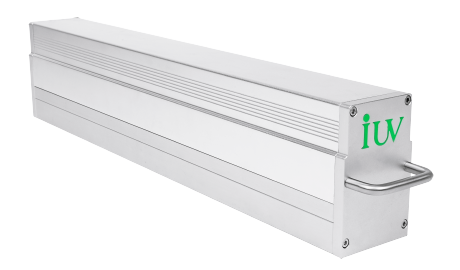
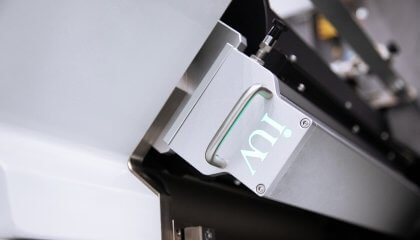
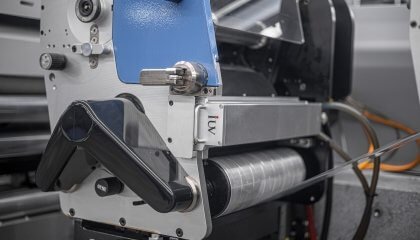
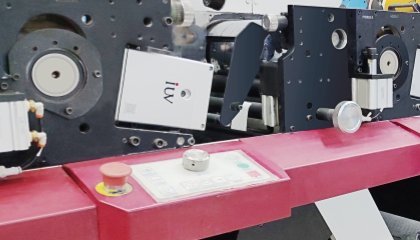
High-intensity LED UV curing systems represent a significant technological leap. Unlike mercury lamps, LEDs emit light within very specific, narrow wavelength bands. This precise control over the emitted spectrum is a game-changer for color stability.
LEDs are also highly efficient and generate significantly less heat than traditional lamps. This is crucial for preventing substrate distortion and maintaining a stable printing environment, which directly translates to more consistent ink behavior and, consequently, more stable colors.
The “high-intensity” aspect refers to the power output of the LEDs, allowing for rapid and thorough curing of UV-curable inks, coatings, and adhesives. This speed and efficiency are particularly beneficial in high-speed narrow-web and flexographic printing environments.
The Mechanism: How LEDs Achieve Superior Color Stability
The superior color stability offered by high-intensity LED curing can be attributed to several key factors:
- Precise Spectral Output: LED systems are designed to emit UV light at specific wavelengths that precisely match the absorption peaks of the photoinitiators within the ink. This targeted energy delivery ensures efficient and complete polymerization of the ink film. When curing is complete and uniform, the pigments are locked in place, minimizing any subsequent migration or degradation that could alter color.
- Low Heat Generation: As mentioned, LEDs produce minimal heat. This is critical for narrow-web printing where thin substrates are often used. Excessive heat can cause the substrate to shrink, warp, or expand unevenly, leading to registration issues and color shifts. Stable substrate temperature means the ink film cures under consistent conditions, preventing thermal-induced color changes.
- Consistent Performance: LED lamps have a very long operational life and their spectral output remains remarkably stable throughout their lifespan. This means that a press equipped with LEDs will deliver consistent curing performance run after run, year after year. This reliability eliminates the need for frequent lamp replacements and recalibration, which are often necessary with mercury lamps to compensate for their performance degradation.
- Controlled Energy Delivery: High-intensity LED systems allow for precise control over the energy delivered to the ink. This means converters can fine-tune the curing process to the exact requirements of each ink and substrate combination. Over-curing, which can sometimes lead to color fading or yellowing, is avoided, while under-curing, which can compromise durability and gloss (affecting perceived color), is also prevented.
Impact on Different Printing Technologies
The benefits of high-intensity LED UV curing are readily apparent across various printing technologies commonly used for labels and packaging:
Narrow-Web Flexographic Printing
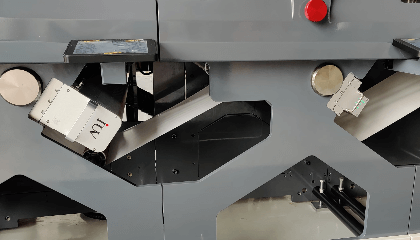
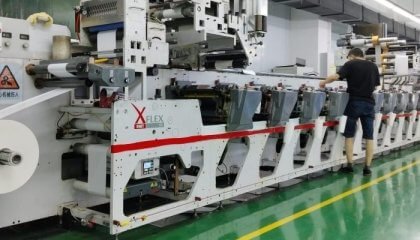
In narrow-web flexo, where speed and efficiency are paramount, LED curing excels. The immediate start-up and shut-down of LED lamps mean less energy is wasted when the press is not running. More importantly, the low heat output is ideal for the thin films and papers used in label production. Consistent curing ensures vibrant colors that remain true across long runs, crucial for brand recognition on shelf. The ability to cure at high speeds without compromising color stability makes LED an indispensable tool for modern label converters.
Offset Printing (Sheetfed and Web)
While traditionally associated with sheetfed, offset printing is also used in web applications for labels. Here, LED curing can be integrated into both configurations. In sheetfed offset, it helps maintain consistent color on complex jobs with multiple ink colors. For web offset, the benefits mirror those in flexography – fast curing, stable temperatures, and reliable color consistency over extended print jobs. The precise spectral output ensures that the wide gamut of colors achievable with offset inks are reproduced faithfully and consistently.
Screen Printing (Specialty Labels)
For specialty labels requiring thick ink layers or unique effects, screen printing is often employed. High-intensity LED curing can effectively cure these thicker ink films, ensuring durability and sharp detail without excessive heat. This is particularly important for high-opacity whites and vibrant spot colors that need to maintain their intensity throughout the print run.
Practical Advantages for Converters
Beyond the direct impact on color, adopting high-intensity LED UV curing brings tangible operational advantages:
- Reduced Energy Consumption: LEDs are significantly more energy-efficient than mercury lamps, leading to lower electricity bills. Their instant on/off capability further contributes to savings by eliminating the warm-up and cool-down periods associated with traditional lamps.
- Extended Lamp Life: LED modules can last tens of thousands of hours, drastically reducing replacement costs and downtime compared to mercury lamps, which typically need replacement every 1,000-2,000 hours.
- Improved Working Environment: The reduced heat output and absence of ozone from LED systems create a safer and more comfortable working environment for press operators.
- Faster Production Speeds: The efficient and powerful curing capabilities of high-intensity LEDs allow for faster press speeds without sacrificing print quality or color consistency. This directly boosts productivity and throughput.
- Greater Ink and Substrate Versatility: LED technology can be optimized for a wide range of UV-curable inks and coatings, including low-migration formulations for food packaging. The ability to control curing precisely also opens possibilities for printing on heat-sensitive substrates.
Addressing Long Print Run Challenges: A Summary
The challenge of maintaining color stability throughout long print runs is multifaceted, involving ink formulation, substrate interaction, curing efficacy, and environmental factors. High-intensity LED UV curing addresses these challenges head-on:
- Ink Formulation: Precisely matched LED wavelengths ensure optimal photoinitiator activation, leading to complete ink polymerization and stable pigment dispersion.
- Substrate Interaction: Minimal heat generation prevents substrate distortion, ensuring dimensional stability and consistent ink adhesion.
- Curing Efficacy: High-intensity output guarantees thorough and rapid curing, regardless of ink thickness, preventing issues like under-curing or surface tack.
- Environmental Factors: Consistent spectral output and long-term performance eliminate the variability introduced by aging traditional lamps.
The Future of Color in Extended Print Runs
As the demand for high-quality, consistent color across all printed materials continues to grow, high-intensity LED UV curing is emerging not just as an alternative, but as the preferred solution for converters focused on precision and reliability. Its ability to deliver stable, vibrant colors over the longest print runs, coupled with its operational efficiencies and environmental benefits, positions it as a critical technology for the future of label and packaging printing. By investing in this technology, printers can confidently meet the stringent color demands of brands and consumers alike, ensuring that every printed piece, from the first to the millionth, is a perfect match.