Traditionally, maintaining consistent color across thousands, or even millions, of printed units has been a significant hurdle. Several factors contribute to color drift:
- Ink Rheology Changes: As inks are exposed to air or the heat of the printing process, their viscosity and flow properties can alter. This directly impacts how much ink transfers to the substrate.
- Substrate Interaction: The interaction between the ink and the substrate can change over time. Variations in substrate absorbency or surface tension can lead to differences in ink laydown and gloss.
- Environmental Fluctuations: Temperature and humidity in the print shop can affect ink behavior and drying rates.
- Drying and Curing Inconsistencies: In conventional printing, drying methods like hot air impingement can lead to over-drying or under-drying, impacting the final ink film.
These inconsistencies manifest as noticeable shifts in hue, saturation, and lightness. For brand owners, this means packaging that doesn’t quite match their established brand identity, leading to potential brand dilution and consumer confusion. For printers, it translates to costly reprints, wasted materials, and damaged client relationships.
The UV Advantage: Instant Curing
This is where UV curing technology, especially with LED UV systems, fundamentally changes the game. Unlike conventional inks that rely on solvents evaporating or oxidation to dry, UV-curable inks contain photoinitiators. When exposed to specific wavelengths of ultraviolet light, these photoinitiators trigger a rapid polymerization process.
This instantaneous curing locks the ink onto the substrate almost immediately after it’s deposited. There’s no waiting for drying, no solvent evaporation, and minimal interaction with the environment during the curing phase.
How Automation Amplifies UV’s Color Stability Benefits
While UV curing itself is a game-changer, automation takes its benefits to a whole new level for long runs:
1. Precise Ink Delivery and Transfer
Automated systems, particularly in flexographic and offset (for narrow web), offer unparalleled control over ink delivery.
- Automated Ink Levels: Sensors monitor ink levels in the fountains, ensuring a constant supply. This prevents starvation or over-inking that can occur with manual adjustments.
- Doctor Blade Control: In flexography, automated doctor blade systems ensure consistent pressure and angle against the anilox roll. This guarantees uniform ink transfer from the anilox to the printing plate.
- Regulated Anilox Speed: In some advanced systems, anilox roll speed can be precisely controlled and synchronized with the press speed, further standardizing ink transfer.
These automated controls mean the ink film thickness applied to the substrate remains remarkably consistent from the first impression to the last. This is a cornerstone of color stability.
2. Consistent Curing Energy and Speed
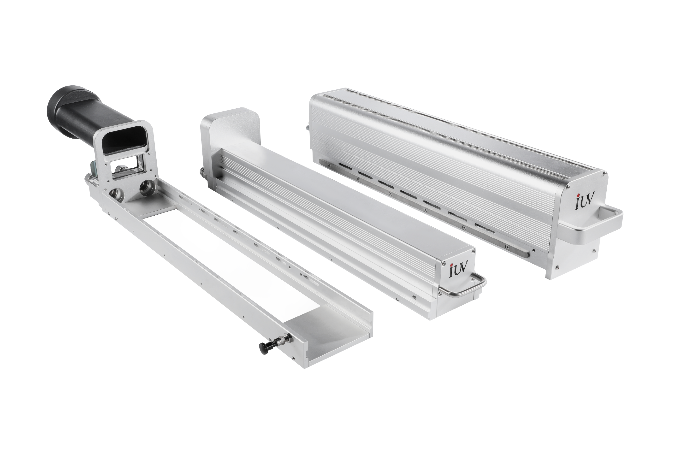
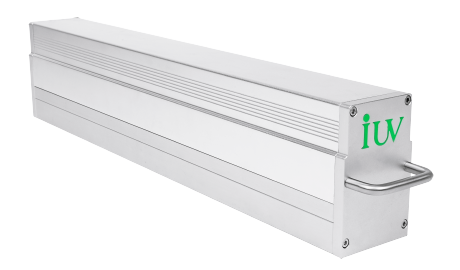
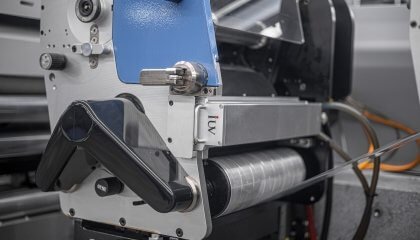
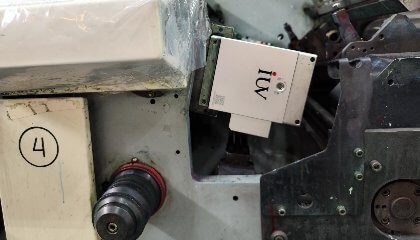
Automated UV curing systems, especially modern LED UV units, are designed for precise energy output and placement.
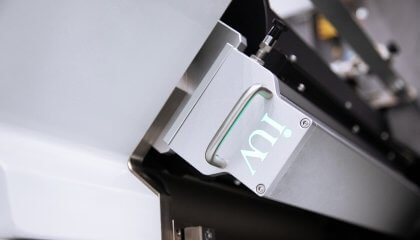
- Controlled Wattage and Wavelength: LED UV lamps emit a specific spectrum of UV light at a consistent intensity. This ensures that the photoinitiators in the ink are activated uniformly every time. Unlike mercury vapor lamps that can degrade over time, LEDs offer a stable and predictable output for extended periods.
- Optimized Exposure Time: The speed at which the substrate passes under the UV lamps is precisely controlled. This ensures that each printed area receives the optimal UV dose for complete and consistent curing. This prevents under-cured ink (leading to smudging and color shifts) or over-cured ink (which can sometimes cause brittleness or yellowing).
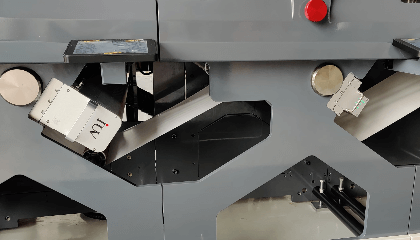
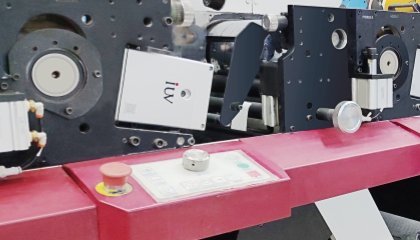
- Targeted Curing: UV lamps can be placed immediately after each print station. This means ink is cured as soon as it’s applied, preventing any potential interaction with subsequent print stations or environmental factors.
3. Reduced Heat Generation
Compared to traditional hot air drying systems, UV curing, particularly LED UV, generates significantly less heat.
- Substrate Integrity: Excessive heat can cause heat-sensitive substrates to shrink, warp, or become brittle. This physical change can subtly alter the surface and affect ink adhesion and appearance. Lower heat ensures the substrate maintains its dimensional stability and surface characteristics throughout the run.
- Ink Film Stability: Less heat means less potential for ink to become overheated and change its rheological properties before or during curing.
4. Minimal Environmental Impact on Ink
Because UV inks cure via a photochemical reaction rather than evaporation, they are less susceptible to changes caused by ambient temperature and humidity. The rapid polymerization effectively seals the ink into a stable film, minimizing its interaction with the surrounding atmosphere. This inherent stability, combined with automated, consistent curing, is key to maintaining color fidelity over long print runs.
Applications in Specific Printing Processes
Let’s look at how this plays out in common narrow web and label printing scenarios:
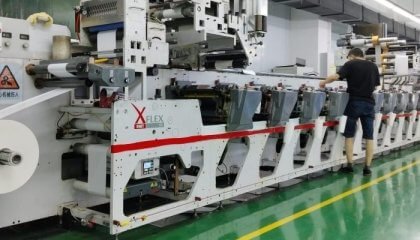
- Flexographic Printing: In flexo, where anilox rolls transfer ink to plates, consistent ink volume is paramount. Automated ink management and precise doctor blade control, coupled with instant UV curing, ensure that the dot gain and ink density remain constant. This is critical for achieving precise color matching and reproduction of fine details, especially in multi-color jobs requiring tight registration.
- Offset (Sheetfed/Webfed Narrow Web): While less common for very long runs compared to flexo in the narrow web space, automated offset presses with UV curing benefit similarly. Precise ink key adjustments, automated roller cleaning, and consistent UV exposure mean that ink laydown and drying are highly repeatable. This is vital for applications demanding smooth solids and subtle tonal gradations.
- Digital UV Printing: Though not typically considered “long run” in the traditional sense, digital UV presses also leverage automated UV curing. For short to medium runs where color consistency is still important (e.g., personalized labels), the inherent stability of UV inks and automated curing cycles ensure that each print, even if on a different substrate or with different colors, is cured identically.
The Bottom Line for Printers and Brand Owners
For printers, the adoption of automated UV printing means:
- Reduced Waste: Fewer reprints due to color inconsistencies.
- Increased Throughput: Faster production speeds are possible due to instant curing and reduced make-ready time.
- Enhanced Quality: Consistent, high-quality output that meets stringent brand requirements.
- Greater Efficiency: Less manual intervention required for color adjustments.
For brand owners, the benefits are equally significant:
- Brand Consistency: Every product on every shelf looks exactly as intended, reinforcing brand identity.
- Reliable Color Matching: Accurate reproduction of corporate colors, metallics, and special effects.
- Durability: UV-cured inks typically offer superior rub, scratch, and chemical resistance.
In conclusion, the integration of automation within UV printing processes provides a robust solution to the long-standing challenge of color stability in long print runs. By precisely controlling ink delivery, curing energy, and environmental factors, printers can deliver output that is not only visually consistent but also highly efficient to produce, meeting the demanding standards of today’s market.