<!-- Meta Pixel Code --> <!-- 结束元像素代码 -->

From Flexo to Offset: Adapting LED UV Curing Systems Across Printing Methods

From Flexo to Offset Adapting LED UV Curing Systems Across Printing Methods

The printing industry is constantly evolving, driven by demands for faster production, improved quality, and greater sustainability. A significant advancement in this landscape is the widespread adoption of LED UV curing systems. These systems offer distinct advantages over traditional mercury-lamp UV curing, including lower energy consumption, reduced heat, and longer lamp life. However, successfully integrating LED UV technology requires understanding its nuances and how it adapts to different printing processes. This article delves into the practicalities of transitioning from conventional UV curing to LED UV, specifically examining its application across flexographic, offset, and other narrow-web printing methods.

Understanding LED UV Curing Technology

LED UV curing utilizes light-emitting diodes (LEDs) to produce ultraviolet light. Unlike mercury lamps, which emit a broad spectrum of UV light, LEDs emit specific wavelengths. This targeted emission is a key differentiator. For instance, common LED UV systems operate at 365 nm, 385 nm, 395 nm, or 405 nm. This specificity allows for more efficient energy transfer to the photoinitiators within the inks and coatings, leading to faster and more complete curing.

The benefits are substantial. Energy efficiency is a primary driver; LEDs consume significantly less power, translating to lower operational costs and a reduced carbon footprint. The absence of mercury eliminates disposal concerns associated with traditional lamps. Furthermore, LEDs generate much less heat, which is critical for heat-sensitive substrates like thin films and certain papers. This lower heat output also contributes to a more stable printing environment, reducing issues like ink viscosity fluctuations and substrate expansion.

Flexographic Printing and LED UV Adaptation

Flexographic printing, a workhorse in the label and packaging industry, relies on flexible relief plates. Historically, flexo presses have utilized both conventional UV and, more recently, LED UV curing. The adaptation to LED UV in flexography is generally straightforward, but requires careful consideration of ink formulation and equipment integration.

Ink Formulation: Flexographic inks designed for UV curing contain photoinitiators that react to specific UV wavelengths. For LED UV, these photoinitiators must be selected to efficiently absorb the narrow wavelengths emitted by the LEDs. Formulators have developed robust LED-specific inks that cure effectively under these conditions, often providing excellent adhesion, rub resistance, and gloss. The move to LED UV may necessitate a switch to these specialized inks to achieve optimal cure speed and quality.

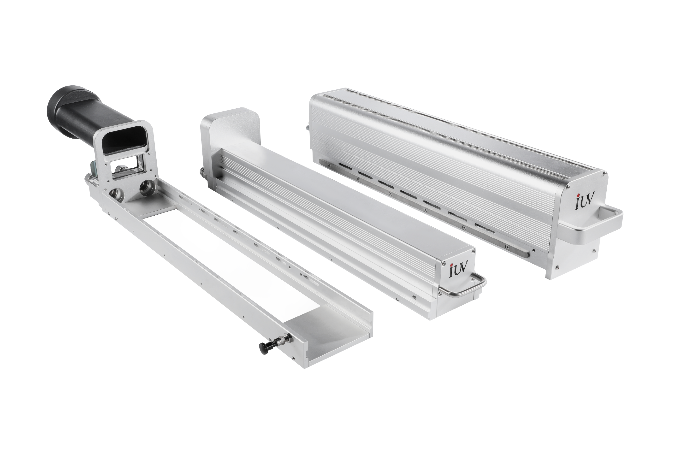
Equipment Integration: Integrating LED UV curing units onto flexo presses involves considerations for lamp placement and power. LED lamps are typically housed in compact modules that can be easily retrofitted into existing press designs. Proper air or water cooling systems are essential to maintain optimal LED performance and longevity, although they are generally less intensive than those required for mercury lamps. The precise positioning of the LED arrays relative to the substrate is also critical to ensure uniform exposure and complete cure.

Advantages in Flexo: For narrow-web label printing, LED UV in flexo offers rapid curing, allowing for faster press speeds and immediate post-print finishing operations like slitting and rewinding. The reduced heat is particularly beneficial when printing on films, preventing distortion. The consistent output of LEDs also leads to more predictable and repeatable print quality across long runs.

Offset Printing and LED UV Adaptation

Offset lithography, while traditionally associated with sheetfed and web offset for commercial printing, also finds application in label production, especially for high-quality graphics and short-to-medium runs. Adapting offset presses to LED UV curing presents unique challenges and opportunities.

Ink and Coating Formulations: Similar to flexography, offset inks and coatings must be specifically formulated for LED UV curing. Photoinitiator packages need to be optimized for the specific LED wavelengths used. Many ink manufacturers now offer comprehensive ranges of LED UV-curable offset inks and coatings, including varnishes, metallics, and specialty effects. The transition may require re-evaluating existing ink suppliers or working closely with them to ensure compatibility.

Press Modifications: Retrofitting LED UV curing systems onto offset presses requires careful planning. Unlike flexo, where curing units are often positioned between print stations, offset presses may require different placement strategies. Dual-sided curing (both top and bottom of the substrate) might be necessary for certain applications or when printing on thicker materials. The cooling requirements for LED modules, while less than mercury lamps, still need to be adequately addressed within the press architecture.

Substrate Versatility: One of the significant advantages of LED UV in offset for labels is its ability to print on a wider range of substrates without extensive drying time or heat-related distortion. This includes non-porous materials like plastics and foils, which are common in label applications. The instant cure prevents ink transfer and allows for immediate handling, streamlining the production workflow.

Challenges in Offset: Achieving a full cure on very thick ink films or in deep screen patterns can sometimes be more challenging with LED UV compared to broad-spectrum mercury lamps, due to the specific wavelength penetration. Careful ink formulation and optimization of lamp power and distance are crucial to overcome this.

Narrow-Web Printing and Beyond

The term “narrow-web printing” encompasses a variety of printing technologies used for producing labels, flexible packaging, and other narrow-width materials. This includes flexography, some forms of digital printing, and specialized offset configurations. LED UV curing has found a particularly strong foothold in this sector due to the inherent benefits it brings to high-speed, high-volume production.

Digital Printing Integration: Many digital printing technologies, especially inkjet, are increasingly incorporating LED UV curing. This allows for instant drying of inks on a wide array of substrates, enabling true “print-and-ship” capabilities for short runs and variable data printing. The compact nature of LED UV curing modules is ideal for integrating into the limited space available on digital presses.

Hybrid Printing: The rise of hybrid printing, which combines different printing technologies on a single press, also benefits from LED UV. For example, a flexo press might be equipped with digital embellishment capabilities, with both technologies cured by LED UV. This flexibility allows for complex, high-value label production.

Key Considerations for Adaptation

Regardless of the printing method, several factors are paramount when adapting to LED UV curing systems:

  • Ink and Coating Selection: This is the most critical element. Always use inks and coatings specifically designed and tested for the LED wavelengths and power output of your chosen curing system. Work with your ink suppliers to identify the best options.
  • Substrate Compatibility: While LED UV is more versatile, always test for adhesion, scuff resistance, and potential substrate degradation, especially with delicate or heat-sensitive materials.
  • Curing Unit Specifications: Understand the output wavelength, power density (irradiance), and uniformity of the LED curing units. These specifications will dictate cure speed and effectiveness.
  • Press Integration and Cooling: Ensure the chosen LED system can be effectively integrated into your press and that adequate cooling (air or water) is provided to maintain optimal LED performance and lifespan.
  • Operator Training: Proper training for press operators on the nuances of LED UV curing, including ink handling, press settings, and maintenance, is essential for consistent results.

Future Trends

The evolution of LED UV technology continues. We are seeing advancements in higher power output LEDs, broader wavelength capabilities, and more sophisticated control systems. These developments promise even greater efficiency and versatility for printers across all sectors. The drive towards more sustainable printing practices will undoubtedly further accelerate the adoption of LED UV curing as a preferred technology for its energy savings and reduced environmental impact. For label printers looking to enhance speed, quality, and substrate flexibility, adapting LED UV curing systems is not just an option, but a strategic imperative for staying competitive.

Contact IUV Curing Experts

滚动至顶部