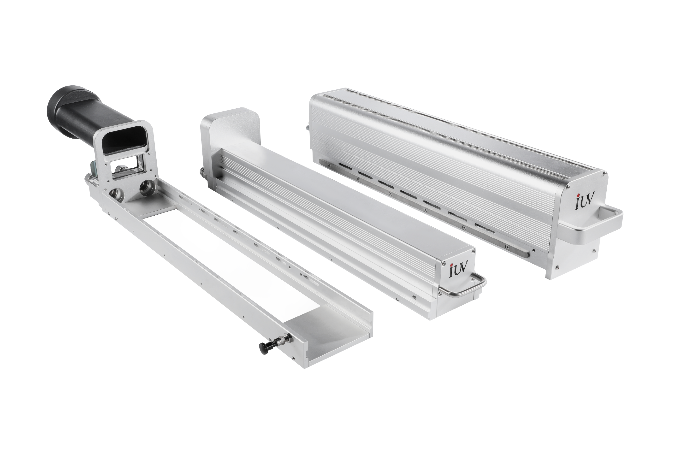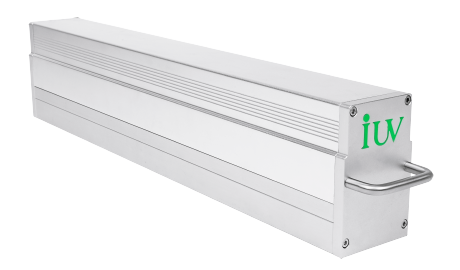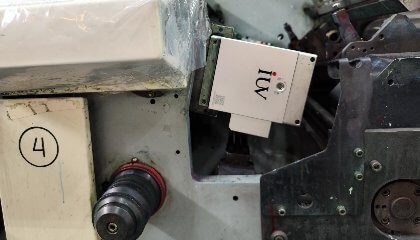
Achieving sharp and vibrant Spot UV effects is a hallmark of premium print production. In the competitive world of label printing, flexible packaging, and commercial offset printing, the quality of a special finish can elevate a product from ordinary to exceptional. For narrow web printers, in particular, the demand for high-definition, precise Spot UV applications is ever-increasing. This is where the advanced capabilities of high-intensity LED curing systems come into play, offering unparalleled control and efficiency.
The Art and Science of Spot UV
Spot UV, also known as spot varnish or spot gloss, involves applying a clear coating to specific areas of a printed piece to create contrast and visual interest. This technique can highlight logos, create tactile textures, or add a glossy sheen to certain elements, making them stand out. The success of Spot UV hinges on two critical factors: the precision of the coating application and the speed and effectiveness of the curing process.
In traditional flexographic and offset printing, the application of Spot UV often involves separate printing units or coating stations. While effective, achieving hairline registration and preventing unwanted spread or ghosting can be challenging, especially with high-speed presses. The curing method also plays a vital role. Traditional mercury vapor lamps have been the industry standard for UV curing for decades. However, they come with significant drawbacks, including high energy consumption, heat generation, and a limited lifespan. Moreover, the spectral output of mercury lamps can sometimes lead to inconsistent curing, affecting the final finish.
The Rise of LED UV Curing in Printing
The advent of UV LED curing technology has revolutionized the printing industry, offering a more efficient, sustainable, and precise alternative to traditional UV lamps. Unlike mercury lamps, which emit a broad spectrum of UV light, LEDs emit light at specific wavelengths. This targeted emission is crucial for achieving optimal curing of UV-curable inks, coatings, and varnishes.
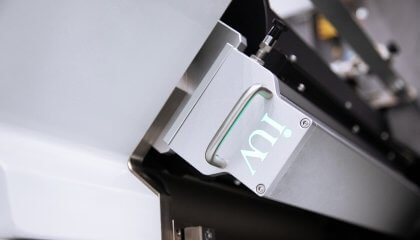
High-intensity LED curing systems deliver a concentrated and consistent output of UV energy. This intensity is key to achieving rapid and thorough polymerization of the UV-curable material. For Spot UV applications, this translates directly to sharper edges, a more consistent gloss level, and reduced risk of the coating spreading beyond the intended design.
Benefits for Narrow Web and Flexographic Printing
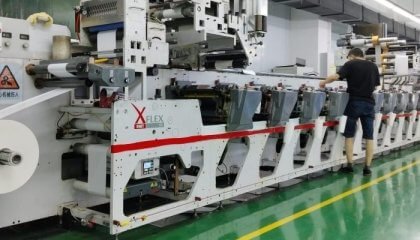
For narrow web printers, where space and speed are often at a premium, LED curing systems offer significant advantages.
- Precise Control: The focused nature of LED UV light allows for pinpoint curing. This means that even intricate Spot UV designs with fine details can be cured accurately without affecting adjacent areas. This precision is paramount for demanding applications like wine and spirits labels, cosmetic packaging, and premium food products.
- Instant On/Off: LEDs offer instant on/off capabilities. This is a game-changer for Spot UV applications that require precise timing and control. Unlike mercury lamps that require warm-up and cool-down periods, LEDs can be activated precisely when the varnish is applied and switched off immediately afterward, preventing over-curing or heat distortion.
- Low Heat Emission: High-intensity LED systems generate considerably less heat compared to mercury lamps. This is particularly beneficial when printing on heat-sensitive substrates, such as thin films or certain plastics. Reduced heat also contributes to a more stable printing environment, improving overall print quality and registration.
- Energy Efficiency: LEDs are significantly more energy-efficient than their mercury vapor counterparts. This translates to lower operating costs and a reduced carbon footprint, aligning with the growing demand for sustainable printing practices.
- Longer Lifespan: LED lamps have a much longer operational lifespan, often exceeding 20,000 hours. This reduces maintenance downtime and the frequency of lamp replacements, further contributing to operational cost savings.
Advantages in Offset and Sheetfed Applications
While narrow web printing is a prime beneficiary, offset and sheetfed printers also gain substantially from high-intensity LED curing systems for Spot UV.
- Consistent Gloss and Clarity: The specific wavelengths emitted by LEDs are often optimized for the photointiators in UV-curable coatings. This leads to a more complete and uniform cure, resulting in a higher, more consistent gloss level and exceptional clarity for the Spot UV effect.
- Reduced Ink and Coating Migration: Rapid and thorough curing with LEDs minimizes the potential for ink or coating migration. This is critical for food-safe packaging and for applications where multiple layers of finishes are applied.
- Flexibility in Substrate Handling: The low heat output allows for the use of a wider range of substrates, including delicate or heat-sensitive materials, without compromising the quality of the Spot UV finish.
- Faster Turnaround Times: The instantaneous curing capability of LEDs allows for immediate handling of printed sheets, enabling faster finishing processes and shorter production cycles.
Optimizing Spot UV with High-Intensity LED
To maximize the benefits of high-intensity LED curing for Spot UV, several factors need careful consideration:
- Wavelength Selection: Different UV-curable formulations are optimized for specific LED wavelengths (e.g., 365nm, 395nm). Selecting the correct LED wavelength that matches the Spot UV coating’s chemistry is fundamental for achieving optimal cure speed and performance. Consulting with both the coating manufacturer and the LED system supplier is recommended.
- Irradiance and Dose: Irradiance refers to the power density of the UV light (measured in W/cm²), while the UV dose is the total energy delivered over time (irradiance x exposure time). High-intensity LED systems provide higher irradiance, allowing for shorter exposure times or achieving a higher UV dose. For Spot UV, precise control over both irradiance and dose is necessary to prevent under-curing (leading to a dull or tacky finish) or over-curing (causing yellowing or brittleness).
- Substrate and Ink Interaction: The interaction between the substrate, the underlying ink, and the Spot UV coating is crucial. The LED light needs to penetrate effectively through the clear Spot UV coating to cure it. The underlying ink should ideally be formulated to allow sufficient transmission of the specific LED wavelength used for curing, or the Spot UV coating must be applied in a way that facilitates efficient curing.
- Application Method: The method of applying the Spot UV coating – whether through a flexo plate, a screen, or a specialized coating unit – must be compatible with the LED curing system. Ensuring the UV energy reaches the entire surface of the applied coating is vital.
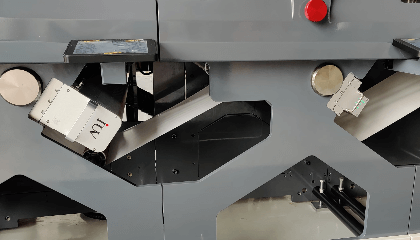
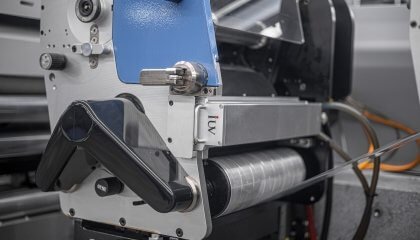
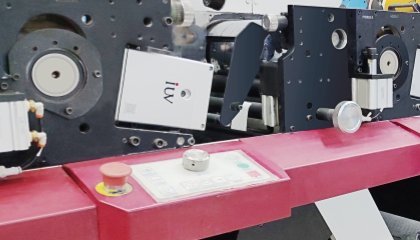
- System Integration: For seamless integration into existing narrow web, flexographic, or offset presses, LED curing systems must be robust, reliable, and designed for the specific press speed and operating environment. Retrofitting these systems requires careful engineering to ensure proper positioning and alignment.
The Future of Spot UV and LED Curing
The continuous advancements in LED technology, including higher power outputs and broader wavelength options, are further enhancing the capabilities for achieving premium Spot UV effects. As the printing industry moves towards more sustainable and efficient practices, high-intensity LED curing systems are becoming an indispensable tool for printers seeking to deliver exceptional quality and achieve a competitive edge, particularly in the demanding applications of labels, flexible packaging, and high-value commercial print. The precision, speed, and control offered by these systems ensure that Spot UV finishes are not just decorative, but a critical element in the overall communication and perceived value of printed products.