In the demanding world of narrow web printing, durability is often as critical as aesthetics. Labels and flexible packaging are subjected to a variety of physical stresses during production, distribution, and end-use. Among these, abrasion is a significant concern. Scratches and scuffs can quickly degrade the appearance and legibility of printed materials, leading to customer dissatisfaction and product rejection. Fortunately, advancements in UV ink technology and strategic application techniques offer powerful solutions. By optimizing UV ink performance, printers can achieve exceptional abrasion resistance, ensuring their output stands up to the rigart of daily use.
Understanding Abrasion Resistance in Printing
Abrasion resistance refers to a printed surface’s ability to withstand wear and tear from friction. This can occur through rubbing against other surfaces, packaging, or even during handling. For labels, especially those on consumer goods, the constant interaction with shelves, other products, and handling can quickly dull or remove print. In applications like wine labels, cosmetic packaging, or industrial product identification, the integrity of the print directly impacts brand perception and product information clarity.
The role of UV ink in this context is paramount. Unlike conventional inks that dry through oxidation or evaporation, UV inks cure almost instantaneously when exposed to ultraviolet light. This rapid polymerization creates a highly cross-linked film that is inherently more robust and resistant to physical damage. However, simply using a UV ink is not a guarantee of superior performance. The specific formulation of the ink, the substrate it’s applied to, and the curing process all play vital roles in determining the final abrasion resistance.
Key Factors Influencing UV Ink Abrasion Resistance
Several interconnected factors contribute to the overall abrasion resistance of UV-cured prints. Understanding these elements allows for targeted optimization strategies.
Ink Formulation: The backbone of abrasion resistance lies within the ink itself. UV inks are comprised of monomers, oligomers, photoinitiators, and pigments.
Monomers and Oligomers: These are the building blocks that polymerize under UV light. Their chemical structure dictates the hardness, flexibility, and toughness of the cured ink film. For enhanced abrasion resistance, formulations often incorporate higher molecular weight oligomers and specific types of monomers that promote a tightly cross-linked network. Resins with high glass transition temperatures (Tg) generally result in harder, more scratch-resistant films.
Photoinitiators: These are crucial for initiating the polymerization process. Their efficiency affects the depth and completeness of cure. Incomplete cure leaves the ink film soft and vulnerable to abrasion.
Pigments and Additives: While pigments provide color, they can sometimes interfere with UV light penetration, leading to under-curing. Additives, such as slip agents, can actually reduce surface friction but may also compromise inherent ink hardness. The balance here is key.
Substrate Selection: The surface to which the ink is applied significantly impacts its durability.
Surface Energy: Substrates with higher surface energy generally promote better ink adhesion, which is foundational for good abrasion resistance. Primed films or coated papers often provide a more receptive surface.
Porosity: Porous substrates can absorb some of the liquid ink before full UV curing, potentially affecting the final film structure and adhesion.
Flexibility: For applications on flexible packaging or labels that will be creased or folded, a certain degree of ink flexibility is required. An overly brittle ink film, however hard, can crack under stress, compromising its resistance.
Curing Process: The efficiency and completeness of the UV curing process are non-negotiable for achieving optimal abrasion resistance.
UV Lamp Intensity and Spectrum: The intensity of the UV lamps and their specific spectral output must match the absorption characteristics of the photoinitiators in the ink. Insufficient energy or the wrong wavelength will lead to under-curing.
Exposure Dose: This is the total amount of UV energy delivered to the ink film. It’s a function of lamp intensity and exposure time. Adequate dose ensures complete polymerization.
Curing Speed: While UV curing is fast, printing speed must be carefully managed. Rushing the process without sufficient UV exposure will compromise the ink’s integrity.
Oxygen Inhibition: Oxygen can interfere with the radical polymerization process, particularly at the surface of the ink film. This can result in a tacky or soft surface layer. Techniques like inerting (using nitrogen) or using specific photoinitiator packages can mitigate this.
Narrow Web Printing Technologies and UV Ink Optimization
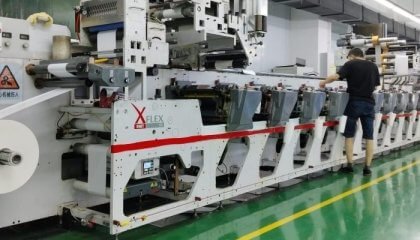
Narrow web printing, encompassing both flexographic and offset (including dry offset and waterless offset) methods, presents unique challenges and opportunities for UV ink performance.
Flexographic Printing:
In flexo, the image is transferred from a raised plate to the substrate via a transfer roller (anilox). The ink film thickness is controlled by the anilox roll and the impression.
Optimization Strategies:
Choosing the right viscosity UV inks is critical for consistent transfer from the anilox.
Plate material and hardness can influence the impression and ink transfer, indirectly affecting the final cured film.
Careful control of anilox cell volume and count ensures consistent ink laydown.
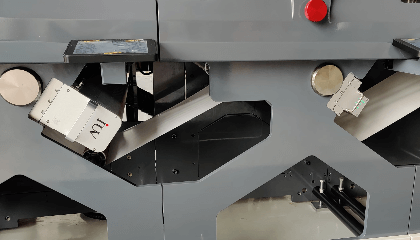
Adequate UV lamp placement and power, especially in-line between stations, are essential for staged curing. This prevents ink from smearing before reaching the final cure lamps.
Offset Printing (Narrow Web):
Offset printing uses a plate and blanket cylinder to transfer the image. UV inks for offset are typically lower in viscosity.
Optimization Strategies:
Maintaining precise control over blanket pressure and roller settings is vital to avoid excessive ink film thickness or ink starvation.
The compatibility of UV offset inks with the dampening solution (if applicable) or roller systems is crucial.
For dry and waterless offset, where ink-on-ink transfer can occur, ink rheology and cure speed are paramount to prevent premature setting or smearing.
Ensuring sufficient UV lamp power post-printing is critical for complete cure, as offset presses may have fewer in-line curing stations compared to some flexo configurations.
LED UV Curing: A Game Changer for Abrasion Resistance
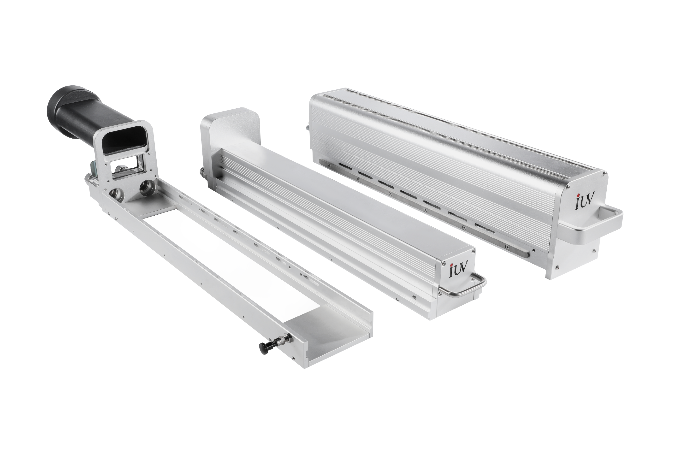
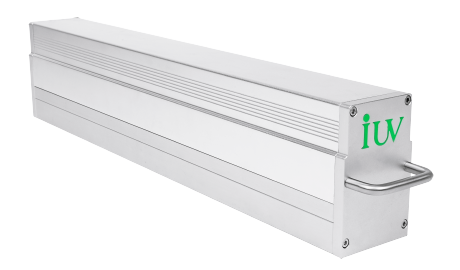
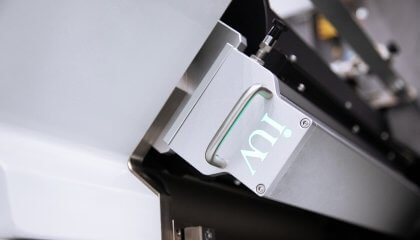
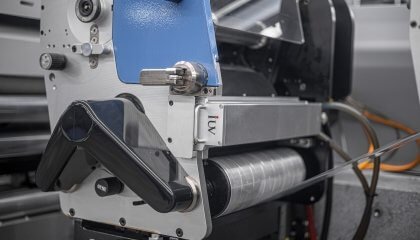
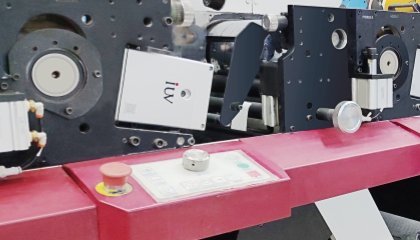
The advent of LED UV curing technology has revolutionized UV printing, offering significant advantages for achieving high abrasion resistance. Traditional mercury vapor lamps emit a broad spectrum of UV light, including heat and ozone. LED lamps, on the other hand, emit UV light at specific, narrow wavelengths, typically 365nm, 385nm, 395nm, or 405nm.
Benefits of LED UV Curing for Abrasion Resistance:
Energy Efficiency: LEDs are far more energy-efficient than mercury lamps, reducing operational costs.
Instant On/Off: This allows for precise control over UV exposure and eliminates warm-up time. It also prevents unwanted heat transfer to sensitive substrates.
Longer Lamp Life: LEDs have a much longer operational lifespan than mercury lamps.
Lower Heat Emission: This is a significant advantage for heat-sensitive substrates commonly used in narrow web applications, preventing shrinkage or distortion that could affect print quality and adhesion.
Targeted Wavelengths: LED lamps can be matched to specific ink formulations, ensuring optimal photoinitiator activation and a more complete, consistent cure. This directly translates to harder, more durable ink films with superior abrasion resistance.
Reduced Oxygen Inhibition: The focused energy and rapid cure from LEDs can help overcome oxygen inhibition more effectively, leading to a tack-free, fully cured surface.
Achieving Peak Abrasion Resistance: Practical Techniques
Beyond ink formulation and curing technology, several practical techniques can further enhance abrasion resistance in narrow web printing.
Substrate Pre-treatment: Applying corona treatment or plasma treatment to low-surface-energy substrates (like certain plastics) can significantly improve ink adhesion, which is the foundation of durability.
Varnishes and Overprint Glazes: Applying a clear UV-curable varnish over the printed image provides an additional protective layer. These varnishes are often formulated specifically for high scratch and abrasion resistance. They can be applied inline using flexo or screen printing units.
Optimizing Ink Transfer: In flexography, ensuring the correct pressure between the plate, anilox, and substrate is key. Too much pressure can squeeze ink out, leading to thin, under-cured areas. Too little can result in poor ink transfer.
Ink Drying/Curing Monitoring: Employing tools like UV radiometers to measure the UV dose delivered to the ink and performing rub tests on printed samples are essential quality control measures. These tests provide objective data on the ink’s performance.
Ink-Substrate Compatibility Testing: Always conduct thorough testing to ensure the chosen UV ink adheres properly and performs durably on the specific substrate being used. Interactions between inks and substrates can sometimes be unpredictable.
Environmental Conditions: Maintaining consistent temperature and humidity in the print environment can contribute to stable ink viscosity and consistent curing performance.
Conclusion
Enhancing abrasion resistance in narrow web printing is a multifaceted endeavor that hinges on a deep understanding of UV ink chemistry, substrate properties, and advanced curing technologies like LED UV. By meticulously selecting ink formulations, optimizing printing processes for both flexographic and offset applications, and leveraging the distinct advantages of LED curing, printers can consistently deliver labels and packaging that not only look good but also withstand the rigors of their intended use. Investing in these optimizations is not merely about preventing defects; it’s about ensuring brand integrity, customer satisfaction, and ultimately, the long-term success of printed products in a competitive market.