The shift toward short-run jobs has redefined the narrow-web printing landscape. Brands now demand more SKUs, faster turnaround times, and higher print quality. For the production engineer, these demands translate into a need for equipment that minimizes downtime. Traditional mercury vapor curing systems often act as bottlenecks during frequent changeovers. LED UV curing technology has emerged as the primary solution to stabilize these workflows. This guide explores the technical integration of LED UV within flexo, offset, and narrow-web label environments.
The Mechanics of Short-Run Label Production
Short-changeover environments require a press to move from one job to the next with minimal waste. Traditional UV systems involve long warm-up and cool-down cycles. If a press stops for a plate change, mercury lamps must be shuttered or dimmed. Even then, they retain massive amounts of residual heat.
LED UV systems operate with instant on-off capabilities. There is no standby mode. When the press stops, the light source shuts off completely. When the operator hits the start button, the lamps reach full intensity immediately. This single feature can save an average of 15 to 20 minutes per shift in a high-mix production environment.
Thermal Management and Substrate Versatility
Narrow-web converters often struggle with heat-sensitive materials like thin films, PE, and shrink sleeves. Mercury lamps emit a broad spectrum of light, including significant Infrared (IR) radiation. This heat can cause thin substrates to stretch, leading to registration errors or web breaks.
LED UV units emit light within a narrow band, typically centered at 385nm or 395nm. They produce almost zero IR radiation toward the substrate. This cold curing process allows engineers to run thinner, lower-cost films without the risk of distortion. Keeping the web cool ensures that registration remains tight from the first color station to the die-cutter.
Optimization for Flexo and Offset Workflows
Flexographic and offset presses have different curing requirements, but LED UV benefits both. In flexo, the consistency of the UV output is vital for maintaining color density across a long run. Unlike mercury bulbs, which degrade over 1,000 to 2,000 hours, LED chips maintain a stable output for over 20,000 hours.
In offset printing, LED UV solves the issue of ink-water balance being affected by heat. Excess heat from traditional lamps can evaporate fountain solution or change the viscosity of the ink. By utilizing a “cool” cure, offset printers achieve better dot gain control and sharper highlights. This stability is essential when the press undergoes frequent restarts during short-changeover sequences.
The Science of Curing: Irradiance and Dose
Engineers must distinguish between peak irradiance and energy density (dose). Irradiance is the intensity of the light hitting the surface, measured in W/cm². Dose is the total energy accumulated over time, measured in J/cm².
For a label press running at 150 meters per minute, the dwell time under the lamp is a fraction of a second. LED systems provide very high peak irradiance. This high intensity drives the photoinitiators in the ink to react instantly. However, the ink chemistry must be “LED-tuned.” Standard UV inks are designed for the broad spectrum of mercury lamps. LED-specific inks react to the specific 395nm wavelength, ensuring a full through-cure even at high speeds.
Overcoming Oxygen Inhibition
One challenge in UV curing is oxygen inhibition, particularly with thin ink layers in flexo. Oxygen at the surface of the ink can interfere with the polymerization process, leading to a tacky finish.
Modern LED UV systems address this through high-intensity output that “outruns” the oxygen. Some high-end narrow-web setups also use nitrogen inertion. This replaces oxygen with nitrogen at the curing station. While nitrogen adds complexity, it allows for faster curing speeds and reduces the amount of photoinitiator required in the ink. For most standard label applications, however, high-power 16W/cm² or 20W/cm² LED lamps provide sufficient intensity to overcome inhibition without extra gases.
Reliability and Operational Maintenance
The maintenance profile of an LED UV system differs significantly from traditional setups. Mercury systems require:
- Periodic bulb replacements.
- Reflector cleaning and replacement.
- Mechanical shutter maintenance.
- Ozone extraction ducting.
LED systems are solid-state. They have no moving parts and do not produce ozone. This eliminates the need for complex exhaust blowers that pull conditioned air out of the pressroom. For the engineer, this means less time spent on mechanical upkeep and more time focusing on print quality. The cooling for LED arrays is handled by a closed-loop water chiller or high-velocity air, both of which are more predictable than mercury cooling fans.
Energy Efficiency and ROI
The financial argument for LED UV centers on energy consumption. Traditional UV lamps remain on even when the press is idle to avoid the long warm-up time. An LED system only consumes power when it is actively curing ink.
On a typical narrow-web press, switching to LED can reduce energy bills by 50% to 70%. Furthermore, because the lamps do not lose intensity over time, the “scrap” caused by under-cured ink at the end of a bulb’s life is eliminated. When calculating ROI, engineers should factor in:
- Lower power consumption.
- Zero bulb replacement costs for 5 years.
- Increased press speeds on heat-sensitive jobs.
- Reduced HVAC costs due to lower heat output in the factory.
Integration Strategies for Existing Presses
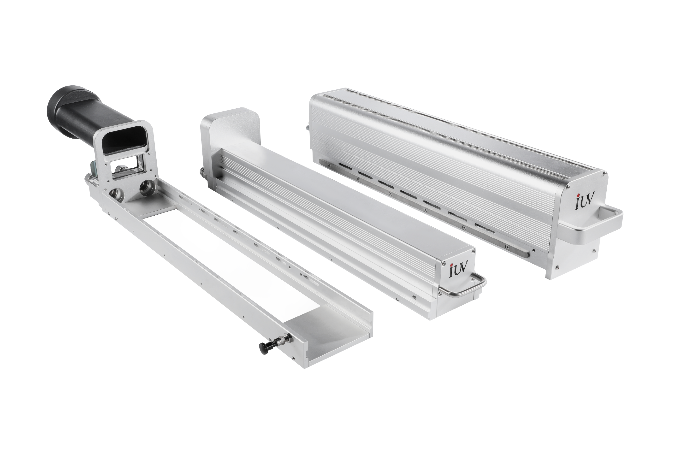
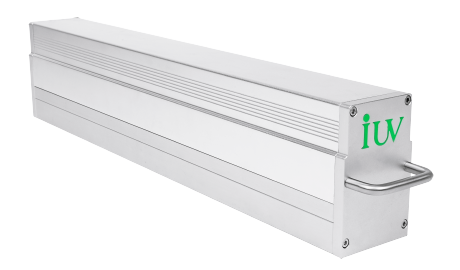
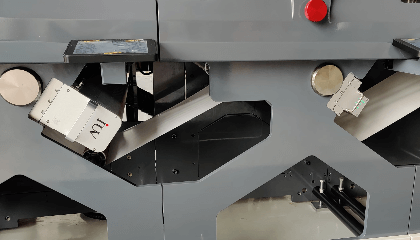
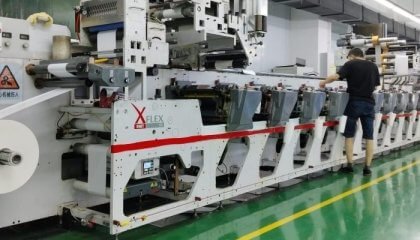
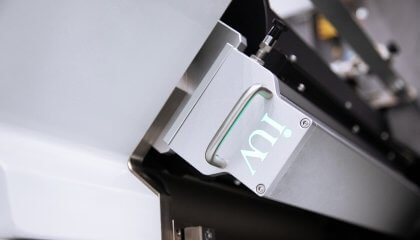
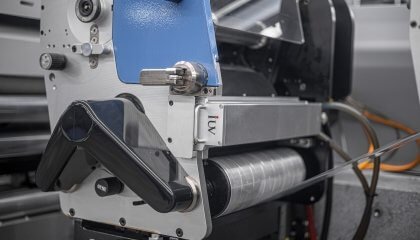
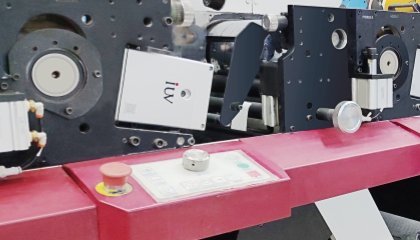
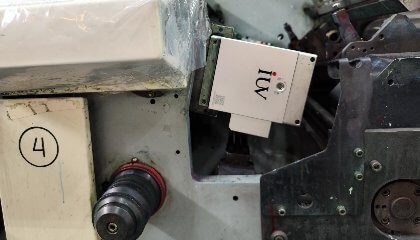
Retrofitting an existing label press requires careful planning. The engineer must evaluate the space available between print stations. LED units are generally more compact than mercury housings, making them easier to fit into tight narrow-web configurations.
The integration also involves the press control system. The LED power supply must be “slaved” to the press speed. This ensures that the light intensity ramps up or down automatically as the web accelerates or slows. This synchronization prevents over-curing at slow speeds and ensures a safe cure at top speeds.
Choosing the Right Wavelength
Most industrial LED UV systems for labels use 395nm. This wavelength offers a good balance of surface cure and deep penetration. Some applications, particularly those involving very thick coatings or opaque whites, may benefit from 385nm.
The choice of wavelength must be coordinated with the ink supplier. The absorption peak of the photoinitiators in the ink must match the spectral output of the LED. If these are mismatched, the surface may look dry while the ink remains liquid at the substrate interface, leading to adhesion failure.
Future-Proofing the Print Shop
The regulatory environment is shifting away from mercury. Many regions are implementing stricter rules regarding the handling and disposal of mercury-containing bulbs. By adopting LED UV now, label converters avoid future compliance headaches.
Beyond regulation, the ability to handle “impossible” jobs—like ultra-thin shrink sleeves or complex multi-layer labels—gives a competitive edge. The consistency of LED curing allows for the implementation of expanded color gamut (ECG) printing. ECG requires extremely stable ink performance across all stations, which is exactly what LED provides.
Technical Summary for Implementation
When transitioning to LED UV for short-changeover label presses, focus on these five technical pillars:
- System Power: Ensure the W/cm² rating meets your maximum line speed requirements.
- Ink Compatibility: Source LED-tuned inks specifically for your primary substrates.
- Cooling Architecture: Choose between air-cooled and water-cooled based on your ambient factory temperature.
- Speed Synchronization: Verify the lamp’s ability to track press speed precisely.
- Substrate Testing: Run adhesion tests on your thinnest films to calibrate the minimum required dose.
By following these engineering principles, a label printing facility can transform its production capacity. The move to LED UV is not just an equipment upgrade; it is a fundamental shift toward a more stable, efficient, and profitable printing process.