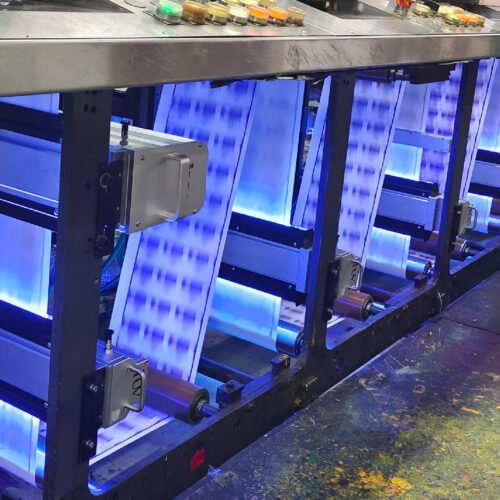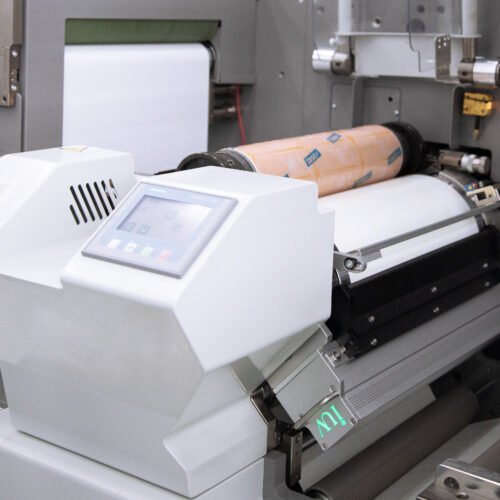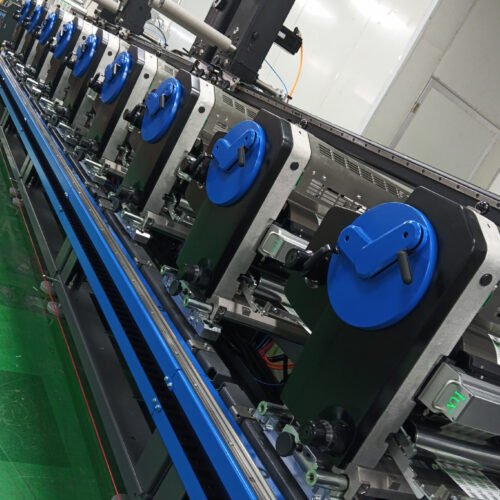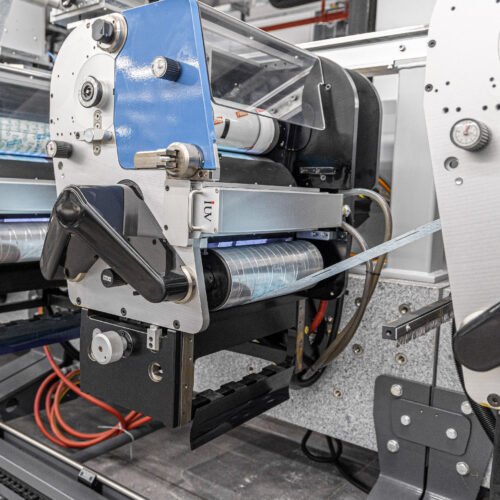
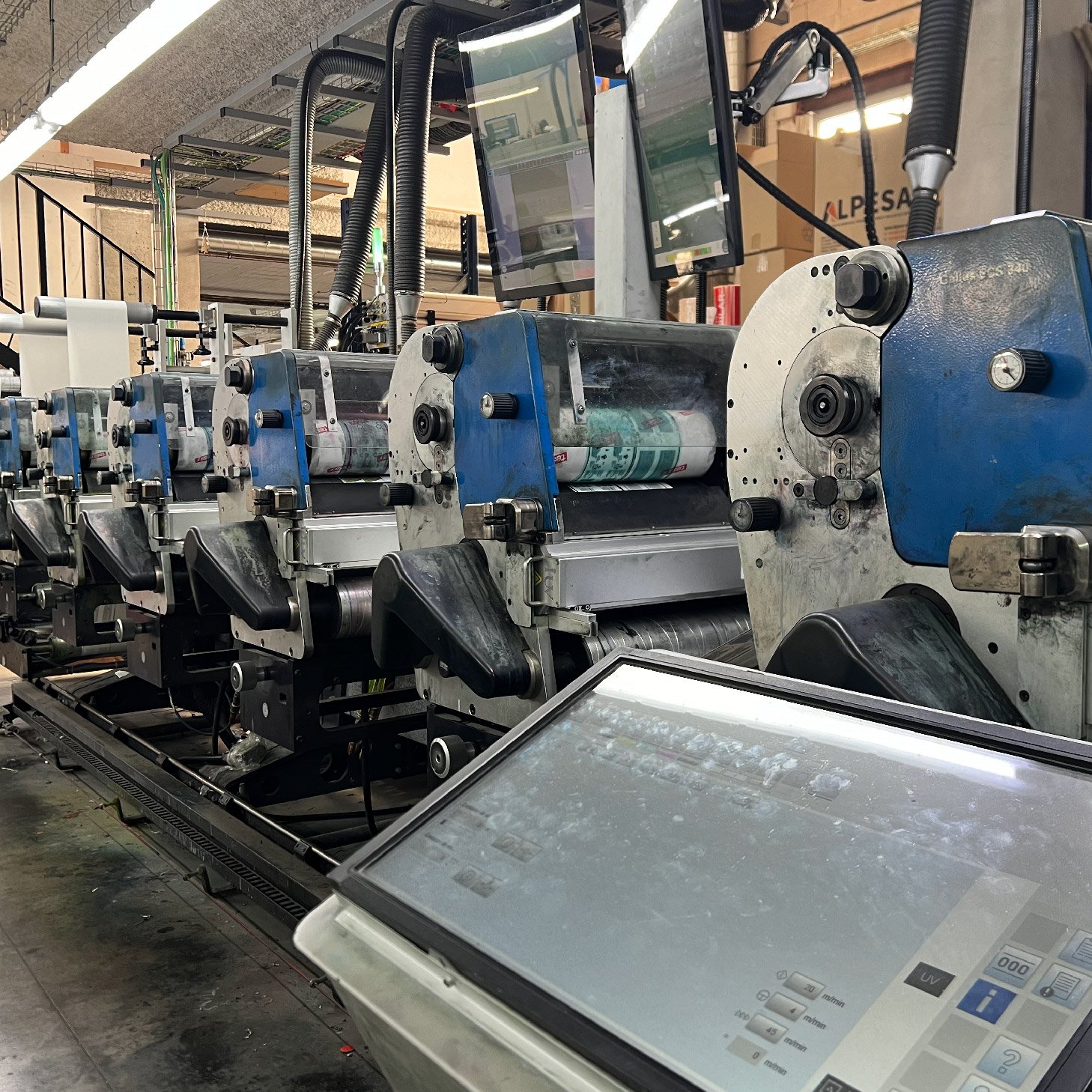
In narrow web label printing, LED UV curing performance depends not only on optical power and wavelength selection, but also on effective thermal control inside the lamp. Among all thermal parameters, diode junction temperature has the strongest influence on curing stability, color consistency, and long-term system reliability. In flexographic and offset label presses operating at high speeds and long duty cycles, unmanaged thermal rise at the diode junction can undermine even well-designed curing systems.
As label converters push for higher productivity, thinner substrates, and tighter color tolerances, thermal optimization becomes an operational necessity rather than a design detail. Cooling flow rate plays a decisive role in how efficiently heat is removed from the LED array and how stable the junction temperature remains during real production conditions.
Heat Generation and Accumulation in LED UV Systems
LED UV lamps convert electrical energy into ultraviolet radiation, but a significant portion of input power is inevitably transformed into heat. This heat concentrates at the diode junction, where thermal stress has the most direct impact on optical output and lifetime. In narrow web printing environments, compact lamp housings and dense press layouts limit passive heat dissipation, making active cooling essential.
During continuous label production, especially on presses running multiple shifts, thermal equilibrium is rarely static. Speed changes, press stops, and variable ink coverage all influence heat generation. Without sufficient cooling flow, junction temperature rises progressively, even if external lamp surfaces appear within normal limits. Over time, this thermal accumulation degrades curing performance and accelerates diode aging.
Cooling Flow Rate and Its Influence on Junction Temperature
Cooling flow rate determines how effectively heat is transported away from the diode junction and dissipated through the cooling system. Whether using liquid or air cooling, flow rate directly affects convective heat transfer efficiency. Too little flow results in localized heat buildup, while excessive flow may introduce instability without meaningful thermal gains.
In LED UV systems designed for label printing, optimal flow rate is achieved when thermal resistance between the diode junction and the coolant is minimized, while system pressure and flow stability remain controlled. This balance ensures consistent junction temperature under varying production loads, rather than peak cooling capacity that is rarely utilized in practice.
Constraints Imposed by Narrow Web Press Architecture
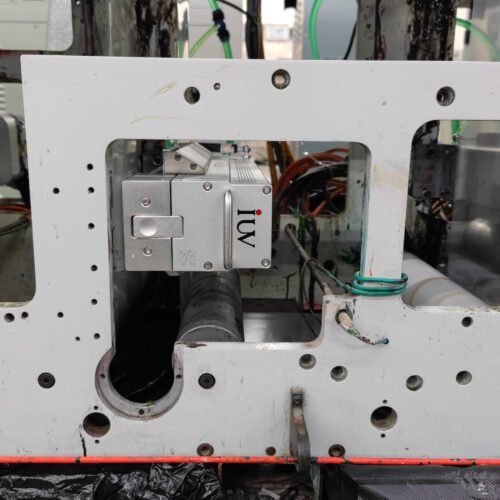
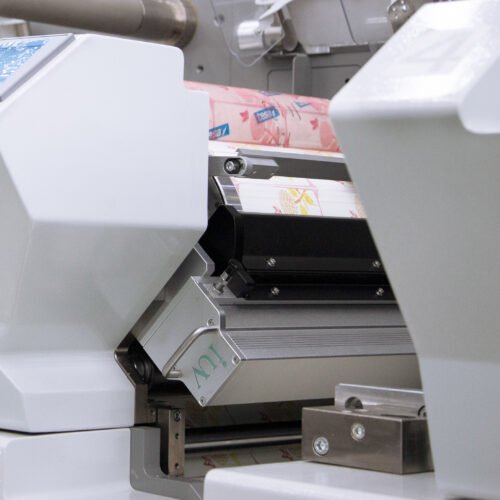
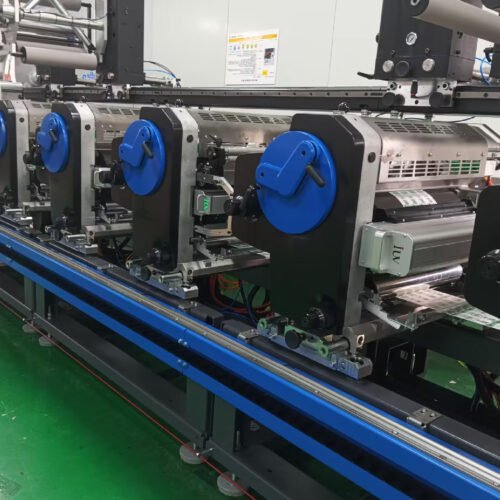
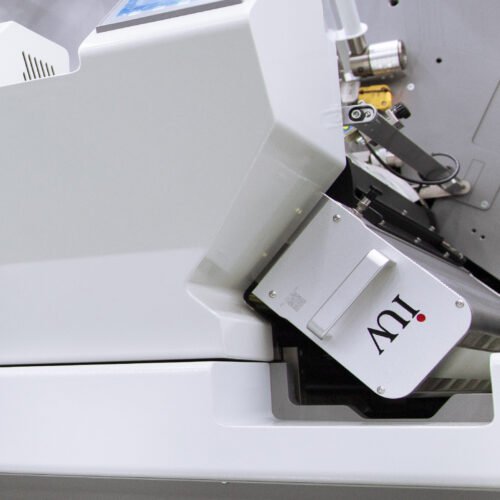
Narrow web label presses impose specific mechanical and spatial limitations on LED UV cooling design. Limited mounting space restricts manifold size, hose routing, and pump selection. In multi-station flexo presses, several LED UV lamps may share a common cooling circuit, increasing the risk of uneven flow distribution.
Differences in hose length, elevation, and connector geometry create hydraulic imbalances that can cause certain lamps to operate at higher junction temperatures than others. These temperature variations often translate into curing inconsistency across print stations, especially noticeable in fine text, vignettes, and overprint trapping areas.
Liquid Cooling as the Preferred Solution for High-Duty Label Production
For high-output label presses, liquid cooling has become the dominant solution due to its superior thermal conductivity and compact implementation. Properly regulated coolant flow stabilizes junction temperature even under high irradiance and extended operating hours. Compared to air cooling, liquid systems are less affected by ambient temperature fluctuations and press enclosure design.
However, liquid cooling performance depends heavily on flow rate control. Insufficient flow reduces heat extraction efficiency, while excessive flow can cause pressure fluctuations, vibration, or erosion within manifolds and fittings. Engineering optimization focuses on achieving stable, laminar flow that maximizes heat transfer without introducing mechanical stress.
Establishing an Optimal Cooling Flow Window
Determining the correct cooling flow rate begins with understanding the thermal load generated by the LED array at typical operating power. Junction temperature is usually inferred from case temperature measurements combined with known thermal resistance values. Once a baseline is established, flow rate adjustments can be evaluated based on measurable temperature response rather than theoretical limits.
The objective is not to reach the lowest possible temperature, but to maintain junction temperature well below critical thresholds with minimal fluctuation during speed ramps, press stops, and job changes. A stable thermal window improves curing predictability and reduces long-term stress on the diode structure.
Optical Stability and Wavelength Consistency
Diode junction temperature has a direct influence on LED emission wavelength. As temperature rises, peak wavelength shifts, reducing overlap with ink photoinitiator absorption curves. In label printing, where inks and coatings are formulated for narrow spectral ranges, this shift can reduce curing efficiency even when irradiance readings remain unchanged.
By maintaining consistent junction temperature through optimized cooling flow, wavelength stability is preserved. This results in deeper cure, improved surface hardness, and reduced risk of tackiness or ink transfer during downstream converting operations such as die cutting and rewinding.
Flow Management in Multi-Lamp and Multi-Station Systems
In presses equipped with multiple LED UV lamps, cooling flow must be balanced across all units to prevent temperature variation between stations. Parallel cooling circuits with matched hydraulic resistance help ensure uniform flow distribution. In series configurations, flow restrictors or balancing valves may be required to equalize thermal performance.
Regular verification of flow stability across all lamps is essential in high-volume label production. Uneven cooling often manifests as subtle curing differences that become more pronounced at higher speeds or during long runs.
Coolant Quality and Its Effect on Heat Transfer
Optimized flow rate alone cannot compensate for poor coolant quality. Contaminated or chemically degraded coolant reduces thermal conductivity and increases the effective thermal resistance of the cooling system. Elevated conductivity levels may also introduce galvanic or electrolytic risks within metallic manifolds.
Maintaining correct coolant composition, cleanliness, and conductivity ensures that heat transfer efficiency remains consistent over time. Routine coolant monitoring is a critical component of thermal management in LED UV systems used for label printing.
Flow Monitoring and Adaptive Control Strategies
Modern LED UV systems increasingly integrate flow sensors and temperature feedback mechanisms. These systems provide real-time monitoring and can trigger alarms or protective shutdowns if flow drops below safe levels. Variable-speed pumps enable adaptive flow control, adjusting cooling capacity based on lamp power and press speed.
Adaptive control reduces unnecessary energy consumption while maintaining stable junction temperature across varying production conditions. For converters handling a wide range of substrates and ink systems, this flexibility improves both efficiency and reliability.
Thermal Transients During Start-Up and Ramp-Down
Thermal stress often peaks during transient phases rather than steady-state operation. Rapid power application without sufficient coolant circulation can cause sharp junction temperature spikes. Similarly, sudden shutdown without continued cooling allows residual heat to accumulate within the LED assembly.
Proper sequencing ensures coolant flow is established before LED activation and maintained during controlled ramp-down. Optimized flow rates support smoother thermal transitions, reducing fatigue and extending diode service life.
Long-Term Performance Benefits in Label Production
Consistent cooling flow optimization reduces thermal cycling, stabilizes optical output, and slows lumen depreciation over the lifetime of the LED UV system. For label converters, this translates into predictable curing behavior, fewer quality deviations, and longer maintenance intervals.
In narrow web printing environments where uptime and consistency are critical, thermal optimization becomes a foundational element of process control rather than a secondary consideration.
Engineering Discipline in Modern LED UV Integration
Optimizing LED UV cooling flow rates requires coordination between press manufacturers, system integrators, and production teams. Each press configuration presents unique thermal and hydraulic characteristics that must be evaluated holistically.
By treating cooling flow as an adjustable engineering parameter rather than a fixed setting, label printers gain greater control over diode junction temperature and overall curing performance. In modern flexographic and offset label printing, disciplined thermal management supports higher speeds, sensitive materials, and increasingly demanding quality standards.