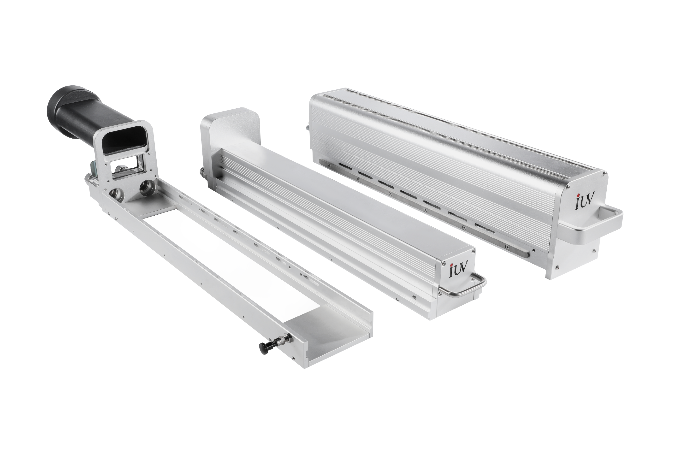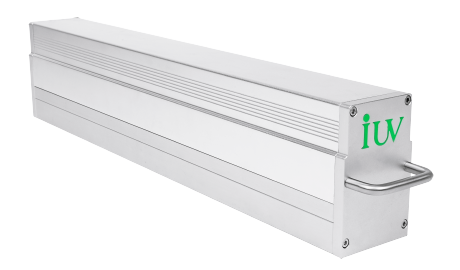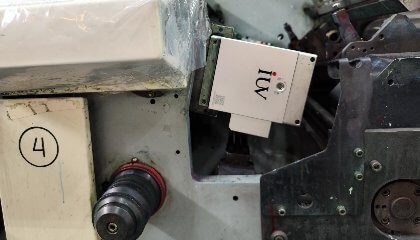
Optimizing print durability and adhesion starts with the curing process. When it comes to UV inks, automated curing strategies are revolutionizing how we achieve superior results. This isn’t just about faster drying; it’s about a fundamental shift in ink performance, leading to prints that stand up to the rigors of their intended application. For narrow web, flexographic, and offset printing operations, understanding and implementing these advanced UV curing techniques can be a significant competitive advantage.
The Science Behind UV Ink Curing
UV inks don’t dry in the traditional sense of solvent evaporation. Instead, they contain photoinitiators that, when exposed to specific wavelengths of ultraviolet light, initiate a rapid chemical reaction. This process, known as polymerization or cross-linking, transforms the liquid ink into a solid, durable film almost instantaneously. The effectiveness of this transformation directly impacts how well the ink adheres to the substrate and how resistant it is to scuffing, chemicals, and environmental factors.
The Role of Automation in UV Curing
Manual control of UV curing systems, even in a professional setting, can lead to inconsistencies. Variations in lamp intensity, exposure time, and distance from the substrate can result in under-cured or over-cured ink. Under-cured ink compromises adhesion and durability, leading to premature failure. Over-cured ink can result in brittleness and potential cracking. Automation addresses these challenges by providing precise, repeatable control over every curing parameter.
Automated systems can monitor and adjust UV output in real-time. This ensures that each printed element receives the optimal dose of UV energy. This level of control is particularly critical in high-speed printing environments like narrow web and flexography, where milliseconds matter. Furthermore, automated systems often integrate with other press controls, allowing for adjustments based on ink density, substrate type, and even ambient conditions.
Key Strategies for Enhanced Durability and Adhesion
Implementing automated UV curing involves more than just installing new equipment. It requires a strategic approach focused on optimizing specific parameters for your printing application.
1. Precise Wavelength and Intensity Control
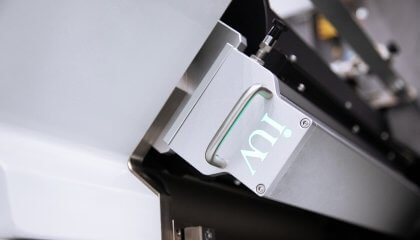
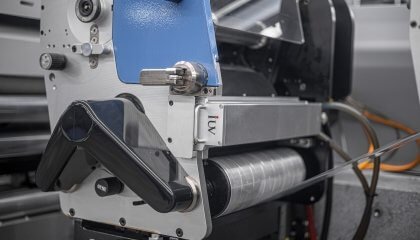
Different UV inks are formulated with specific photoinitiators that respond best to particular wavelengths of UV light. Modern LED UV curing systems offer unparalleled control over these wavelengths, often allowing for multiple zones with distinct spectral outputs. This means you can precisely match the UV output to the ink’s requirements, ensuring complete and efficient polymerization.
Intensity, measured in watts per square centimeter (W/cm²), dictates the energy delivered to the ink. Automated systems can maintain a consistent and optimized intensity across the entire web. This prevents issues like “shadowing” at the edges of the printed area, where intensity might naturally drop off. Consistent intensity ensures uniform curing, which is a cornerstone of robust adhesion and durability.
2. Optimized Exposure Time and Dose
The total UV energy delivered to the ink is a product of intensity and exposure time. Automated systems precisely control the dwell time of the substrate under the UV lamps. This ensures that the ink receives the correct “dose” of UV energy. For example, a faster press speed requires a higher intensity or a more efficient curing lamp to maintain the same energy dose. Automated systems can dynamically adjust intensity to compensate for speed changes, guaranteeing consistent curing regardless of production pace.
3. Substrate-Specific Curing Profiles
Different substrates absorb and reflect UV light differently. Porous substrates might require higher energy to achieve full cure, while smooth, non-porous materials might cure more readily. Automated systems allow for the creation and storage of specific curing profiles for each substrate type. When a new job runs on a different material, the system can automatically recall the optimized profile, eliminating guesswork and ensuring consistent performance. This is invaluable in narrow web printing, where frequent job changes on diverse materials are common.
4. Inter-Station Curing for Complex Designs
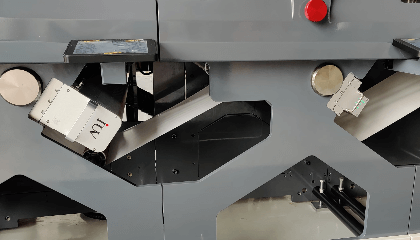
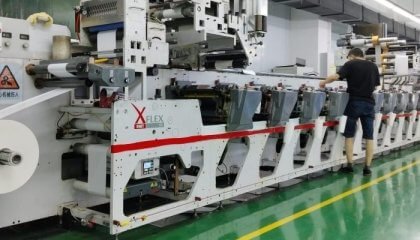
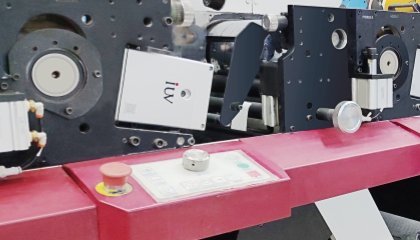
In multi-color printing, especially in flexography and offset, it’s often beneficial to cure inks between stations. This is known as inter-station curing. By partially curing each ink layer before the next is applied, you prevent ink trapping issues and “dot gain.” More importantly, it ensures that each ink layer is cured effectively, contributing to the overall adhesion and layering integrity of the final print. Automated UV systems can be configured to provide precisely controlled bursts of UV energy at each inter-station position, preventing over-curing while ensuring adequate polymerization.
5. Advanced Cooling and Ventilation
While UV curing is a “cool” process compared to thermal drying, the lamps themselves generate heat. Excessive heat can affect the substrate, leading to warping or dimensional instability, especially with sensitive materials used in label printing. Automated systems often incorporate intelligent cooling mechanisms. These systems monitor temperature and adjust airflow to maintain optimal conditions, protecting the substrate and ensuring the longevity of the UV lamps themselves. Proper ventilation also removes ozone, a byproduct of UV lamp operation, contributing to a safer working environment.
Benefits for Specific Printing Sectors
Narrow Web Printing: The label and packaging industry, predominantly using narrow web presses, benefits immensely from automated UV curing. The ability to achieve rapid curing on a wide range of films and papers, often with demanding adhesion requirements (e.g., for food packaging or durable goods), is crucial. Automated UV ensures that labels withstand abrasion, chemicals, and moisture, maintaining brand integrity.
Flexographic Printing: For flexo printers, especially those running at high speeds, consistent curing is vital for achieving sharp print quality and excellent adhesion on flexible packaging materials. Inter-station curing with automated UV prevents ink smearing and ensures that subsequent layers bond effectively. This is critical for vibrant graphics and functional coatings.
Offset Printing: In sheetfed and web offset, especially for commercial printing or packaging applications, automated UV curing provides a significant productivity boost. It allows for immediate handling of printed sheets, eliminating drying time delays. Furthermore, UV inks cured with automated systems offer superior resistance to scuffing and rub, which is a major advantage for printed materials that undergo significant post-press handling.
The Future: Smarter UV Curing
The trend towards automation in UV curing is only accelerating. We’re seeing the integration of advanced sensor technology that monitors ink curing in real-time and provides feedback to the press system. Machine learning algorithms are being developed to analyze production data and proactively adjust curing parameters for optimal results. This predictive and adaptive approach will further enhance print durability, adhesion, and overall print quality, making automated UV curing an indispensable tool for the modern print professional. Embracing these strategies is not just about keeping up; it’s about leading the way in producing high-performance printed products.