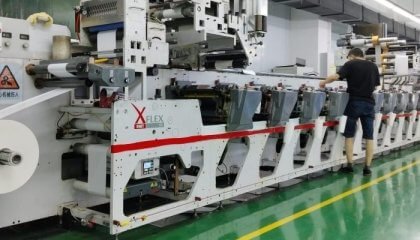
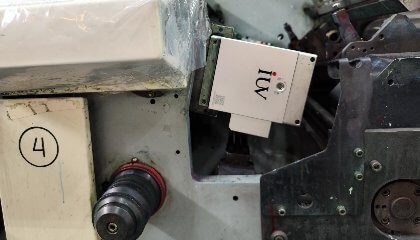
The label printing industry is in constant pursuit of sharper detail and faster production. Narrow-web flexography has long been a cornerstone for label production. Now, the integration of Light Emitting Diode (LED) UV curing technology is revolutionizing this space, particularly for high-resolution applications. This advancement offers unparalleled precision, efficiency, and a more sustainable printing process.
The Evolving Landscape of Label Printing
For decades, label printing relied on various technologies. Offset printing offered excellent quality for longer runs but struggled with the setup times and flexibility needed for shorter runs and variable data. Gravure provided high quality and speed but came with significant plate costs and turnaround times, making it less viable for many label markets. Flexography, with its inherent ability to print on a wide range of substrates, became the go-to for label printing. Its adaptable nature and reducing plate costs made it suitable for diverse applications.
However, traditional flexo often faced challenges in achieving the ultra-fine detail and edge definition required for premium labels. Ink viscosity control and the limitations of older UV curing systems could impede the ability to reproduce subtle gradients, fine fonts, and intricate graphics with absolute clarity. This is where the synergy between narrow-web flexo and LED UV technology truly shines.
Understanding Narrow-Web Flexography
Narrow-web flexography refers to printing on materials typically less than 20 inches (50 cm) wide. This format is perfectly suited for the vast majority of label and flexible packaging production. The flexographic process uses a raised flexible relief plate mounted on a cylinder. As the plate rotates, it picks up ink from an anilox roll and transfers it directly to the substrate. The inherent flexibility of the plate allows it to conform to slightly uneven surfaces, making it ideal for a variety of materials like paper, film, and foil.
The advantages of narrow-web flexo include:
- Substrate Versatility: It prints effectively on a wide array of materials.
- Cost-Effectiveness: Compared to offset or gravure, plate costs are lower and turnaround is faster.
- Speed and Efficiency: Modern presses are capable of very high printing speeds.
- Inline Capabilities: Presses can incorporate multiple converting processes like die-cutting, lamination, and foiling in a single pass.
Despite these strengths, achieving photographic-quality or extremely fine detail in traditional flexo printing often required significant process optimization and could still be limited by the curing technology employed.
The Impact of UV Curing in Flexo
UV curing uses ultraviolet light to instantly dry or “cure” inks, coatings, and adhesives. In traditional flexo, this often involved mercury vapor lamps. These lamps offered a powerful light source but also generated considerable heat and ozone. The heat could be detrimental to heat-sensitive substrates and could cause plate distortion over time. The ozone byproduct required ventilation systems. Furthermore, the spectral output of mercury lamps, while broad, wasn’t always perfectly optimized for specific ink chemistries, potentially leading to incomplete curing or requiring higher energy input.
Enter LED UV Curing: A Paradigm Shift
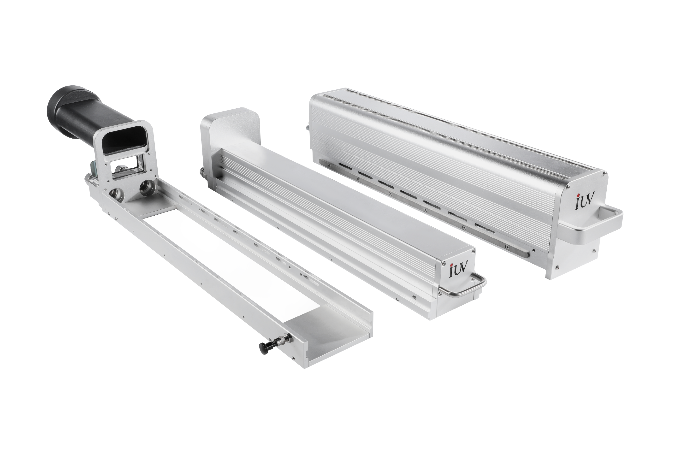
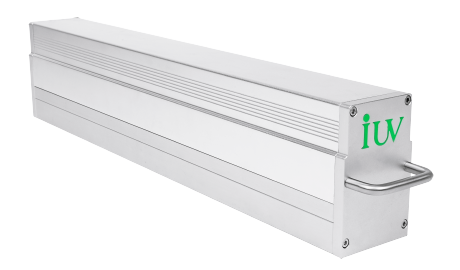
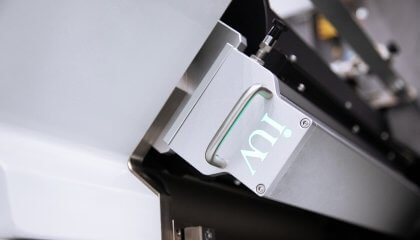
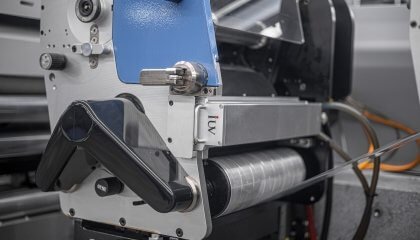
LED UV curing technology represents a significant leap forward. Instead of broad-spectrum mercury lamps, LED systems use light-emitting diodes that emit UV light within a very narrow, specific wavelength band. This targeted approach brings a host of benefits to narrow-web flexo printing.
Advantages of LED UV for High-Resolution Printing:
- Precise Wavelength Control: LED systems can be tuned to emit light at precise wavelengths that perfectly match the photoinitiators in UV-curable inks and coatings. This ensures efficient and complete curing, leading to superior ink film hardness and adhesion. For high-resolution printing, this means inks are cured immediately and lock down precisely where they are placed, preventing spreading and maintaining sharp dot edges.
- Minimal Heat Generation: LED lamps produce virtually no infrared radiation, meaning significantly less heat is transferred to the substrate. This is crucial for printing on delicate films and thin papers without deformation or shrinkage, preserving the integrity of fine details and registration.
- Instant On/Off Capability: LEDs can be switched on and off instantaneously. This eliminates lamp warm-up and cool-down times, saving energy and allowing for immediate start-up and shutdown of the press. It also contributes to maintaining stable operating temperatures on the press.
- Longer Lamp Lifespan: LED arrays have a much longer operational lifespan compared to mercury lamps, often exceeding 20,000 hours. This reduces maintenance costs and downtime associated with lamp replacement.
- Energy Efficiency: LEDs consume significantly less energy than traditional mercury vapor lamps. This translates to lower operating costs and a reduced environmental footprint, aligning with growing sustainability demands in the print industry.
- Compact Footprint: LED curing units are generally more compact, allowing for easier integration into existing or new narrow-web presses, even in space-constrained environments.
Achieving High Resolution with LED Flexo
The combination of advanced narrow-web flexo press capabilities and precise LED UV curing unlocks new levels of detail in label printing. Here’s how:
- Fine Dot Reproduction: The ability to cure inks instantly and without excessive heat allows for the faithful reproduction of very small ink dots. This is critical for achieving smooth tonal gradations, subtle shading, and detailed photographic images.
- Sharp Edge Definition: With rapid and complete curing right at the point of ink transfer, the edges of printed elements remain exceptionally sharp. This prevents “dot gain” or ink spread, ensuring that fine lines, small text (like nutritional information or serial numbers), and intricate patterns remain crisp and legible.
- Improved Ink Laydown: Modern anilox rolls and anilox engraving technologies, combined with precisely controlled ink viscosity and LED curing, allow for thinner, more consistent ink layers. This reduces the visual impact of the ink film and enhances the substrate’s natural appearance.
- Expanded Color Gamuts: The ability to print finer dots and achieve sharper edges allows for wider color gamuts using process colors (CMYK) or extended color sets (CMYK OGV). This means more vibrant and accurate color reproduction, bringing graphics to life.
- Substrate Compatibility: The low heat of LED curing opens up printing on a broader range of substrates, including thinner films and recycled materials, which are increasingly popular for sustainability reasons. This means high-resolution printing is no longer limited to robust materials.
Practical Applications and Benefits
The impact of advanced narrow-web LED flexo technology is evident across numerous label market segments:
- Premium Product Labels: For wines, spirits, cosmetics, and gourmet foods, where intricate branding, fine typography, and rich imagery are paramount for shelf appeal.
- Pharmaceutical and Nutraceutical Labels: Where small, highly legible text for dosage instructions, warnings, and ingredient lists is non-negotiable. The accuracy provided by LED flexo ensures compliance and consumer safety.
- Security and Track-and-Trace Labels: Micro-printing, holographics, and fine security features can be reproduced with greater fidelity, enhancing anti-counterfeiting measures.
- Shrink Sleeve Labels: The ability to print with fine detail on shrinkable films, coupled with durable LED-cured inks, allows for high-impact, all-around branding on containers.
- Specialty Labels: Including labels with metallic effects, spot varnishes, and textured finishes, where precision in ink laydown and curing is vital for achieving the desired aesthetic.
Integrating LED UV into the Workflow
Adopting LED UV technology in narrow-web flexo involves several considerations:
- Ink and Coating Selection: Printers must choose inks and coatings specifically formulated for LED UV curing. These formulations contain photoinitiators optimized for the specific wavelengths emitted by the LEDs.
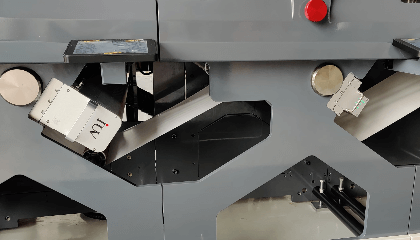
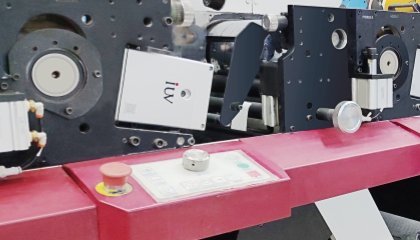
- Press Configuration: New presses are often designed with integrated LED UV systems. For retrofitting older presses, careful planning is needed to ensure proper placement, power supply, and ventilation (though ozone is minimal).
- Color Management: With enhanced capabilities, printers can refine their color management strategies to take full advantage of the wider color gamuts and finer detail reproduction.
- Operator Training: While LED UV is generally user-friendly, operators should be trained on the specifics of the technology, including maintenance and optimal operating parameters.
The Future is Bright and Detailed
The advancements in narrow-web LED flexo technology are not just incremental improvements; they represent a fundamental shift in what is achievable in label printing. The combination of precise curing, minimal heat, and enhanced ink performance allows for unprecedented levels of detail, vibrant color, and substrate versatility. As the demand for high-quality, sustainable, and efficient label production continues to grow, narrow-web LED flexo is poised to remain at the forefront, illuminating the path to crisper, more impactful labels. This technology empowers printers to meet the most demanding visual specifications while enhancing operational efficiency and environmental responsibility.