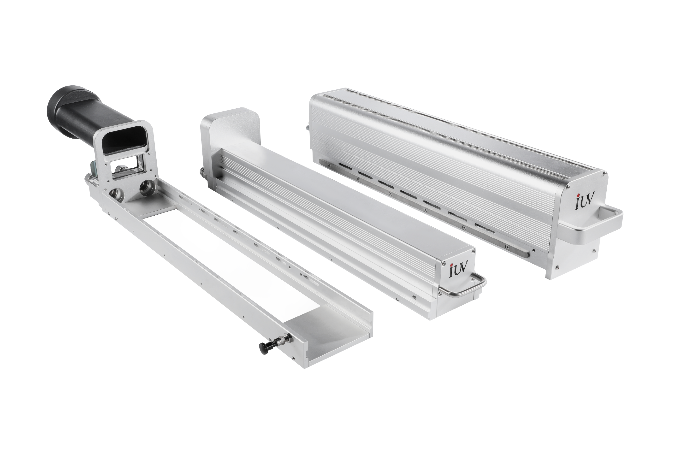
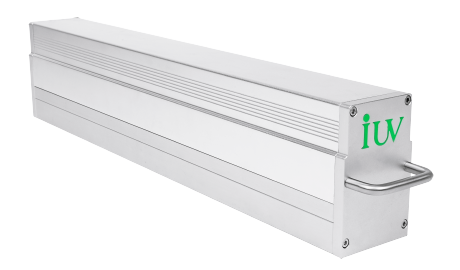
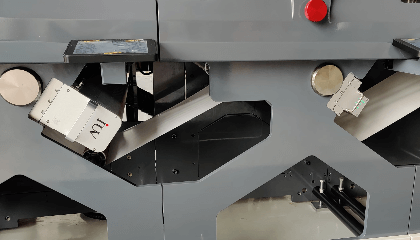
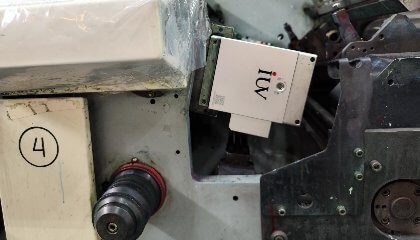
Digital label production is constantly pushing boundaries. Manufacturers seek higher quality, faster speeds, and greater efficiency. A key area of innovation lies in the curing process. Specifically, achieving precise UV curing on a wide range of substrates is paramount. This demands sophisticated solutions, and advanced substrate tracking plays a critical role.
The Challenge of Consistent UV Curing
UV curing offers significant advantages in label printing. It’s fast, energy-efficient, and provides excellent durability. However, achieving optimal results isn’t always straightforward. The process relies on delivering the correct UV energy dose to the ink or coating. This dose is influenced by several factors, including the lamp intensity, exposure time, and the distance between the lamp and the substrate.
When printing on various materials, each with its own texture, thickness, and surface characteristics, maintaining a consistent distance becomes a challenge. Variations in substrate height can lead to over-curing or under-curing. Over-curing can cause yellowing, brittleness, or even damage to sensitive inks and varnishes. Under-curing results in poor adhesion, scratching, and insufficient chemical resistance. This inconsistency directly impacts the final print quality and the overall productivity of the digital label press.
Understanding Substrate Tracking
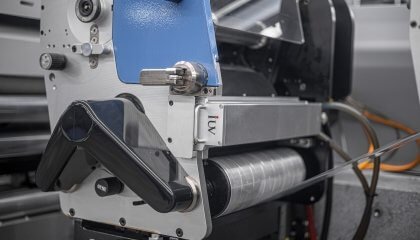
Substrate tracking refers to the technology that monitors and adjusts the position of the substrate relative to the UV curing lamps. In its simplest form, it might involve manual adjustments. However, for precision and automation, advanced systems are employed. These systems can actively measure and compensate for variations as the material moves through the curing zone.
The goal is to maintain an optimal and consistent gap between the UV source and the surface of the label. This ensures that every part of the printed image receives the intended amount of UV energy, regardless of minor fluctuations in the substrate’s topography.
Why Advanced Tracking Matters for Digital Labels
Digital label printing, especially in the narrow-web sector, often involves high speeds and a diverse media portfolio. This is where advanced substrate tracking truly shines. Consider the variety of materials used in label production:
- Standard Coated Papers: These generally offer a smooth surface, but minor variations can still occur.
- Textured Papers: These present a more significant challenge due to their inherent surface relief.
- Films (Polypropylene, Polyester, Vinyl): Different films have varying degrees of stiffness and surface properties. Some can be prone to static or deformation.
- Specialty Materials: Foils, metallized films, and other unique substrates require careful handling.
Without advanced tracking, achieving perfect cure on every one of these materials would be nearly impossible at production speeds. This can lead to costly waste, rejected jobs, and frustrated customers.
Key Technologies in Advanced Substrate Tracking
Several technological approaches enable advanced substrate tracking for precision UV curing. These systems often work in conjunction with the printing press’s control software and the UV curing unit itself.
- Optical Sensors: These sensors can scan the surface of the substrate. They measure the distance to the surface and send real-time data to a control system. This system then instructs actuators to adjust the height of the UV lamp or the print cylinder.
- Laser Profiling: More advanced systems may use laser technology to create a detailed profile of the substrate surface. This allows for highly accurate measurement of even minute variations.
- Closed-Loop Control: The most sophisticated systems employ closed-loop feedback mechanisms. The sensor data is continuously fed back to the control unit, which makes immediate, micro-adjustments to maintain the target gap. This dynamic adjustment is crucial for high-speed printing.
- Integration with Press Controls: Seamless integration with the digital press’s main control panel is vital. This allows operators to set parameters, monitor performance, and receive alerts through a single interface.
Benefits of Precision UV Curing with Advanced Tracking
Implementing advanced substrate tracking for precision UV curing brings tangible benefits to digital label production operations.
- Enhanced Print Quality: Consistent energy delivery leads to uniform ink and coating cure. This means sharper images, richer colors, and superior adhesion across the entire label.
- Wider Substrate Versatility: Presses equipped with advanced tracking can confidently handle a broader range of materials. This expands production capabilities and opens new market opportunities.
- Increased Production Speeds: By ensuring optimal curing conditions are maintained automatically, presses can operate at higher speeds without compromising quality. This boosts throughput and reduces turnaround times.
- Reduced Waste and Rework: Consistent curing minimizes the risk of defective prints, leading to less material waste and fewer costly rework jobs.
- Improved Durability and Performance: Properly cured labels exhibit better scratch resistance, chemical resistance, and overall durability, meeting demanding end-use requirements.
- Energy Efficiency: Precise control ensures that UV lamps operate at peak efficiency, delivering the necessary energy without excessive power consumption.
Integration in Narrow-Web Presses
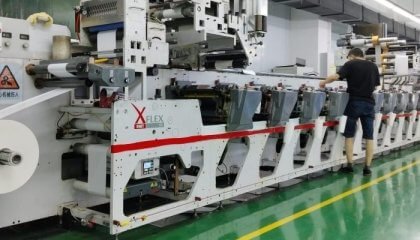
Narrow-web digital presses are particularly well-suited for advanced substrate tracking. These machines are designed for high-volume label production, often requiring quick job changeovers and the ability to print on diverse media. The compact nature of narrow-web presses also means that integrating advanced UV curing systems with precise tracking is more feasible.
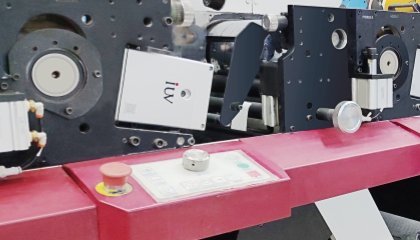
Whether the press uses flexographic, offset, or digital printing technology, the principle remains the same. The UV curing stations are positioned to treat the printed substrate as it exits the last printing station or before the rewind. Advanced tracking ensures that the curing process is optimized regardless of the specific print technology used on the press.
The Future of UV Curing in Digital Labels
As digital label printing continues to evolve, the demand for even more precise and intelligent curing solutions will grow. Advanced substrate tracking is a foundational element of this evolution. We can expect to see further integration of AI and machine learning into these systems, enabling predictive adjustments and even greater automation.
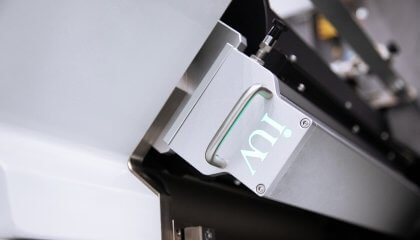
The ongoing development of LED UV curing technology also plays a role. LED lamps offer targeted spectral output and can be modulated more precisely. When combined with advanced substrate tracking, this allows for highly customized curing profiles for different inks, coatings, and substrates.
For any digital label producer aiming for superior quality, maximum efficiency, and maximum versatility, investing in advanced substrate tracking for precision UV curing is no longer a luxury, but a necessity. It’s a technology that directly addresses the core challenges of modern label production, ensuring consistent, high-performance results on every job.