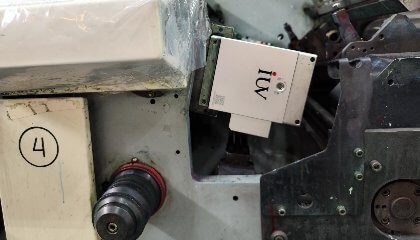
In the fast-paced world of label production, efficiency is king. Printers constantly seek ways to streamline workflows, reduce waste, and deliver high-quality products faster than ever before. One significant bottleneck has historically been the drying or curing process of inks and coatings. Traditional methods, while functional, often introduce delays, impacting turnaround times and overall productivity. However, the advent and widespread adoption of LED UV curing systems are fundamentally changing this landscape, promising a future of “zero drying delay” in label printing.
This technology offers a compelling solution for label converters, particularly those engaged in narrow-web printing applications like flexography and offset printing. Understanding the nuances of UV curing and how LED technology specifically enhances these processes is key to unlocking its full potential.
The Challenge of Drying in Traditional Label Printing
Before diving into the benefits of LED UV, it’s important to appreciate the challenges faced with conventional drying methods. In flexographic and offset printing, inks and coatings need to solidify or “cure” before the printed material can be handled, stacked, or further processed.
Heatset drying, common in web offset printing, relies on hot air to evaporate solvents from the ink. This process requires substantial energy, takes time, and can lead to issues like paper shrinkage or ink transfer if not perfectly controlled.
Infrared (IR) drying uses radiant heat to cure inks. While effective for certain ink types, it also generates significant heat, posing similar challenges to heatset drying regarding material stability and energy consumption.
Traditional UV curing systems, often employing mercury vapor lamps, were a significant step forward. They use UV light to initiate a photochemical reaction that rapidly cures the ink. However, these older systems come with their own set of drawbacks:
- High Energy Consumption: Mercury lamps are power-hungry and generate considerable heat, requiring extensive ventilation and cooling systems.
- Short Lamp Lifespan: They have a limited operational life and need frequent replacement.
- Ozone Production: The curing process can produce ozone, necessitating specialized exhaust systems.
- Heat Generation: Despite rapid curing, the lamps themselves produce a significant amount of heat, which can affect sensitive substrates.
- Warm-up Time: Mercury lamps require a warm-up period before reaching optimal curing intensity, adding a small but real delay.
These factors collectively contribute to the “drying delay” that label printers have learned to manage, often by incorporating extra machinery or planning production runs with buffer times.
Enter LED UV Curing: A Paradigm Shift
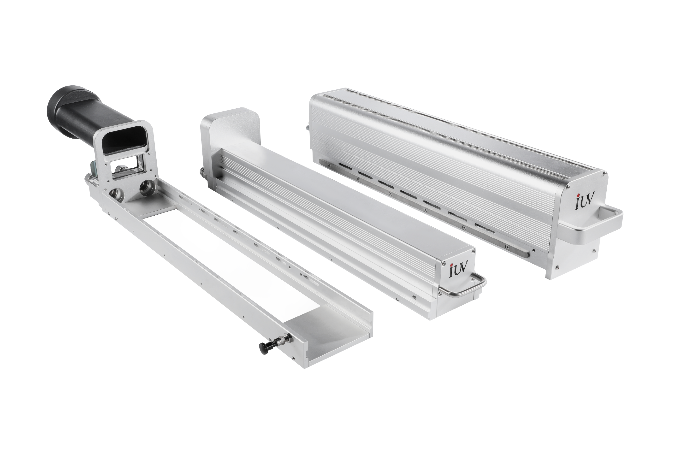
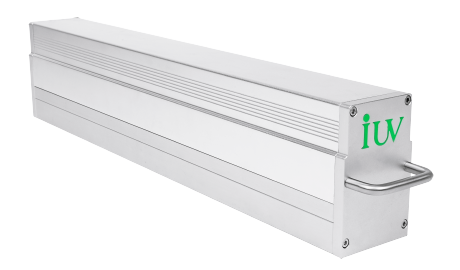
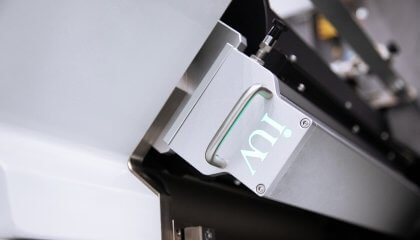
LED UV curing systems represent a technological leap, addressing the shortcomings of traditional methods and ushering in an era of unprecedented efficiency. Instead of broad-spectrum mercury lamps, LED systems use light-emitting diodes (LEDs) to generate UV light at specific wavelengths. This targeted approach is the foundation of their superiority.
How it Works: Targeted Wavelengths and Instant Curing
LED UV curing relies on photoinitiators within the ink or coating formulation. These photoinitiators absorb UV light energy at specific wavelengths and trigger a rapid polymerization process. The ink transforms from a liquid to a solid, cross-linked film almost instantaneously upon exposure.
The key advantage of LED UV lies in its ability to deliver this high-intensity UV light precisely at the wavelengths that most efficiently activate these photoinitiators. This means the curing process happens in fractions of a second, literally as the label stock passes under the LED lamp.
Benefits of LED UV Curing for Zero Drying Delay in Label Production
The implications for label production are profound. Let’s break down the specific advantages that lead to “zero drying delay”:
1. Instantaneous Curing
This is the most direct contributor to eliminating drying delays. As soon as the ink is applied and passes under the LED UV unit, it is fully cured. There’s no need for extended cooling tunnels, large drying units, or waiting periods between printing stations or for post-print processes. The printed web is ready for the next operation immediately.
2. Energy Efficiency
LEDs are remarkably energy-efficient. They consume significantly less power than mercury lamps, often up to 70-80% less. Furthermore, LEDs only emit light when powered on; they don’t waste energy on warm-up or standby. This dramatically reduces operational costs and the carbon footprint of the printing operation.
3. Reduced Heat Output
While LEDs do produce some heat, it’s concentrated in a much narrower spectrum and is far less than mercury lamps. This “cool cure” capability is invaluable for printing on heat-sensitive substrates like thin films, plastics, and even some papers that can warp or degrade under excessive heat. This opens up new substrate possibilities and reduces the risk of material spoilage.
4. Longer Lifespan and Lower Maintenance
LEDs have an exceptionally long operational lifespan, often rated for tens of thousands of hours – far exceeding that of mercury lamps. This translates to fewer replacements, reduced downtime for maintenance, and a more predictable operational cost. The consistent intensity of LEDs over their lifespan also ensures reliable curing performance.
5. No Ozone Production
Unlike mercury vapor lamps, LEDs do not produce ozone. This eliminates the need for expensive and cumbersome exhaust and ventilation systems, simplifying installation and reducing ongoing maintenance.
6. Superior Ink and Coating Performance
The efficient and instant curing process with LEDs often leads to more robust and durable ink films. This can result in improved scratch resistance, chemical resistance, and adhesion, enhancing the overall quality and longevity of the printed labels.
7. Compact Footprint
LED UV curing systems are typically more compact than their mercury-based counterparts. This is beneficial in narrow-web printing environments where space is often at a premium, allowing for easier integration into existing press configurations or new installations.
LED UV in Flexographic Label Printing
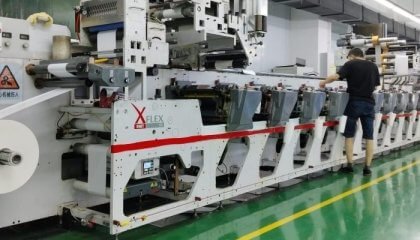
Flexography is a dominant printing process for labels, especially in narrow-web applications. The inherent speed of flexo presses makes drying a critical factor. Integrating LED UV curing into flexo presses allows for:
- Higher Press Speeds: Because curing is instantaneous, presses can run at their maximum mechanical speed without being limited by drying capacity. This directly boosts throughput.
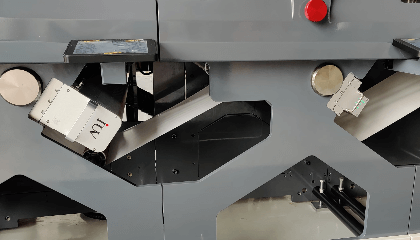
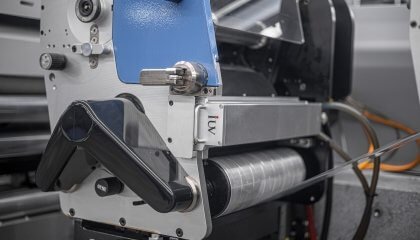
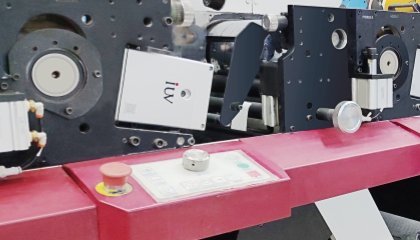
- Simultaneous Printing and Curing: Each print station can be followed by an LED UV unit, allowing for multiple colors to be printed and cured consecutively without any delay. This enables complex, multi-color labels to be produced efficiently in a single pass.
- Efficient White Ink and Opaque Ink Curing: LEDs are highly effective at curing white inks and other opaque formulations, which can be challenging for traditional UV systems due to their light-blocking properties.
- Reduced Ink Migration: Instant curing minimizes the time ink is in a vulnerable liquid state, reducing the risk of ink migration, which is crucial for food and pharmaceutical labels.
LED UV in Offset Label Printing
Narrow-web offset printing is also a significant player in the label market, often chosen for its high-quality graphics and fine detail. LED UV curing enhances offset label production by:
- Enabling Faster Runs: Similar to flexo, offset presses can achieve higher speeds when drying is not a limiting factor.
- Facilitating In-line Finishing: Cured labels can immediately proceed to in-line finishing operations like die-cutting, embossing, or varnishing without requiring separate drying stages.
- Versatility with Substrates: The low-heat nature of LED UV is ideal for offset printing on a wider range of plastic films and foils, expanding the creative options for label designers.
- Consistent Quality: The consistent UV output of LEDs ensures uniform curing across the entire print run, leading to predictable and high-quality results.
Considerations for Implementing LED UV Curing
While the advantages are clear, successful implementation requires careful consideration:
- Ink and Coating Formulation: It’s crucial to use inks and coatings specifically designed for LED UV curing. These formulations contain LED-specific photoinitiators that react optimally to the narrow wavelengths emitted by LEDs.
- Wavelength Compatibility: LED UV systems are available in different wavelength ranges (e.g., 365 nm, 385 nm, 395 nm, 405 nm). The choice depends on the specific photoinitiators in the inks and coatings being used. Close consultation with ink suppliers is vital.
- Integration into Existing Presses: Retrofitting existing flexo or offset presses with LED UV units requires proper planning regarding space, power, and ventilation (even though ozone is not produced, general airflow is still beneficial).
- Operator Training: Ensuring operators understand the new technology, its maintenance requirements, and safety protocols is essential for optimal performance.
The Future is Now: A Drying-Delay-Free Label Production
The pursuit of “zero drying delay” is no longer a distant dream but an achievable reality with LED UV curing systems. For label printers, this translates directly to increased productivity, reduced operational costs, expanded substrate capabilities, and the ability to deliver high-quality labels faster than ever before. By embracing this technology, printers can gain a significant competitive edge in the dynamic and demanding label market. The instantaneous nature of LED UV curing allows for workflows that are seamless, efficient, and ultimately, more profitable.