In the competitive world of label printing, visual appeal is paramount. The ability to achieve and maintain a consistent, high-gloss finish is a key differentiator, directly impacting brand perception and product shelf presence. For narrow web printers, especially those utilizing flexographic and offset processes, achieving this coveted gloss often hinges on sophisticated control over UV ink performance. This is where advanced UV ink technology and meticulous process management come into play.
The Science Behind the Shine: UV Ink Curing
UV inks represent a significant leap forward in printing technology. Unlike conventional inks that rely on solvent evaporation to dry, UV inks contain photoinitiators and monomers/oligomers. When exposed to ultraviolet light, these components undergo a rapid photochemical reaction, transforming from a liquid to a solid, highly cross-linked polymer in seconds. This instant curing process offers several advantages, including faster production speeds, reduced VOC emissions, and excellent durability.
However, the very nature of this rapid curing process presents challenges in achieving consistent gloss. Factors influencing the final surface sheen are multifaceted, involving the ink itself, the substrate, the printing process, and the UV curing system.
Key Factors Influencing Gloss Levels
Several elements contribute to the final gloss level of a printed label:
- Ink Formulation: The composition of the UV ink is foundational. The type and concentration of monomers, oligomers, photoinitiators, and pigments all play a role. Higher concentrations of certain oligomers can contribute to a smoother, more reflective surface. Pigment dispersion is also critical; uneven dispersion can lead to micro-variations in the ink film, scattering light and reducing gloss.
- Substrate Properties: The surface energy, porosity, and smoothness of the label stock significantly influence how the ink lays down and cures. A smoother, less porous substrate generally allows for a more uniform ink film, leading to higher gloss. Surface treatments, such as corona or plasma, can enhance ink adhesion and wet-out, further promoting a consistent finish.
- Print Process Parameters: In flexographic and offset printing, crucial parameters include ink transfer, impression pressure, and dot gain. Inconsistent ink transfer from the anilox roll (flexo) or plate, excessive impression pressure causing ink spread, or significant dot gain can all create uneven ink film thickness. This unevenness disrupts light reflection and diminishes gloss uniformity.
- UV Curing System: The intensity, wavelength, and uniformity of the UV light are paramount. Insufficient or uneven UV exposure can lead to incomplete curing, resulting in a tacky surface that attracts dust and contaminants, and a duller finish. The distance between the UV lamp and the substrate, as well as the speed of the press, must be precisely controlled to ensure optimal energy transfer.
- Anilox Roll and Plate Quality (Flexo): For flexographic printing, the quality and cell engraving of the anilox roll directly dictates ink transfer volume. Worn or incorrectly engraved anilox rolls will lead to inconsistent ink laydown. Similarly, the quality and integrity of the printing plates are vital. Worn or damaged plates can result in poor ink transfer and print defects that affect gloss.
- Ink Film Thickness: Generally, a thicker, more uniform ink film will achieve higher gloss, provided it is cured properly. Too thin a film may not provide sufficient coverage or reflectivity. Too thick a film, especially if not fully cured, can lead to other issues like increased tack or slower cure speeds.
Advanced UV Ink Performance Control Strategies
Achieving consistent gloss requires a proactive and controlled approach to managing these factors. Here are strategies for advanced UV ink performance control:
1. Ink Selection and Management
- High-Gloss Formulations: Opt for UV inks specifically designed for high-gloss applications. These often feature specialized oligomers and additives that promote surface smoothness and reflectivity.
- Batch Consistency: Work with reputable ink manufacturers who maintain stringent quality control over their ink batches. Requesting batch certificates and performing incoming quality checks can help identify any deviations.
- Ink Viscosity Control: Maintaining stable ink viscosity is crucial for consistent transfer. Utilize automated viscosity controllers on the press, especially in environments with fluctuating temperatures. Ink temperature also plays a role; avoid excessively hot or cold ink.
2. Optimizing the Printing Process
- Flexographic Specifics:
- Anilox Roll Selection: Choose anilox rolls with the correct cell volume and engraving pattern for the desired ink film thickness. Regular cleaning and inspection of anilox rolls are essential.
- Plate Calibration: Ensure printing plates are correctly mounted and that impression settings are optimized to avoid excessive squeeze and ink spread. Rubber rollers and doctor blades should be in good condition to prevent ink streaks or uneven laydown.
- Offset Specifics:
- Ink/Water Balance: For UV offset, maintaining the correct ink-water balance is critical. Improper balance can lead to poor ink transfer and affect gloss.
- Plate and Blanket Condition: High-quality plates and blankets that are free from damage are necessary for uniform ink transfer.
- Press Speed Synchronization: Ensure the press speed is synchronized with the ink transfer mechanism and the UV curing unit. Consistent speed is vital for uniform ink laydown and curing.
3. Precision UV Curing Control
The UV curing system is the heart of the gloss achievement. Advanced control here is non-negotiable.
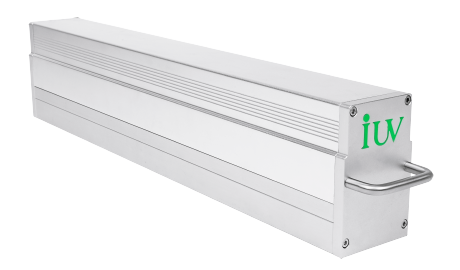
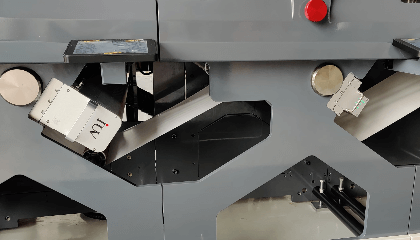
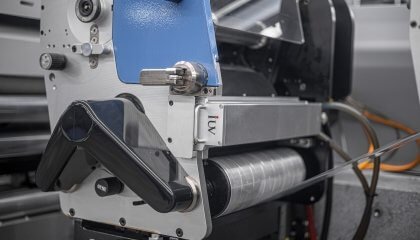
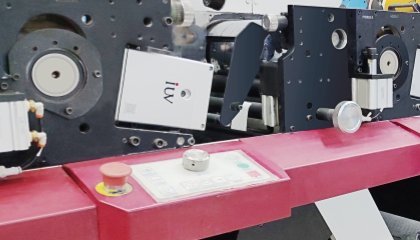
- UV Lamp Technology: Transitioning to LED UV curing systems offers significant advantages. LEDs provide a stable, consistent output of UV energy at specific wavelengths, unlike traditional mercury lamps that degrade over time and can fluctuate in intensity. This consistency translates directly to more repeatable curing and gloss levels.
- Dose Management: Instead of simply “on” or “off,” advanced UV systems allow for precise control over the UV dose delivered. This is typically managed by adjusting lamp power and press speed. The goal is to deliver the minimum effective dose required to fully cure the ink while avoiding over-curing, which can sometimes lead to yellowing or reduced gloss in certain formulations.
- Uniformity: The UV lamps must provide uniform energy output across the entire width of the web. Uneven exposure will result in localized variations in gloss. Ensure lamps are clean and regularly serviced.
- Wavelength Matching: Ensure the UV lamp’s output spectrum closely matches the absorption spectrum of the ink’s photoinitiators. LED systems excel here, as their narrow wavelength output can be precisely matched to ink requirements.
- Reflector Efficiency: For mercury lamp systems, the efficiency of the reflectors degrades over time. Regular cleaning and replacement are necessary. LED systems generally do not require reflective components in the same way.
4. Substrate Preparation and Handling
- Surface Treatment: If using substrates that are challenging for ink adhesion, consider appropriate pre-treatment methods like corona discharge to enhance surface energy.
- Environmental Control: Maintain a stable printing environment. Fluctuations in temperature and humidity can affect substrate properties and ink performance, indirectly impacting gloss.
Troubleshooting Common Gloss Issues
- Dull Spots or Patches: Often caused by uneven ink laydown, insufficient UV energy in specific areas, or contamination. Check anilox rolls/plates, UV lamp uniformity, and for any debris on the web.
- Tacky Surface: Indicates incomplete UV curing. Increase UV energy (lamp power or reduce speed), ensure correct wavelength, and check for obstructions blocking UV light.
- Yellowing or Discoloration: Can be a sign of over-curing or using the wrong UV wavelength with certain ink formulations. Adjust UV dose or consult with your ink supplier.
- Inconsistent Gloss Across the Roll: Points to process inconsistencies. Analyze ink viscosity, anilox/plate condition, impression settings, and UV lamp uniformity along the web path.
The Future of Gloss: Innovation in UV Ink and Curing
The pursuit of perfect, consistent gloss is an ongoing journey. Innovations in UV ink chemistry continue to yield formulations with enhanced reactivity and superior surface properties. Simultaneously, advancements in LED UV curing technology are providing printers with unprecedented control over the curing process. The ability to fine-tune UV dose, wavelength, and intensity allows for a level of predictability that was previously unattainable.
By understanding the intricate relationship between ink, substrate, printing process, and UV curing, and by implementing robust control strategies, label printers can consistently achieve the high-gloss finishes that elevate their products and impress their customers. This mastery of UV ink performance is not just about achieving a shiny surface; it’s about delivering a premium product that stands out in a crowded marketplace.