<!-- Meta Pixel Code --> <!-- 结束元像素代码 -->

A Technical Tutorial on Measuring UV Dose and Intensity in Label Production

A Technical Tutorial on Measuring UV Dose and Intensity in Label Production

Accurate measurement of UV dose and intensity is paramount in modern label production. This is especially true with the rise of UV LED curing technology, which offers significant advantages in terms of energy efficiency, speed, and environmental impact. Achieving consistent, high-quality prints relies heavily on understanding and controlling the UV energy delivered to the inks, coatings, and adhesives. This tutorial delves into the technical aspects of measuring UV dose and intensity, specifically within the context of label printing processes like flexography, offset lithography, and narrow web printing.

Understanding UV Dose and Intensity in Printing

Before diving into measurement techniques, it’s vital to grasp the fundamental concepts.

  • UV Intensity: This refers to the power of the UV light output per unit area, typically measured in Watts per square centimeter (W/cm²). Higher intensity means more UV energy is available at the substrate surface at any given moment.
  • UV Dose: This is the total amount of UV energy delivered to the substrate over a specific period. It’s calculated by multiplying UV intensity by the exposure time, resulting in units of Joules per square centimeter (J/cm²). A higher dose generally leads to more complete curing.

In label printing, achieving the correct UV dose is critical for several reasons:

  • Ink/Coating Curing: Insufficient dose results in uncured or undercured inks and coatings. This can lead to poor adhesion, scratch resistance issues, bleeding, and potential migration of uncured components.
  • Process Consistency: Variations in UV dose across a print run can cause inconsistencies in color, gloss, and performance properties of the labels.
  • Substrate Integrity: Excessive UV energy can degrade certain substrates, leading to yellowing or embrittlement.
  • Adhesive Bonding: For applications requiring UV-curable adhesives, proper dose ensures a strong and reliable bond.

Why Measurement is Crucial for Label Production

The diverse applications of labels, ranging from food and beverage packaging to industrial products, demand stringent quality control. In narrow web printing, where speeds are often high and print areas can be complex, precise control over UV curing is essential.

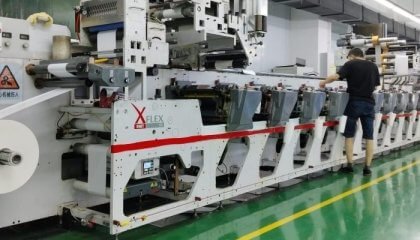
  • Flexographic Printing: This popular method for labels often involves multiple print stations. Each station may require different UV energy levels for its specific ink or coating. Accurate measurement ensures that each color and varnish is cured correctly without affecting subsequent stations or the substrate.
  • Offset Lithography (Narrow Web): While traditionally associated with sheetfed, narrow web offset is increasingly used for labels. UV curing in this context also requires precise energy delivery to achieve desired print properties and facilitate rapid finishing.
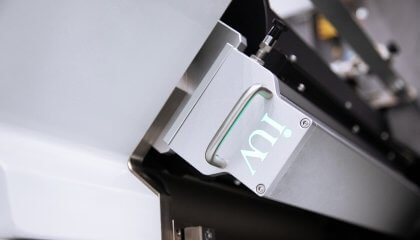
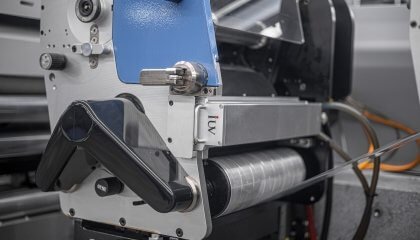
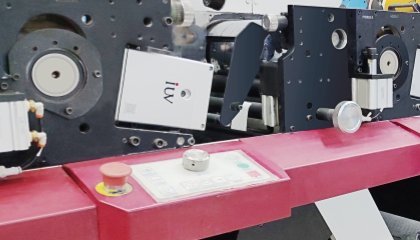
  • UV LED Curing: The shift towards UV LED curing systems in label printing offers targeted wavelengths and significant energy savings. However, it also necessitates understanding the specific output characteristics of LED lamps and how they translate to dose and intensity. Unlike traditional mercury vapor lamps, LEDs have a narrower spectral output, which can influence curing efficiency for different ink chemistries.

Tools for Measuring UV Dose and Intensity

Several types of instruments are available for measuring UV energy. The choice depends on the specific application, budget, and required accuracy.

1. Radiometers (UV Meters)

Radiometers are handheld devices that measure UV intensity at specific wavelengths or across a broad spectrum. They provide real-time readings of UV power output.

  • Types:
    • Broadband Radiometers: Measure across a wide range of UV wavelengths. Useful for initial setup and general monitoring.
    • Spectrally Specific Radiometers: Measure intensity at particular UV wavelength ranges (e.g., UVA, UVB, UVC). Crucial for inks and coatings formulated for specific wavelengths, common with LED curing.
  • Usage: Radiometers are typically placed directly under the UV lamp or at the substrate level during a setup or test run. They indicate the instantaneous power.
  • Limitations: Radiometers only measure intensity, not dose. To determine dose, you must multiply the intensity reading by the exposure time. They also don’t account for variations in spectral output that can occur with aging lamps or different LED arrays.

2. Integrators (UV Energy Meters)

Integrators are specialized devices that measure both UV intensity and exposure time to calculate the total UV dose. They are designed to be placed directly on the printing press, passing through the UV curing zone with the substrate.

  • How They Work: Integrators typically have a sensor that measures UV intensity and an internal timer. They record the intensity throughout their passage through the curing zone and integrate this over time to provide a cumulative dose reading in J/cm². Many integrators also display peak intensity.
  • Types:
    • Single-Channel Integrators: Measure the total UV energy.
    • Multi-Channel Integrators: Measure UV energy at different spectral bands simultaneously, which is particularly valuable for LED curing systems with specific wavelength outputs.
    • Data-Logging Integrators: Store measurement data for analysis and record-keeping.
  • Usage: These are the gold standard for ensuring consistent UV curing in production. An integrator is placed on the press and runs through the curing station as if it were a label. This provides a direct measurement of the energy delivered to the substrate.
  • Key Considerations:
    • Spectral Response: Ensure the integrator’s spectral response matches the UV output of your lamps and the sensitivity of your inks and coatings. This is especially important for UV LED systems, which often have narrow emission peaks.
    • Placement: The integrator should be placed on the substrate or a material of similar reflectivity and thickness to accurately represent the energy reaching the printed labels.
    • Calibration: Regular calibration is essential to maintain accuracy.

3. Spectrophotometers and Colorimeters (Indirect Measurement)

While not directly measuring UV dose or intensity, these instruments play a vital role in assessing the results of UV curing. They measure color, gloss, and other optical properties of the cured print.

  • Usage: After printing and curing, these devices can verify if the desired color reproduction, gloss level, and opacity have been achieved. If results are suboptimal, it can indicate a problem with the UV curing process, prompting the use of radiometers or integrators for diagnosis.
  • Benefits: They provide a direct link between the UV curing process and the final product quality. If color shifts or gloss differences are observed, it’s a clear signal to investigate the UV system.

Best Practices for Measuring UV Dose and Intensity in Label Printing

Implementing a robust measurement strategy will significantly improve your label production outcomes.

  1. Establish Baseline Measurements: Before commencing a print run, especially with new inks, coatings, or substrates, use a calibrated integrator to determine the optimal UV dose required for complete cure. This involves running tests and checking for adhesion, scratch resistance, and other critical properties.
  2. Understand Your UV System: Know the spectral output of your UV lamps (mercury vapor or LED), their intensity range, and the recommended curing parameters for your inks and coatings. Consult with ink manufacturers for their specific UV dose requirements.
  3. Match Integrator to Application: Select an integrator whose spectral range aligns with the UV output of your lamps and the absorption characteristics of your inks. For LED curing, multi-channel integrators that can measure specific wavelengths are highly recommended.
  4. Regular Calibration: Ensure your radiometers and integrators are calibrated annually by an accredited laboratory. This guarantees the accuracy of your measurements.
  5. In-Production Monitoring: Regularly use your integrator to check UV dose throughout the print run. Lamp output can degrade over time, and variations in web speed or power fluctuations can affect the delivered energy. Frequent checks ensure consistency.
  6. Correlate with Print Quality: Always link your UV measurements to tangible print quality. If you observe issues like poor adhesion, smudging, or incomplete cure, use your measurement tools to diagnose the problem. Conversely, if your measurements are within spec but quality is lacking, the issue might lie elsewhere (e.g., ink formulation, substrate condition).
  7. Consider Substrate Effects: Different substrates have varying UV reflectivity and transmittance. A measurement taken on a white synthetic label might differ from one taken on a clear film or a textured paper. Ensure your measurement reflects the actual substrate being used.
  8. Document Everything: Keep records of UV intensity and dose measurements, along with print quality checks, for each job. This creates a valuable historical database for troubleshooting and process optimization.

The Future of UV Curing Measurement in Label Production

As UV LED technology continues to evolve, so too will the methods for measuring its effectiveness. Advancements in sensor technology and data analytics will likely lead to more sophisticated, integrated systems for real-time monitoring and control. The ability to precisely control and verify UV energy delivery will remain a cornerstone of high-quality, efficient label production. By investing in the right measurement tools and implementing rigorous testing protocols, label printers can ensure consistent results, reduce waste, and capitalize on the full benefits of UV curing technology.

Contact IUV Curing Experts

滚动至顶部