<!-- Meta Pixel Code --> <!-- 结束元像素代码 -->

A Deep Dive into the Environmental Benefits of LED UV Curing for Labels

A Deep Dive into the Environmental Benefits of LED UV Curing for Labels

The label printing industry is constantly seeking innovative solutions that enhance efficiency, improve product quality, and, increasingly, minimize environmental impact. Within this landscape, LED UV curing technology has emerged as a transformative force, particularly for narrow web printing applications like labels. Moving beyond traditional UV curing methods, LED UV offers a compelling suite of environmental advantages that are reshaping how labels are produced.

Understanding UV Curing: The Foundation

Before delving into the specifics of LED UV, it’s helpful to understand the broader concept of UV curing. This process uses ultraviolet light to instantly dry or “cure” inks, coatings, and adhesives. When exposed to specific wavelengths of UV light, photoinitiators within the formulation absorb the energy and trigger a rapid polymerization reaction. This transforms the liquid into a solid, durable film. This immediate curing allows for faster production speeds and the ability to print on a wider range of substrates, including heat-sensitive materials, as the process generates very little heat compared to conventional drying methods.

The Evolution: From Mercury Lamps to LED UV

Historically, UV curing relied on mercury vapor lamps. While effective, these lamps presented several drawbacks from an environmental and operational standpoint. Mercury lamps consume significant amounts of energy, require a warm-up period, and have a relatively short lifespan, necessitating frequent replacement. Furthermore, they emit a broad spectrum of UV light, including wavelengths that are not essential for curing, leading to wasted energy. The disposal of mercury-containing lamps also poses environmental challenges.

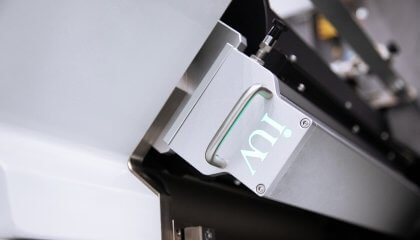
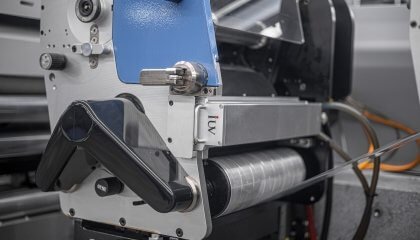
LED UV curing, on the other hand, utilizes Light Emitting Diodes (LEDs) as the UV light source. LEDs emit light at very specific wavelengths, precisely matched to the absorption peaks of the photoinitiators in UV-curable inks and coatings. This targeted emission is a game-changer for both efficiency and environmental sustainability.

Environmental Advantages of LED UV Curing for Labels

The shift to LED UV technology in label printing, whether through flexographic, offset, or other narrow web processes, unlocks a cascade of environmental benefits.

Energy Efficiency: A Greener Footprint

One of the most significant environmental advantages of LED UV curing is its remarkable energy efficiency. Compared to traditional mercury lamps, LED UV systems consume substantially less electricity. Estimates suggest that LEDs can be up to 70-80% more energy-efficient. This reduced energy consumption directly translates to a lower carbon footprint for label printers. For flexographic and offset presses operating in narrow web environments, where energy usage can be a considerable operating cost, this efficiency boost is not only economically beneficial but also environmentally responsible.

Reduced VOC Emissions: Cleaner Air

Volatile Organic Compounds (VOCs) are a major concern in the printing industry due to their contribution to air pollution and potential health hazards. Traditional solvent-based inks release VOCs as they dry. While UV-curable inks are generally low in VOCs compared to solvent-based alternatives, the efficiency of LED UV curing further minimizes any residual emissions. The instant, thorough curing achieved by LEDs ensures that the ink solidifies completely, leaving virtually no unreacted components or solvents to evaporate into the atmosphere. This is particularly important for label printing, where end products may be used on food packaging or other sensitive applications.

No Mercury Content: Safer Disposal

As mentioned earlier, mercury vapor lamps contain mercury, a toxic heavy metal. The handling, maintenance, and disposal of these lamps require strict protocols to prevent environmental contamination. LED UV systems, by their nature, contain no mercury. This eliminates the environmental risks associated with mercury disposal and simplifies waste management for printing facilities. This is a crucial benefit for companies committed to sustainable manufacturing practices.

Extended Lamp Lifespan: Less Waste

LED UV lamps boast an exceptionally long operational lifespan, often tens of thousands of hours, compared to the few thousand hours typically offered by mercury lamps. This extended lifespan means fewer lamp replacements are needed over the equipment’s operational life. Consequently, the volume of waste generated from discarded lamps is significantly reduced. This not only cuts down on material waste but also reduces the logistical burden and associated environmental impact of frequent replacements and disposal.

Lower Heat Generation: Substrate Versatility and Energy Savings

While UV curing in general produces less heat than thermal drying, LED UV curing does so even more efficiently. The focused, specific wavelengths of light mean less wasted energy is converted into heat. This lower heat output is advantageous for printing on heat-sensitive substrates, such as thin films or certain plastics commonly used in label applications. It prevents substrate distortion or damage, expanding the range of materials that can be printed without compromising quality. Furthermore, lower heat generation means less demand on facility cooling systems, contributing to further energy savings.

Optimized Ink and Coating Formulations: Performance and Sustainability

The precise wavelengths emitted by LED UV systems allow ink and coating manufacturers to develop more efficient formulations. Photoinitiators can be optimized for specific LED outputs, leading to faster cure speeds, improved adhesion, and enhanced durability. This optimization can also lead to the development of inks and coatings with reduced raw material content or those based on more sustainable components, further bolstering the environmental credentials of the overall printing process.

LED UV in Different Label Printing Processes

The benefits of LED UV curing are readily applicable across various label printing technologies.

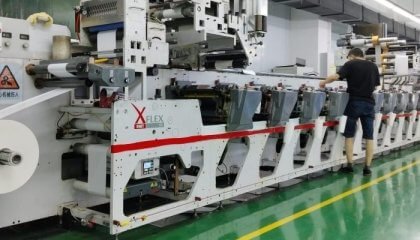
  • Flexographic Printing: For narrow web flexo presses, LED UV curing is a natural fit. It allows for faster press speeds, sharper print definition, and the ability to achieve excellent results on a wide array of substrates, all while maintaining a low environmental impact. The instant curing prevents ink transfer between rolls and allows for immediate finishing operations.
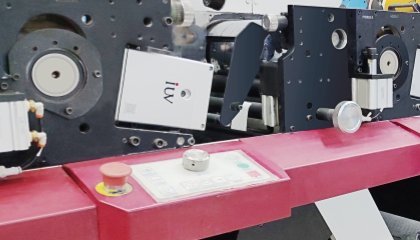
  • Offset Printing (Narrow Web): In narrow web offset printing, LED UV curing enables high-quality, vibrant prints with excellent ink adhesion. It eliminates the need for inter-deck drying units that consume significant energy and space, streamlining the printing process and reducing its environmental footprint.
  • Other Narrow Web Technologies: Whether it’s digital printing with UV-curable inks or other specialized narrow web processes, LED UV provides a cleaner, more energy-efficient curing solution.

Conclusion: A Sustainable Choice for Label Printing

The adoption of LED UV curing technology in the label printing industry represents a significant step towards greater environmental responsibility. Its exceptional energy efficiency, drastic reduction in VOC emissions, absence of mercury, extended lamp life, and lower heat generation collectively contribute to a more sustainable printing process. For label converters, especially those utilizing narrow web flexographic and offset presses, embracing LED UV is not just a technological upgrade; it’s a commitment to reducing their environmental impact, enhancing operational efficiency, and meeting the growing demand for eco-friendly printed products. As the industry continues to evolve, LED UV curing stands out as a powerful and environmentally conscious solution for the future of label printing.

Contact IUV Curing Experts

滚动至顶部