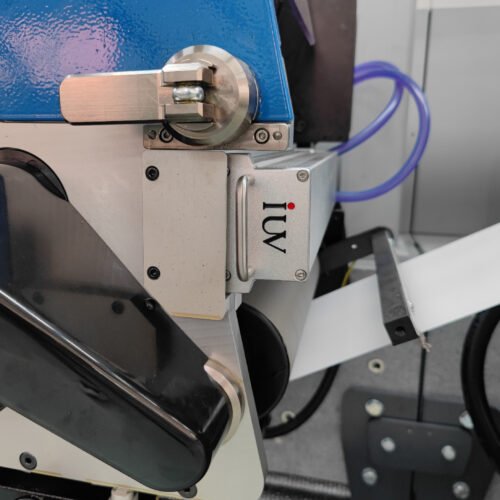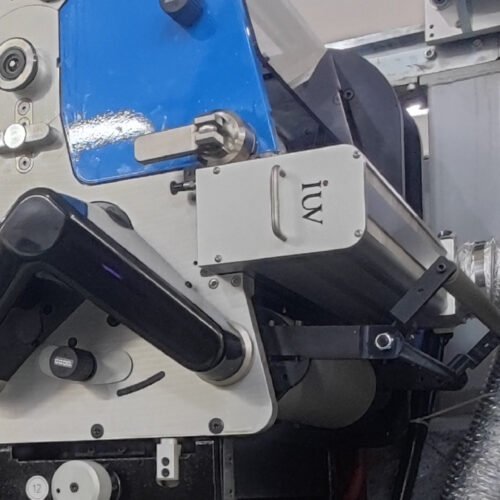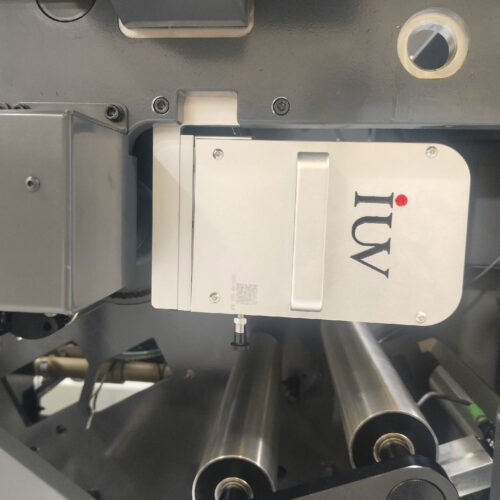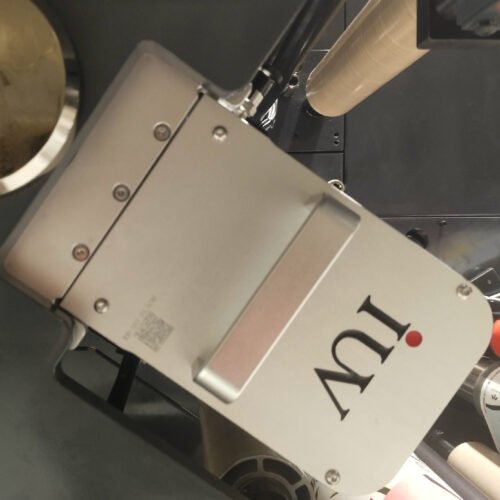
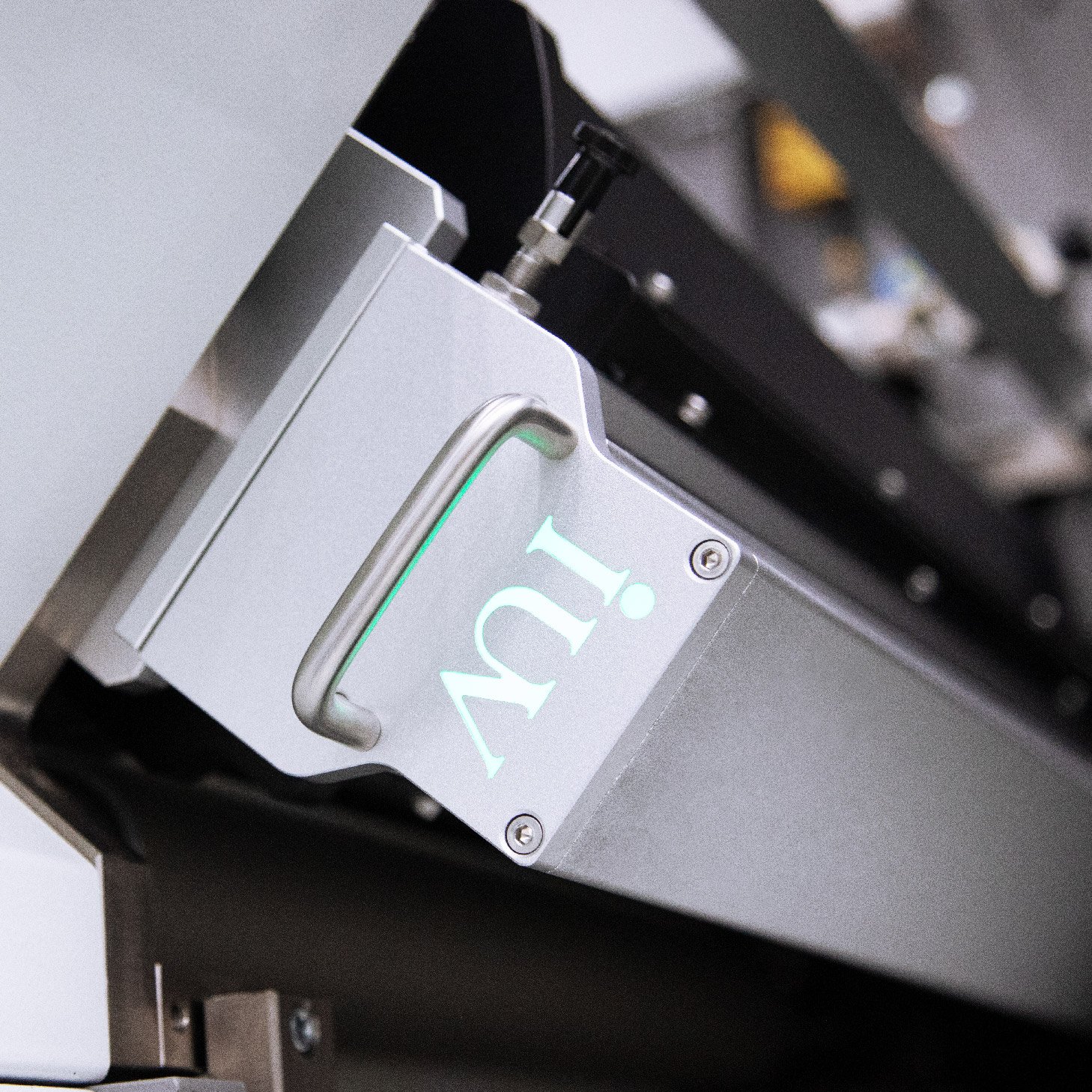
As LED UV curing becomes standard in label, flexographic, and narrow web printing, process control increasingly depends on accurate energy measurement rather than nominal lamp settings. High-speed presses operate with tight curing margins, short exposure windows, and demanding quality targets. Under these conditions, relying on preset power values is no longer sufficient. High-speed radiometers provide direct insight into how UV intensity is actually delivered across the print width.
Profiling LED UV intensity transversely allows printers and engineers to detect non-uniform curing conditions that are invisible during normal operation. Variations across the web can lead to uneven surface cure, color shifts, gloss differences, and die-cutting instability. Radiometric profiling converts these hidden variables into measurable data, supporting informed adjustments and repeatable results.
Understanding What High-Speed Radiometers Measure
High-speed radiometers are designed to capture UV irradiance and energy dose under dynamic press conditions. Unlike static sensors, they sample UV output at high frequency, allowing accurate measurement at production speeds. Most radiometers used in LED UV applications focus on UVA wavelengths, typically between 365 nm and 405 nm, which correspond to common LED curing spectra.
Irradiance represents instantaneous intensity, expressed in W/cm², while energy dose represents cumulative exposure, expressed in J/cm². For transverse profiling, irradiance distribution is often the primary focus, as it reveals how evenly energy is delivered from edge to edge. Both parameters are valuable when evaluating curing performance on labels and films.
Selecting the Right Radiometer for Transverse Profiling
Not all radiometers are suitable for profiling across the print width. Devices must support fast sampling rates to capture LED UV output at high web speeds. Insufficient sampling leads to averaged readings that mask local peaks and valleys in intensity.
Sensor size and optical acceptance angle also influence measurement accuracy. A sensor that is too large may smooth out local variations, while one that is too small may exaggerate minor fluctuations. For label printing, radiometers designed specifically for LED UV systems offer the best balance between resolution and practicality.
Preparing the Press for Radiometric Measurement
Before profiling begins, the press must be configured to represent normal production conditions. This includes standard press speed, typical curing power settings, and normal working distance between the LED UV head and the substrate path. Any deviation from production setup reduces the relevance of collected data.
The web path should be stable, with consistent tension and tracking. Vibrations or lateral movement during measurement can distort transverse profiles. For accurate results, measurements should be taken with the press running steadily, avoiding acceleration or deceleration phases unless those conditions are specifically under evaluation.
Positioning the Radiometer Across the Print Width
Transverse profiling requires systematic movement of the radiometer across the web width. This can be done manually by repositioning the sensor between runs or using a dedicated traverse system that moves the sensor laterally during operation. The goal is to collect intensity data at defined intervals from one edge of the web to the other.
Measurement spacing should reflect the required resolution. In narrow web printing, intervals of 10 to 20 millimeters are often sufficient. For wider formats, tighter spacing may be needed to capture subtle variations between lanes. Consistent positioning ensures that profiles are comparable between runs.
Capturing Data at Production Speed
High-speed radiometers must be synchronized with press speed to ensure meaningful data. Measurements should be taken at the same speed used for actual label production. Slower test speeds may artificially improve uniformity by increasing exposure time, masking issues that appear at full speed.
During data capture, it is important to maintain steady conditions for each transverse position. Allowing the system to stabilize before recording ensures that transient fluctuations do not skew results. Multiple passes can be averaged to improve confidence in the measured profile.
Interpreting Transverse Intensity Profiles
Once data is collected, transverse profiles reveal how LED UV intensity varies across the print width. An ideal profile shows minimal deviation from center to edge, indicating uniform curing conditions. Real-world profiles often show gradual roll-off near edges or localized dips corresponding to diode spacing or optical transitions.
Interpreting these patterns requires understanding of the LED UV head design. Regularly spaced peaks may reflect individual diode contributions, while broader trends may indicate optical or mechanical alignment effects. The key is identifying variations that exceed acceptable curing tolerances for the specific ink and substrate combination.
Linking Radiometric Data to Print Performance
Radiometric profiles become most valuable when correlated with print results. Areas showing lower intensity often correspond to softer ink surfaces, reduced scratch resistance, or poor die-cutting performance. Higher intensity zones may show increased gloss, color density shifts, or substrate stress.
By comparing transverse intensity data with print inspection results, engineers can define acceptable intensity ranges and identify thresholds beyond which quality degrades. This correlation transforms radiometric measurement from a diagnostic exercise into a practical process control tool.
Diagnosing Common Causes of Transverse Non-Uniformity
Several factors can cause uneven LED UV intensity across the web. Diode spacing variations, optical lens contamination, mechanical misalignment, and cooling-related output differences all contribute to transverse profiles. Radiometric data helps distinguish between these causes.
Sharp localized drops in intensity often point to individual diode or optic issues. Gradual gradients may indicate working distance variation or head alignment problems. Understanding these signatures accelerates troubleshooting and reduces downtime.
Using Profiling Data to Optimize LED UV Setup
Once transverse variations are identified, profiling data guides corrective actions. Adjustments may include realigning the LED UV head, cleaning or replacing optics, modifying working distance, or adjusting power distribution if supported by the system.
In some cases, data may indicate that curing margins are insufficient for the current application. This insight supports informed decisions about power settings, press speed limits, or ink selection. Profiling ensures that changes are based on measured reality rather than assumptions.
Profiling for Pinning and Inter-Station Applications
In flexographic presses using LED UV pinning, transverse consistency is critical for stable ink trapping. Profiling pinning lamps reveals whether energy is evenly distributed across the web before overprinting. Uneven pinning can cause color shifts and registration issues that compound through subsequent stations.
By profiling both pinning and final cure lamps, printers gain a complete picture of curing behavior throughout the press. This comprehensive approach supports higher quality and more predictable results in multi-color label printing.
Establishing Baselines and Trend Monitoring
Radiometric profiling is most effective when used regularly rather than as a one-time check. Establishing baseline profiles for each LED UV system creates a reference against which future measurements can be compared. Deviations from baseline indicate changes in system performance.
Trend monitoring helps detect gradual output decline, optical degradation, or cooling issues before they impact production. For high-utilization label presses, this proactive approach supports consistent quality and reduces unplanned maintenance.
Integrating Radiometric Profiling into Quality Systems
For operations with strict quality requirements, transverse UV profiling can be integrated into broader process control strategies. Documented profiles support internal audits, customer validation, and process optimization initiatives.
Radiometric data provides objective evidence that curing conditions meet defined standards. This documentation is especially valuable when producing labels for regulated markets where consistency and traceability are essential.
Practical Value for Label and Narrow Web Printers
Using high-speed radiometers to profile LED UV intensity across the print width gives printers direct control over a critical variable in curing performance. Instead of reacting to print defects, operators can identify and correct root causes based on measured data.
In label, flexographic, and narrow web printing, this capability supports higher speeds, wider formats, and more demanding applications. Radiometric profiling turns LED UV curing from a fixed setting into a controlled, verifiable process aligned with modern production needs.