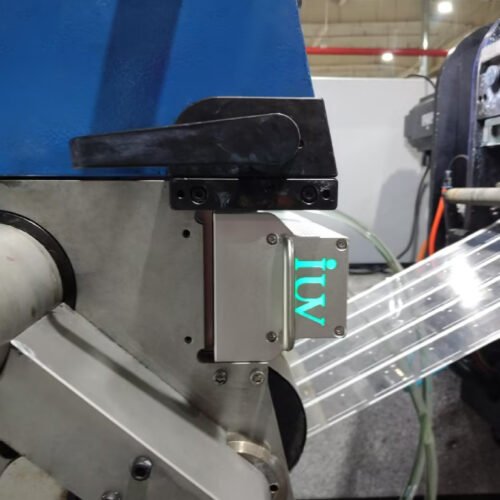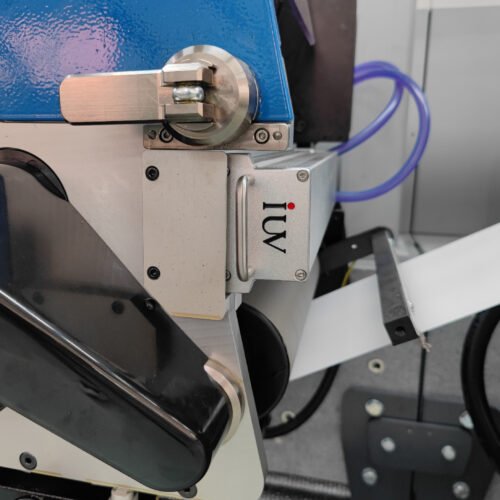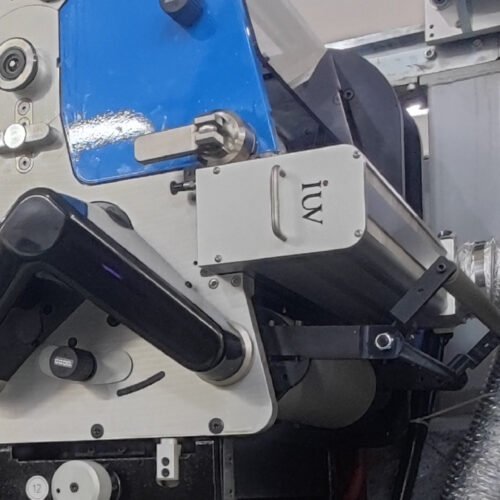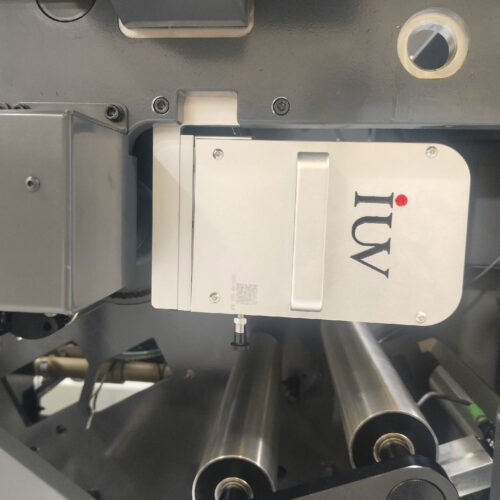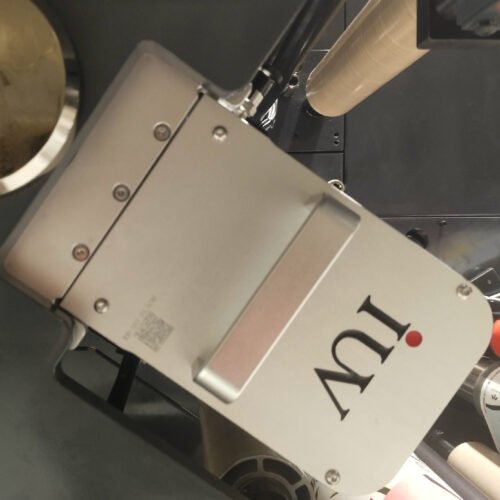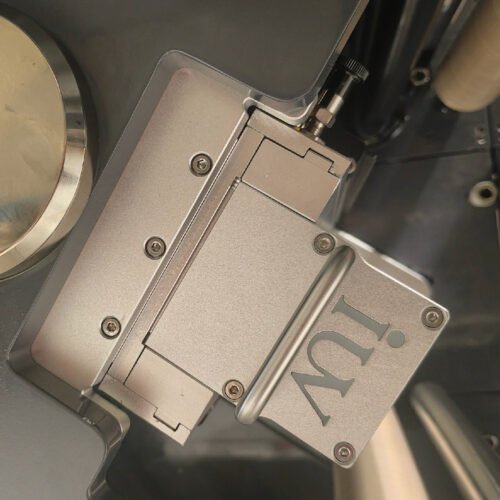

UV LED curing has become a core technology in narrow web label printing due to its energy efficiency, spectral stability, and compatibility with modern ink systems. In flexographic and letterpress label production, especially for high-value applications, UV LED curing supports consistent quality while reducing heat stress on sensitive substrates. However, when printing on textured or structured materials, shadowing effects can compromise curing uniformity and long-term performance.
Shadowing is one of the most common yet misunderstood challenges in UV LED curing for narrow web applications. It directly affects ink adhesion, abrasion resistance, odor, and migration behavior. This guide explains why UV LED shadowing occurs, how it impacts label printing, and how to troubleshoot it effectively to achieve true 360-degree curing on textured substrates.
What Is UV LED Shadowing in Narrow Web Printing
UV LED shadowing occurs when parts of the printed ink film receive insufficient UV exposure due to physical obstructions, surface geometry, or directional light limitations. Unlike conventional mercury lamps, UV LED systems emit collimated light with a narrow beam angle. This characteristic improves efficiency but reduces the ability of UV light to wrap around raised or recessed surfaces.
In label printing, shadowing often appears on embossed materials, rough papers, structured films, and substrates with deep surface profiles. Ink located in recessed areas or behind surface features may not receive enough UV energy, leading to incomplete polymerization.
Why Shadowing Is More Pronounced with UV LED Technology
UV LED curing systems emit light in a narrow wavelength band and with limited angular dispersion. While this is ideal for controlled curing, it reduces the scattering effect that helped traditional arc lamps reach complex geometries.
In narrow web flexo and letterpress printing, shadowing becomes more visible due to thin ink films, high press speeds, and the use of textured substrates for premium label designs. When curing relies on a single irradiation direction, areas shielded by surface features remain under-cured even if peak irradiance values appear sufficient.
Common Substrates Affected by UV LED Shadowing
Textured narrow web substrates are increasingly popular in label printing. These materials enhance shelf appeal but create curing challenges. Common examples include laid papers, embossed papers, tactile varnished films, synthetic materials with micro-textures, and structured laminates.
On these substrates, ink film thickness varies across peaks and valleys. UV exposure may fully cure ink on raised areas while leaving ink in recessed zones partially reactive. This imbalance can cause long-term durability issues even when initial visual inspection appears acceptable.
How Shadowing Impacts Print Quality and Compliance
Shadowing affects more than surface appearance. Under-cured ink in recessed areas can reduce adhesion, increase rub sensitivity, and generate residual odor. In food and pharmaceutical labeling, these issues raise concerns about migration and regulatory compliance.
In flexographic printing, shadowing can also affect interstation adhesion, especially when printing multiple layers or applying overprint varnishes. In letterpress applications, it may cause inconsistent gloss and mechanical weakness in fine details.
Identifying UV LED Shadowing on Press
Shadowing is not always visible immediately after printing. Standard visual checks may fail to detect curing deficiencies in recessed areas. Effective identification requires a combination of observation and testing.
Pay attention to uneven rub resistance, localized adhesion failures, and odor persistence after curing. Structured substrates that pass flat-surface tests but fail after converting or application are often affected by shadowing. Microscopic inspection can reveal differences in ink cure between peaks and valleys.
Understanding the Role of Irradiance and Exposure Angle
Irradiance alone does not guarantee uniform curing. High peak intensity can cure exposed surfaces rapidly while leaving shaded areas under-cured. In UV LED systems, exposure angle is just as important as total energy.
Narrow beam angles limit light penetration into textured features. When UV energy approaches the surface from a single direction, recessed ink areas receive reduced photon exposure. Achieving uniform curing requires managing both irradiance distribution and exposure geometry.
Press Configuration Factors That Increase Shadowing Risk
Several press-related factors can worsen shadowing in narrow web printing. Excessive press speed reduces exposure time, limiting energy penetration into recessed areas. Large lamp-to-substrate distances reduce angular coverage, increasing shadow depth.
Anilox selection also plays a role. Higher-volume anilox rolls deposit thicker ink films, increasing the challenge of curing ink in textured regions. Improper lamp positioning relative to the print station can further restrict effective light access.
Practical Strategies to Reduce UV LED Shadowing
Achieving uniform curing on textured substrates requires process optimization rather than simply increasing lamp power. One effective approach is reducing press speed to increase energy density without raising peak irradiance. This allows UV energy more time to penetrate shaded areas.
Adjusting lamp positioning can also improve results. Reducing the distance between the UV LED head and the substrate increases angular coverage and minimizes shadow depth. In some cases, using multiple curing heads at different positions improves exposure uniformity.
Ink formulation should not be overlooked. Low-migration inks with optimized photoinitiator systems are often more tolerant of complex curing conditions. Working closely with ink suppliers to select formulations designed for LED curing on textured substrates can significantly reduce shadowing effects.
The Role of Multi-Angle and Secondary Curing
For demanding applications, secondary curing strategies can improve 360-degree curing performance. Adding an additional UV LED unit downstream, positioned at a different angle, helps expose shaded regions that were missed during initial curing.
In narrow web presses, integrating curing at multiple stations or after varnish application can improve overall polymerization. This approach is especially effective for tactile coatings, heavy whites, and structured label stocks.
Verifying Uniform Cure Performance
Verification should go beyond surface checks. Conduct adhesion and rub tests after converting, not only at the press. Odor evaluation after aging provides insight into residual reactivity in shaded areas.
For food-grade labels, migration and extraction testing remains the final validation step. Uniform curing across textured surfaces reduces the risk of localized migration caused by under-cured ink pockets.
Long-Term Process Control for Textured Substrates
Once shadowing issues are resolved, maintaining consistency is critical. Regular irradiance measurements, lamp alignment checks, and substrate-specific process documentation help prevent recurrence.
Operators should be trained to recognize substrates that require adjusted curing parameters. Documented curing windows for textured materials reduce setup time and minimize trial-and-error adjustments during production.
Conclusion
UV LED shadowing is a predictable and manageable challenge in narrow web label printing. It arises from the interaction between directional UV light and complex substrate geometry rather than from insufficient lamp power alone.
By understanding how shadowing affects curing on textured substrates and applying targeted process adjustments, printers can achieve uniform 360-degree curing. Proper control of irradiance, exposure geometry, press speed, and ink formulation ensures reliable performance in flexographic and letterpress label production.
When addressed systematically, UV LED curing delivers consistent quality, regulatory confidence, and long-term durability even on the most demanding narrow web substrates.