Labels destined for industrial, automotive, or outdoor use face a relentless battery of stressors. High-performance labels must survive exposure to aggressive chemicals, extreme temperature fluctuations, and constant mechanical abrasion. In the world of narrow web flexo and offset printing, the secret to this resilience is not found in the ink alone. It lies in the precision of the UV curing process.
Proper UV curing transforms liquid ink into a robust, cross-linked polymer film in milliseconds. However, achieving a “shelf-stable” cure is different from achieving an “industrial-grade” cure. For engineers and print shop managers, understanding the nuances of UV and LED curing technology is the primary step toward reducing field failures and ensuring long-term adhesion.
The Technical Reality of UV Polymerization
At its core, UV curing is a photochemical reaction. When UV ink or varnish is exposed to specific wavelengths of light, photoinitiators within the liquid absorb that energy. They fragment into free radicals, which then force the monomers and oligomers to link together. This creates a dense, three-dimensional network.
In harsh environments, the density of this cross-linking determines the label’s fate. If the cure is incomplete, unreacted monomers remain trapped within the ink layer. These “free” molecules can migrate to the substrate interface, weakening the bond. Worse, they leave the ink film porous. Chemicals and solvents can then penetrate the ink, leading to swelling, softening, and eventual delamination.
Bridging the Gap: Flexo and Offset Curing Dynamics
Narrow web converters often juggle different printing methods depending on the job requirements. Flexographic printing dominates the label space due to its high speed and versatility. Here, the ink film thickness is relatively high compared to offset. This thickness presents a challenge for UV curing. The UV light must penetrate through the pigmented layer to reach the very bottom of the ink film. If the light intensity is too low, the surface may feel dry, but the base remains liquid. This “undercure” is a leading cause of ink flaking when the label is flexed or exposed to moisture.
Offset printing, by contrast, uses much thinner ink films. While penetration is easier, offset inks are highly sensitive to oxygen inhibition. Oxygen in the air can quench the free radicals at the surface, leaving a microscopic “tacky” layer. In a warehouse setting, these labels might stick together or scuff during shipping. In a harsh environment, this poorly cured surface acts as a magnet for dust and corrosive agents.
The Shift to LED UV Technology
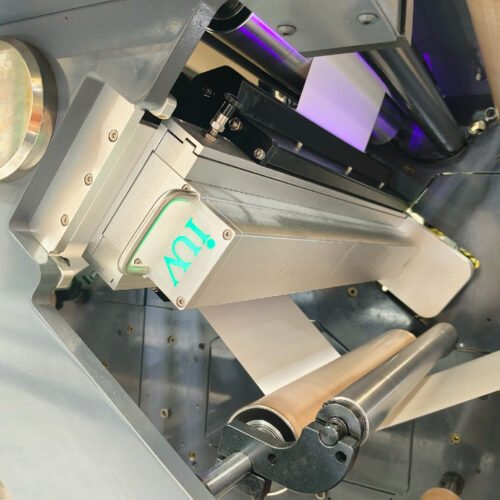
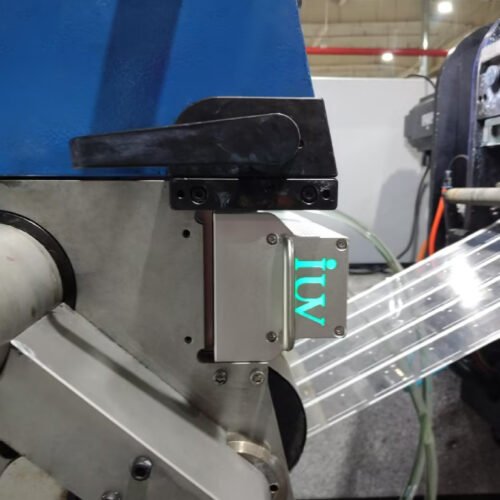
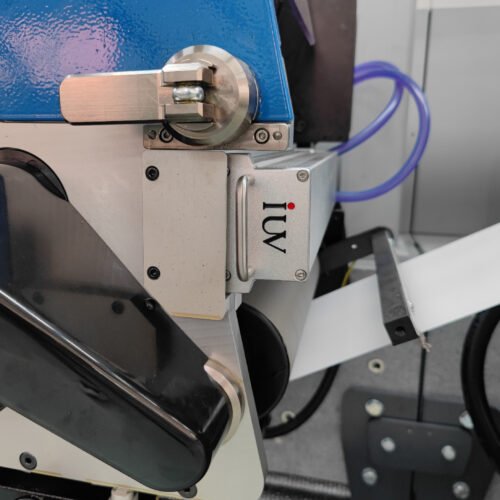
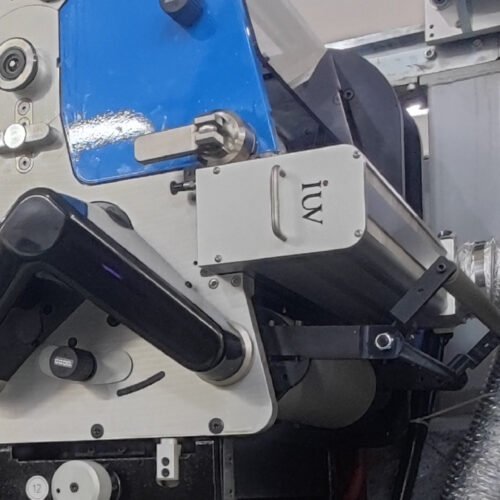
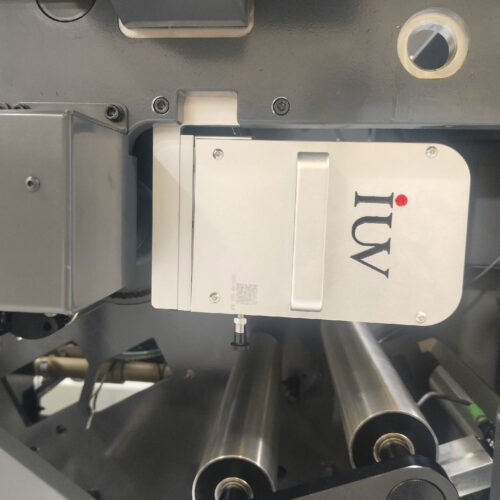
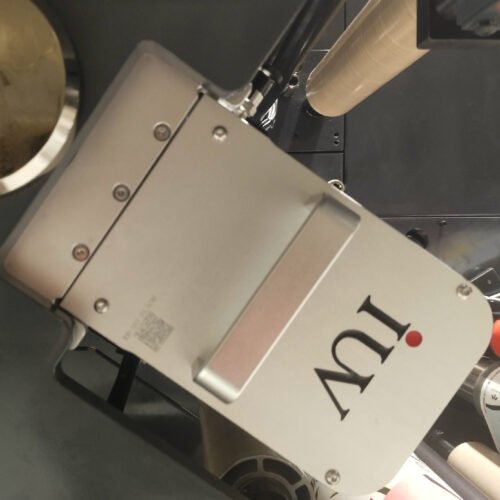
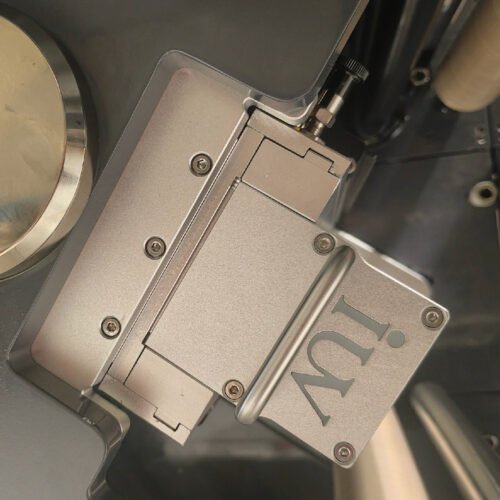
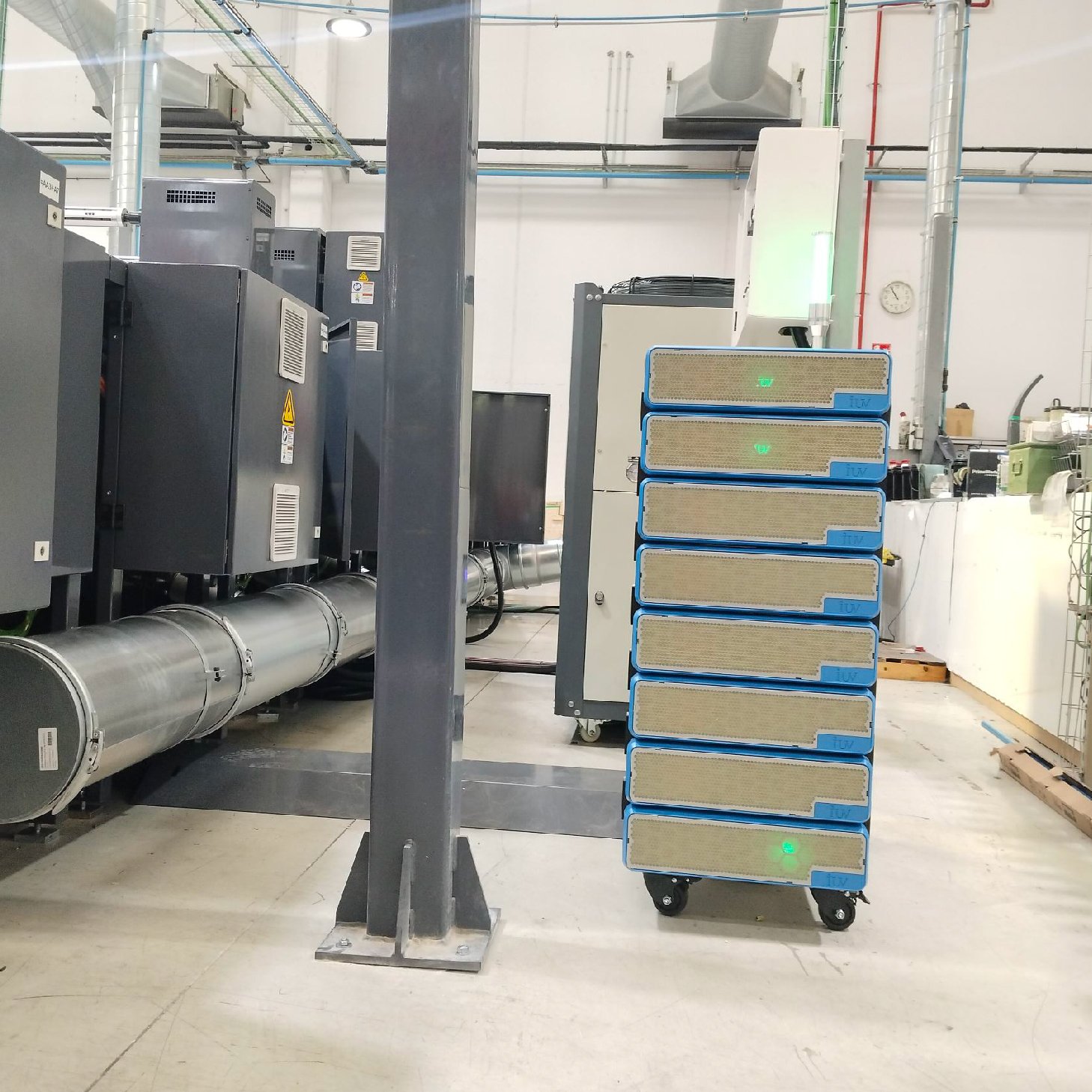
The adoption of LED UV curing has redefined what is possible in narrow web printing. Traditional mercury vapor lamps emit a broad spectrum of light, including a significant amount of infrared (IR) heat. While effective, this heat can distort thin, heat-sensitive films like PE or PP.
LED UV systems emit a narrow, concentrated band of light, typically at 365nm, 385nm, or 395nm. This monochromatic output offers several advantages for harsh-environment labels:
- Deep Penetration: The longer wavelengths of LED light (particularly 395nm) penetrate more effectively through opaque whites and dense blacks than the short-wave UVC found in mercury lamps. This ensures a consistent cure from the surface to the substrate.
- Substrate Integrity: Since LEDs generate very little heat on the web, converters can use thinner, more cost-effective films without the risk of stretching or shrinking. A stable substrate provides a better foundation for ink adhesion.
- Consistency: Mercury lamps degrade over time, losing intensity and shifting their spectral output. LEDs provide a stable light intensity for tens of thousands of hours. For a brand owner, this means the label printed today will have the exact same chemical resistance as the label printed six months from now.
Resistance Factors: Chemicals and Weathering
When a label is applied to a chemical drum or an engine component, it must resist solvents like brake fluid, gasoline, or industrial cleaners. The key to this resistance is “Cross-Link Density.”
A properly cured UV ink forms a shield that is chemically inert. If the curing parameters—specifically the dose (total energy) and irradiance (peak power)—are optimized, the polymer chains are so tightly packed that solvent molecules cannot find a way in.
Weatherability is another factor. Labels used outdoors face UV radiation from the sun, which can continue the polymerization process, eventually making the ink brittle. High-quality UV curing during the printing process “finishes” the reaction correctly, using stabilizers and high-grade oligomers that prevent the ink from cracking or yellowing under the sun’s rays.
Managing the “Dose vs. Intensity” Balance
One common mistake in the pressroom is equating “fast” with “cured.” An engineer must distinguish between irradiance and energy density.
- Irradiance (Intensity): This is the “brightness” of the light. High intensity is required to kickstart the reaction and overcome oxygen inhibition at the surface.
- Energy Density (Dose): This is the total amount of light the ink “sees” as it passes under the lamp. Dose is a function of time and intensity.
For labels in harsh environments, a high dose is often required to ensure every photoinitiator has been activated. If the press speed is too high for the lamp’s output, the total energy density will be insufficient. The labels might pass a simple “thumb twist” test in the lab, but they will fail a 24-hour chemical soak test in the field.
Surface Tension and Adhesion
In narrow web printing, the relationship between the ink and the substrate is delicate. Harsh environments often involve vibration or thermal expansion, which puts mechanical stress on the ink-to-film bond.
Proper UV curing ensures that the ink “locks” into the surface energy of the substrate. If using LED, the specific ink formulation must be matched to the LED wavelength. Using a standard mercury-bulb ink with an LED lamp often results in “surface-only” curing. This leaves a weak boundary layer at the substrate, causing the ink to peel off in large flakes when exposed to cold temperatures or high humidity.
The Role of Monitoring and Radiometry
You cannot manage what you do not measure. In high-stakes label production, relying on factory settings for UV lamps is a risk. Professional engineers use radiometers to map the output of their curing systems.
Regular radiometry checks ensure that the lamps are still performing at the required levels. If the reflectors in a mercury system are dusty, or if an LED module has failed, the irradiance will drop. This drop might not be visible to the eye, but it will significantly degrade the chemical resistance of the finished label. Establishing a “process window”—a range of acceptable UV power for a specific ink and substrate combination—is the only way to guarantee performance in harsh environments.
Solving Common Curing Failures
When a label fails in a harsh environment, the investigation often leads back to the curing station. Common issues include:
- Brittle Ink: This is often the result of over-curing. Too much UV energy can cause the polymer chains to become too rigid, leading to cracking when the label is applied to a curved surface.
- Low Chemical Resistance: Usually caused by under-curing or “oxygen inhibition.” The surface remains porous.
- Ink Transfer/Ghosting: This happens when the ink is not cured through to the bottom. In a roll, the uncured ink sticks to the back of the liner.
To solve these, engineers must adjust the balance of lamp power and press speed. Sometimes, the solution involves changing the photoinitiator package in the ink to better match the light source’s spectral output.
Conclusion: The Bottom Line for Converters
In the competitive landscape of label and narrow web printing, the ability to produce labels for “harsh environments” is a high-value capability. It allows converters to move away from commodity work and into specialized industrial markets.
Proper UV curing is the bridge between a standard label and a high-performance industrial component. By focusing on the science of polymerization, leveraging the stability of LED technology, and maintaining rigorous process control through radiometry, printers can ensure their products withstand the toughest conditions.
The goal is not just to dry the ink, but to engineer a polymer shield that stays vibrant and adhered, regardless of the heat, chemicals, or wear it encounters. Investing in the right curing strategy is, ultimately, an investment in the brand’s reputation for quality.