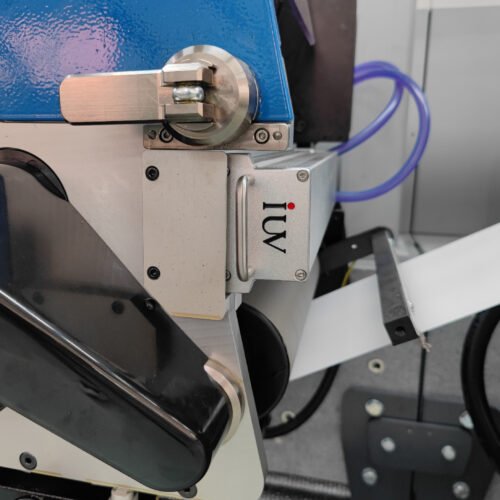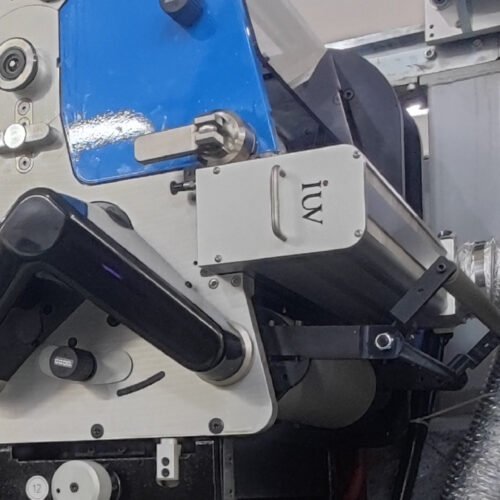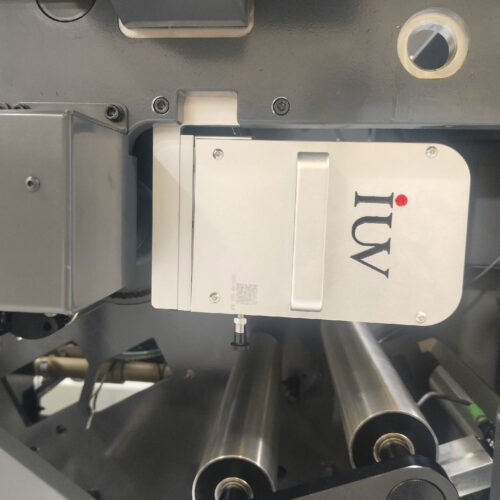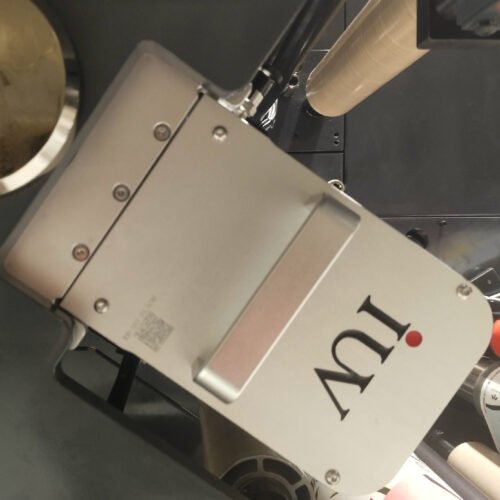
Compact narrow web presses dominate the label and flexible packaging sectors. These machines require high precision within a limited physical footprint. Engineers face a constant challenge: achieving high-speed production while ensuring total ink polymerization. Optimization of the UV curing process directly dictates line speed, adhesion quality, and substrate integrity. This guide breaks down the technical variables required to master UV and LED curing in narrow web environments.
The Shift from Mercury Arc to LED Technology
Traditional narrow web presses long relied on medium-pressure mercury arc lamps. These lamps provide a broad spectral output across UV-A, UV-B, and UV-C wavelengths. This breadth allows for effective surface curing and deep through-curing. However, mercury lamps generate significant infrared (IR) heat. In compact presses, this heat can distort thin films and heat-sensitive labels.
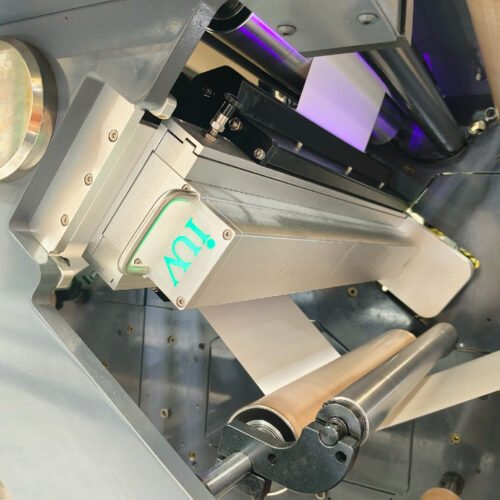
LED UV technology has changed the engineering landscape. LED systems emit a narrow band of UV-A, typically at 365nm or 395nm. They eliminate IR radiation, making them ideal for heat-sensitive substrates. Transitioning to LED requires a shift in how engineers view ink chemistry. Photoinitiators must be specifically tuned to the narrow peak of the LED output to ensure a complete reaction.
Understanding Irradiance vs. Energy Density
Two metrics define curing success: irradiance and energy density (dose). Engineers often confuse these terms, leading to inconsistent results.
Irradiance refers to the peak power of the light hitting the surface. It is measured in Watts per square centimeter. High irradiance is necessary to overcome oxygen inhibition at the ink surface. If irradiance is too low, the surface remains tacky, even if the lower layers are dry.
Energy Density, or dose, represents the total energy delivered over time. It is measured in Joules per square centimeter . Dose depends directly on press speed. If you double the press speed, the dose is halved. Engineers must ensure the dose remains above the minimum threshold for full adhesion at maximum production speeds.
Optimizing Curing for Flexographic Label Printing
Flexo printing involves thin ink films, usually between 1 to 2 microns. Because the film is thin, UV light penetrates easily. The primary challenge here is surface curing. Oxygen in the air inhibits the free radical polymerization process.
In compact flexo presses, the distance between the and the substrate is often very short. Engineers should maintain a consistent focal point. If the lamp or reflector is slightly out of alignment, irradiance drops significantly. For LED systems, the “drop-off” of light intensity over distance is more pronounced than with focused arc lamps. Keeping the LED head within 10-15mm of the web is standard practice for peak efficiency.
Challenges in Narrow Web Offset Curing
Narrow web offset printing uses much higher viscosity inks compared to flexo. These inks are applied in thicker layers or via complex water-ink balances. UV offset inks require high-intensity light to penetrate the pigment load, especially with whites and blacks.
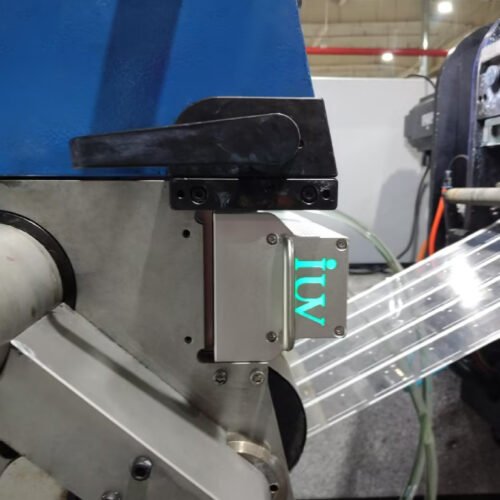
In an offset configuration, the curing stations are integrated between printing units. Space is at a premium. Small, high-output LED bars are often the only viable solution for modern compact offset presses. Engineers must monitor the temperature of the rollers near the curing zone. Even though LED is “cold” light, the UV reaction itself is exothermic. Heat can build up in the press frame, affecting ink rheology and dot gain.
Managing Substrate Temperature and Stability
Compact presses often run specialized materials like shrink sleeves, BOPP, and thermal papers. These materials have low heat deflection temperatures. Excessive heat from a mercury lamp causes the web to stretch, leading to registration errors.
To optimize this, engineers use “cool” UV systems. These include dichroic reflectors that absorb IR radiation while reflecting UV light. In LED setups, the cooling system is usually integrated via water-cooled chill plates or high-velocity air. Water-cooling is generally superior for compact narrow web designs. It allows for a smaller lamphead footprint and more stable operating temperatures during long runs.
The Role of Photoinitiator Matching
You cannot simply swap a mercury lamp for an LED bar without adjusting the ink. Standard UV inks are designed for the broad spectrum of arc lamps. LED-curable inks contain photoinitiators that peak at 395nm.
Using the wrong ink results in “under-curing,” which manifests as a chemical smell or poor rub resistance. When optimizing a press, engineers must conduct a “ladder red-test” or use a radiometer to verify that the ink’s absorption spectrum aligns with the lamp’s output. For food-grade packaging, this becomes even more critical to prevent migration of unreacted components.
Maintenance Protocols for Consistent Output
UV systems degrade over time. Mercury lamps lose intensity as the electrodes wear and the quartz sleeve solarizes. LED chips are more durable but can still fail due to heat or contamination.
- Reflector Cleaning: In arc systems, reflectors provide up to 80% of the light reaching the web. Dust and ink mist reduce efficiency. Clean reflectors weekly with isopropyl alcohol.
- Chiller Maintenance: For water-cooled systems, check flow rates and coolant levels daily. A rise in LED operating temperature leads to a direct drop in UV output power.
- Sensor Calibration: Use a calibrated radiometer to map the UV output across the web width. Check for “dead spots” where an LED segment might have failed or where a lamp is sagging.
Troubleshooting Adhesion and Surface Tack
When a press fails to cure properly, engineers should look at the variables in a specific order.
First, check the press speed. If the issue disappears at lower speeds, the energy density (dose) is insufficient. The solution is either to increase lamp power or add a second curing station.
Second, examine the lamp height. A 5mm change in distance can result in a 20% loss of irradiance. Ensure the lamp is at the manufacturer’s specified focal point.
Third, check for oxygen inhibition. If the surface is tacky but the ink doesn’t scratch off, the surface cure is weak. Increasing the irradiance or using an internal nitrogen inerting system can solve this. Nitrogen replaces oxygen at the curing point, allowing for much faster speeds with lower power consumption.
Future-Proofing Compact Press Operations
Modern narrow web operations are moving toward “smart” curing. These systems use sensors to monitor UV output in real-time. The system automatically adjusts lamp power based on press speed. This saves energy and extends the life of the lamps.
Engineers should also consider the environmental impact. LED systems use up to 50% less electricity than mercury systems. They also contain no mercury, simplifying disposal and compliance with environmental regulations. In a compact shop environment, the reduction in ozone and noise from cooling fans also improves the workspace.
Conclusion of Process Control
Optimization is a balance of chemistry, physics, and mechanical precision. By understanding the interaction between irradiance, dose, and substrate sensitivity, engineers can maximize the throughput of compact narrow web presses. Consistent monitoring and the transition to LED technology remain the most effective ways to ensure high-quality label and packaging production. Precise control over the curing environment reduces waste and ensures the longevity of the equipment.