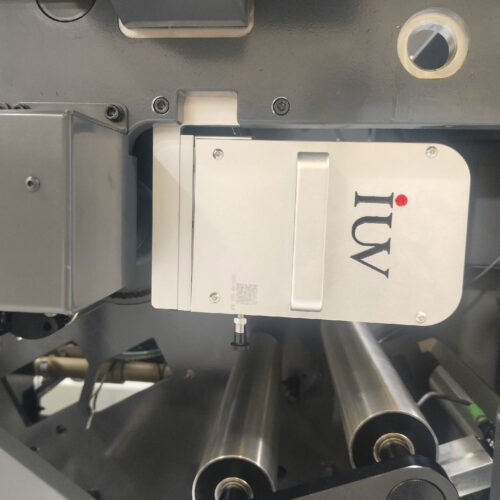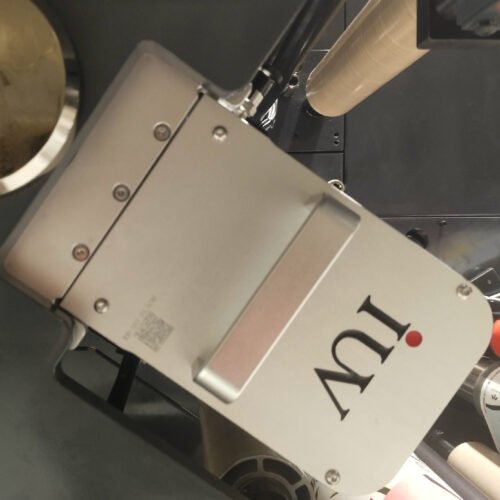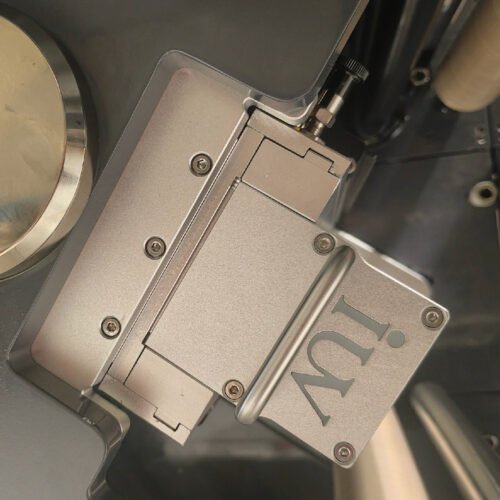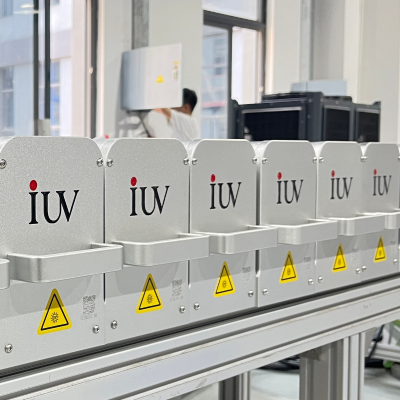
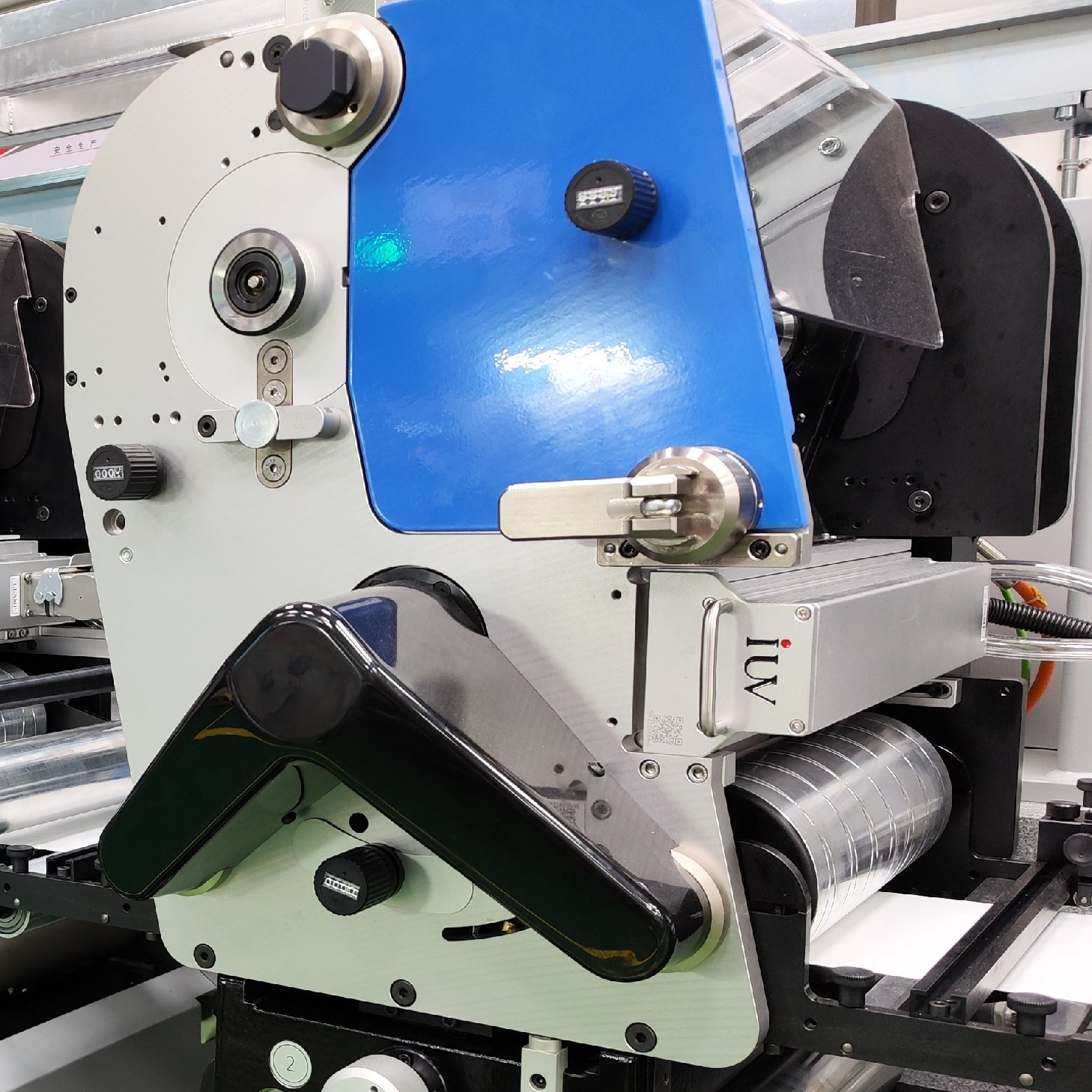
Understanding UV Dose Control in Flexographic Label Printing sets the stage for reliable curing and predictable production quality. This article explains practical dose control principles for narrow-web and label applications, with emphasis on UV and LED curing systems, ink chemistry, substrates, and press adjustments.
What UV dose means in practical terms
UV dose equals irradiance multiplied by exposure time. Irradiance is measured in mW/cm2 and exposure time in seconds. Dose is expressed as joules per square centimeter, J/cm2. For a press, dose depends on lamp output, distance from the web, reflectors, and line speed. An accurate dose ensures inks and coatings crosslink fully without overexposing the substrate.
Differences between LED and traditional mercury UV lamps
Mercury arc lamps emit a broad UV spectrum with significant near-infrared output. They provide high peak power and cure many photoinitiator types. Warm-up time and heat load are typical concerns.
LED lamps emit narrow bands, commonly 385–405 nm. They turn on instantly and maintain stable output over long life. LED systems reduce heat on the web and remove mercury handling issues. However, their narrow spectrum requires inks and varnishes with photoinitiators tuned to the LED wavelengths. Dosimetry tools must match the lamp spectrum for accurate readings.
Key factors that determine required dose
- Ink formulation: Photoinitiator types and concentrations dictate the energy needed for full cure. Films, varnishes, and adhesives each have different reactivity.
- Pigment and opacity: High pigment load or metallics can shield photoinitiators, raising dose requirements.
- Substrate: Label face stocks vary in heat sensitivity and absorbance. Films often transmit UV differently than papers.
- Web speed: Faster speeds reduce exposure time and increase the dose needed per pass.
- Lamp configuration: Lamp power, number of lamps, and reflector efficiency control irradiance.
- Distance and optics: Gap between lamp and web alters irradiance dramatically. Reflectors or cooling windows can change effective dose.
- Environmental oxygen: Oxygen at the cure surface can inhibit polymerization, particularly for certain photoinitiators.
Measuring and verifying UV dose on press
Two complementary measurement approaches work best. Use a calibrated UV radiometer to monitor instantaneous irradiance in mW/cm2. Pair this with a dosimeter that integrates energy in J/cm2 across a run. Photochromic dosimeter strips or stickers that change color with dose provide visual confirmation across the web.
For LED systems, select sensors matched to the LED emission peak. Many broadband radiometers under-report LED output. Place sensors at representative positions across the web width to detect uneven lamp output or reflector misalignment.
Behavior of inks and substrates in narrow-web flexo
Narrow-web presses impose compact architectures and short dwell times. Plate and anilox contact dynamics determine film thickness. Thinner films cure faster but may not provide sufficient opacity or adhesion.
Pressure-sensitive labels have adhesive layers that can be sensitive to heat and migration. Over-curing can embrittle inks and coatings, leading to cracking during label application. Under-curing risks tacky surfaces that attract dust or cause stack blocking. Balance is required between complete polymerization and substrate protection.
Plate, anilox, and impression settings that affect cure
Anilox volume and cell geometry control transferred ink film thickness. Higher volume increases required energy. Plate relief and hardness influence dot shape and trapping. Impression roll pressure affects ink transfer and dwell contact. Excessive pressure can create thicker wet films and increase cure demand. Regularly check metering and plate mounting to maintain consistent film weights.
Common cure defects and how dose plays a role
- Under-cure: Soft or tacky ink, adhesion failures, and solvent sensitivity. Often caused by insufficient energy, misaligned lamps, or wrong photoinitiator chemistry.
- Over-cure: Excessive brittleness, cracking, yellowing, or loss of stretch. Caused by overly high dose, long exposure, or repeated passes.
- Surface inhibition: Tacky surfaces despite internal cure. Oxygen inhibition or unsuitable photoinitiators often cause this. Inerting or different initiator systems may resolve it.
- Hot spots and banding: Uneven lamp output, dirty reflectors, or aging lamps create localized over- or under-cure.
Practical steps to control UV dose in production
- Establish target doses for each ink and substrate combination through lab testing. Record effective J/cm2 values at typical line speeds.
- Match ink photoinitiators to the lamp spectrum, especially for LED systems. Work with ink suppliers for optimized formulations.
- Use on-press dosimeters in multiple positions across the web for real-time verification. Track both irradiance and integrated energy.
- Implement scheduled lamp maintenance and reflector cleaning. Lamp aging reduces irradiance and alters dose distribution.
- Control web-to-lamp distance with simple mechanical checks. Minor gaps produce large irradiance changes.
- Adjust anilox and plate settings to manage film weights instead of compensating only with higher energy. Reducing film thickness often yields better cure with less heat exposure.
- For oxygen-sensitive systems, evaluate inerting options or switch to photoinitiator blends with lower oxygen inhibition.
- Calibrate radiometers to the lamp type and replace sensors per manufacturer guidance.
Specific considerations for LED retrofits and new press builds
When retrofitting mercury lamps with LED units, reassess ink and varnish systems. Some photoinitiators that cure well under broad spectra will not react adequately to narrow-band LED light. Confirm that sensors and control systems are compatible with LED modulation and cooling requirements. LEDs allow closer lamp placement due to reduced IR, but verify that the press web and adhesives tolerate the different spectral exposure.
Data-driven process control and automation
Integrating radiometry into press control systems allows closed-loop adjustments. Systems can modulate lamp power automatically in response to speed changes. Logging dose data by job supports traceability and faster troubleshooting. Combine dose logs with print quality metrics to refine target values over time.
Checklist for consistent curing on narrow-web label presses
- Define target J/cm2 for each ink/substrate pair.
- Use spectrally matched radiometers and dosimeters.
- Maintain lamp and reflector cleanliness.
- Monitor lamp temperature and age.
- Control film thickness via anilox and plate settings.
- Verify web-to-lamp distance and alignment.
- Test adhesion and tack after setup, not only visual cure.
- Log dose and production parameters for continuous improvement.
Closing notes
Effective UV dose control reduces waste, improves label durability, and speeds customer sign-off. Combining proper ink chemistry, accurate measurement, and disciplined press setup yields consistent results on narrow-web flexo label presses. Follow test-based targets and use dosimetric verification to maintain consistent cure across runs.