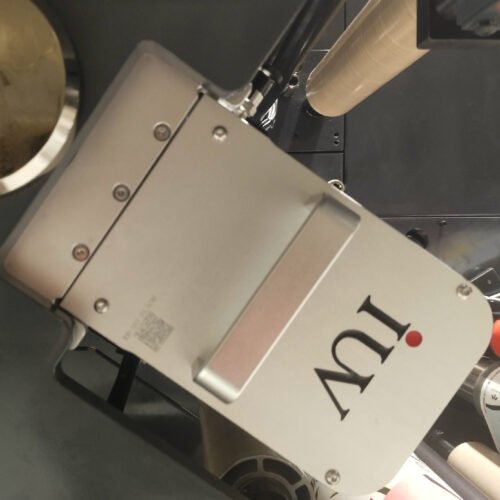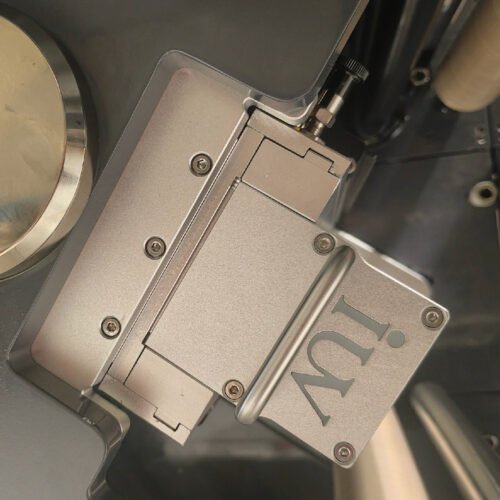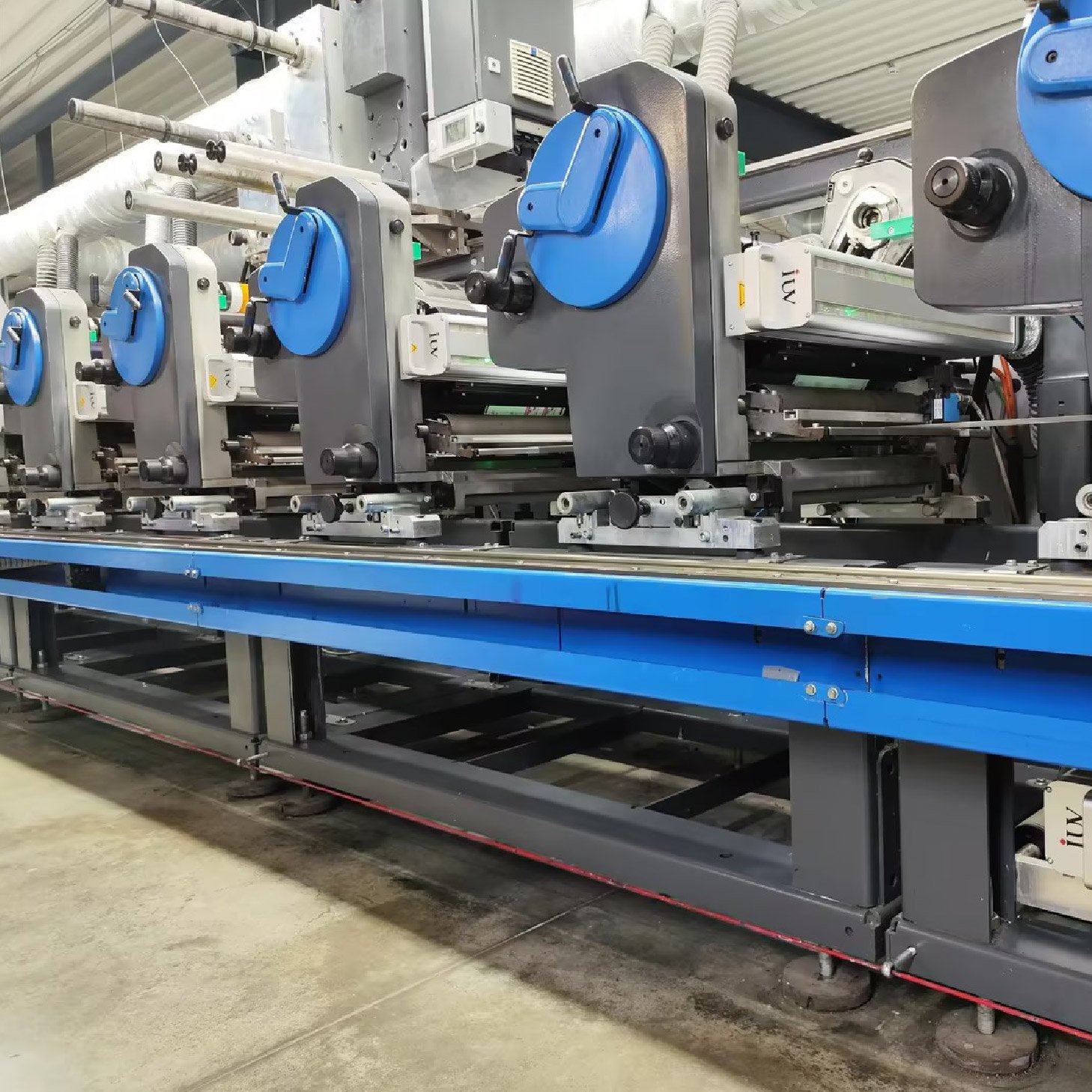
The printing industry is constantly evolving, driven by demands for faster production, higher quality, and greater sustainability. For businesses engaged in label printing, flexography, offset lithography, and narrow web printing, staying competitive means embracing innovative technologies. Among these, UV LED curing solutions have emerged as a transformative force, offering significant advantages over traditional curing methods.
The Limitations of Conventional Curing
For decades, printers relied on thermal curing or mercury vapor UV lamps. Thermal curing, while effective for certain inks, is slow and energy-intensive. It can also pose challenges for heat-sensitive substrates, limiting material choices and potentially causing warping or degradation.
Mercury vapor UV lamps offered a faster alternative, but they came with their own set of drawbacks. These lamps generate substantial heat, requiring robust cooling systems and increasing energy consumption. Furthermore, mercury is a hazardous substance, posing environmental and safety concerns during lamp disposal and maintenance. The lifespan of mercury lamps is also finite, necessitating frequent replacements and contributing to downtime.
Enter UV LED Curing: A Paradigm Shift
UV LED curing utilizes light-emitting diodes (LEDs) to emit ultraviolet light. This technology represents a significant leap forward, addressing many of the shortcomings of older curing methods. Unlike mercury lamps that emit a broad spectrum of UV light, LEDs emit a highly specific wavelength. This targeted approach enhances curing efficiency and reduces energy waste.
Key Advantages for Modern Printing
The adoption of UV LED curing brings a multitude of benefits directly impacting the operational efficiency and profitability of label, flexo, offset, and narrow web printing businesses.
1. Enhanced Curing Speed and Efficiency
UV LED lamps cure inks, coatings, and adhesives almost instantaneously upon exposure. This rapid curing process dramatically increases print speeds, allowing businesses to handle higher production volumes without compromising quality. For narrow web printers, in particular, this means quicker turnaround times for short-run jobs and greater flexibility in meeting client demands.
2. Superior Energy Efficiency
Compared to traditional mercury lamps, UV LED systems consume significantly less energy. They are highly efficient, converting a larger percentage of electrical energy into UV light. This not only translates to lower electricity bills but also reduces the overall carbon footprint of the printing operation, aligning with growing environmental awareness and regulatory pressures.
3. Reduced Heat Generation
UV LED lamps emit very little infrared radiation, meaning they produce significantly less heat than mercury lamps. This is a critical advantage when printing on heat-sensitive substrates such as thin films, plastics, and delicate papers. The reduced heat minimizes the risk of substrate deformation, wrinkling, or damage, expanding the range of printable materials and opening up new application possibilities.
4. Longer Lamp Lifespan and Reduced Maintenance
UV LED lamps boast an exceptionally long operational life, often exceeding 20,000 hours. This is substantially longer than mercury lamps, which typically last a few thousand hours. The extended lifespan reduces the frequency of lamp replacements, leading to lower maintenance costs and minimized production downtime. This reliability is invaluable for maintaining consistent output in busy printing environments.
5. Environmental and Safety Benefits
The absence of mercury in UV LED technology eliminates the hazards associated with its handling and disposal. This makes UV LED systems a safer and more environmentally responsible choice. Furthermore, the lower energy consumption contributes to a greener printing process, appealing to clients who prioritize sustainable supply chains.
6. Instant On/Off Capability
Unlike mercury lamps that require a warm-up period, UV LEDs can be switched on and off instantaneously. This feature is particularly beneficial in applications where the printing unit is not continuously running, such as intermittent printing or job changeovers. It saves energy and prevents unnecessary exposure of the substrate to UV light, further protecting sensitive materials.
7. Consistent Curing Performance
UV LED systems provide a stable and consistent UV output over their lifespan. This ensures reliable curing results batch after batch, minimizing variations in ink adhesion, gloss, and durability. For label printers who often deal with stringent brand color requirements and product performance standards, this consistency is paramount.
Applications Across Printing Sectors
The versatility of UV LED curing makes it an indispensable technology across various printing sectors:
- Label Printing: In the demanding world of label production, UV LED curing enables high-speed printing on a wide array of substrates, including films, foils, and textured papers. It ensures durable, scratch-resistant, and chemically resistant labels, crucial for food, beverage, pharmaceutical, and industrial applications. The ability to cure thick ink layers or special effects like varnishes and tactile finishes is also enhanced.
- Flexographic Printing (Flexo): Flexo printing, widely used for packaging and labels, benefits immensely from UV LED. The faster speeds achieved with LED curing allow for higher throughput on narrow and mid-web flexo presses. It ensures excellent print definition and color vibrancy on flexible packaging materials, corrugated board, and other substrates.
- Offset Lithography: While historically a slower process, offset printing can achieve significant speed increases with UV LED curing. It’s particularly advantageous for short-run, high-quality commercial printing and packaging applications where vibrant colors and durable finishes are required. The ability to print on a wider range of non-absorbent substrates is also a key advantage.
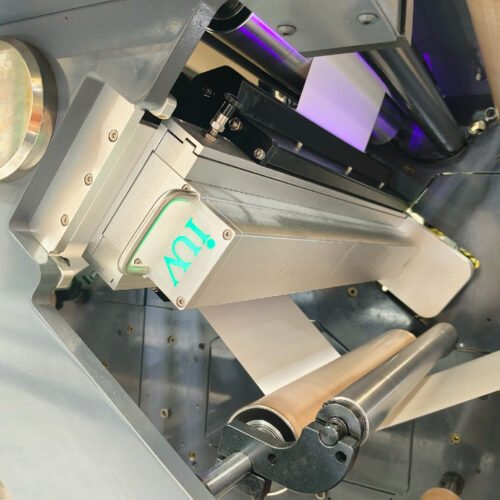
- Narrow Web Printing: This sector, focused on producing small to medium-sized labels and flexible packaging, is a prime candidate for UV LED technology. The compact nature of LED curing units, their rapid curing capabilities, and energy efficiency are perfectly suited for the space and speed constraints of narrow web presses, enabling efficient production of diverse label types.
Choosing the Right UV LED Solution
Selecting the appropriate UV LED curing system depends on several factors:
- Wavelength: Different UV LED wavelengths are optimized for specific ink and coating chemistries. Common wavelengths include 365 nm, 385 nm, 395 nm, and 405 nm. It’s crucial to match the LED wavelength to the spectral sensitivity of the UV-curable materials being used.
- Irradiance and Dose: Irradiance (intensity of UV light) and total UV dose are critical for achieving complete and effective curing. The system’s irradiance must be sufficient to cure the ink or coating within the required web speed and exposure time.
- Cooling Requirements: While UV LEDs generate less heat than mercury lamps, effective cooling is still necessary to maintain optimal LED performance and longevity. Air-cooled systems are common for many applications, while water-cooled systems might be employed for higher-power requirements.
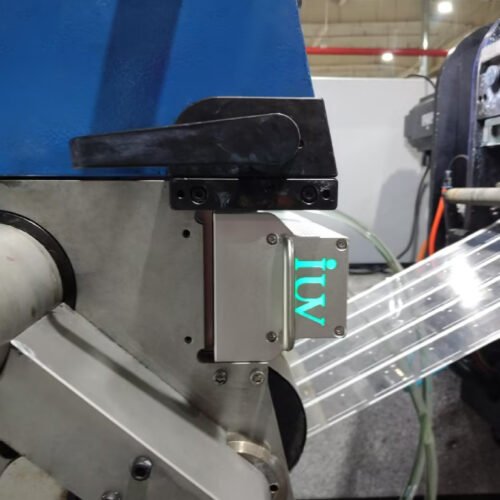
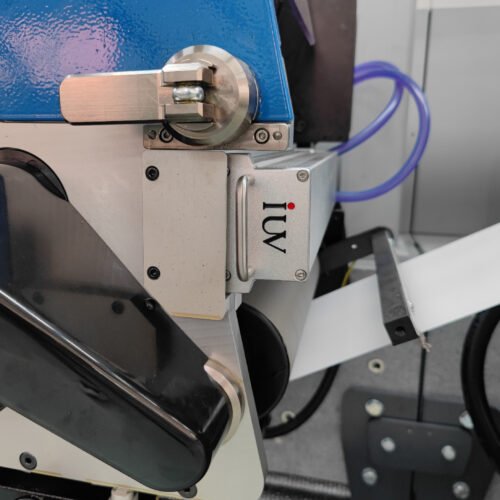
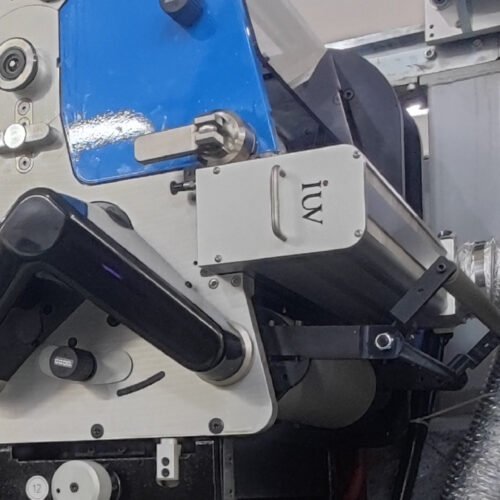
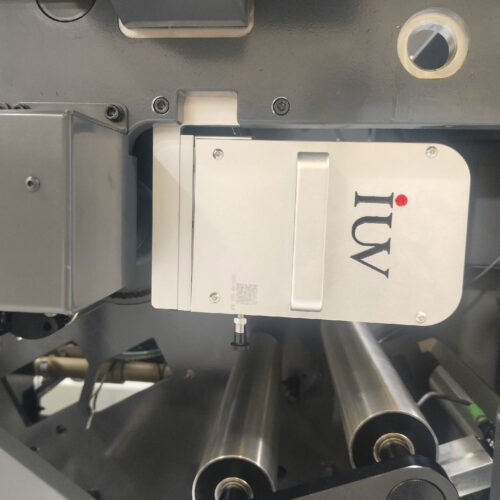
- Integration: Consider how the UV LED system will integrate with your existing printing press. Manufacturers offer various form factors, including form-fitting units for tight spaces and modular systems that can be easily installed and serviced.
The Future is Cured with UV LED
In conclusion, UV LED curing solutions are no longer a niche technology but an essential component for any modern printing operation aiming for efficiency, quality, and sustainability. Whether you’re involved in intricate label printing, high-volume flexo production, precise offset work, or specialized narrow web applications, the adoption of UV LED technology offers a clear competitive advantage. By reducing energy consumption, enhancing production speeds, expanding substrate capabilities, and improving workplace safety, UV LED curing systems are paving the way for a more dynamic and profitable future in the printing industry.