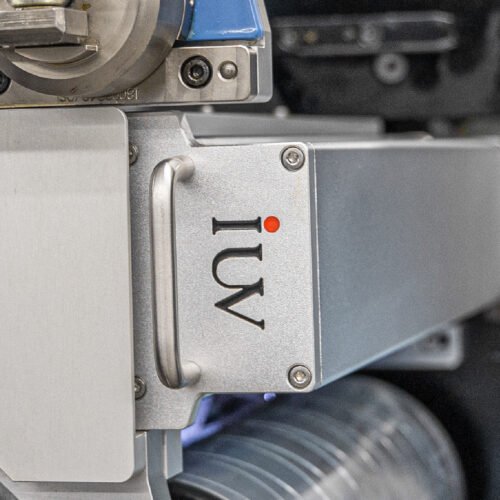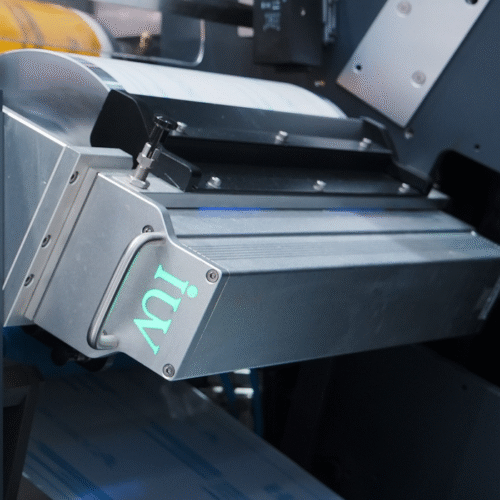
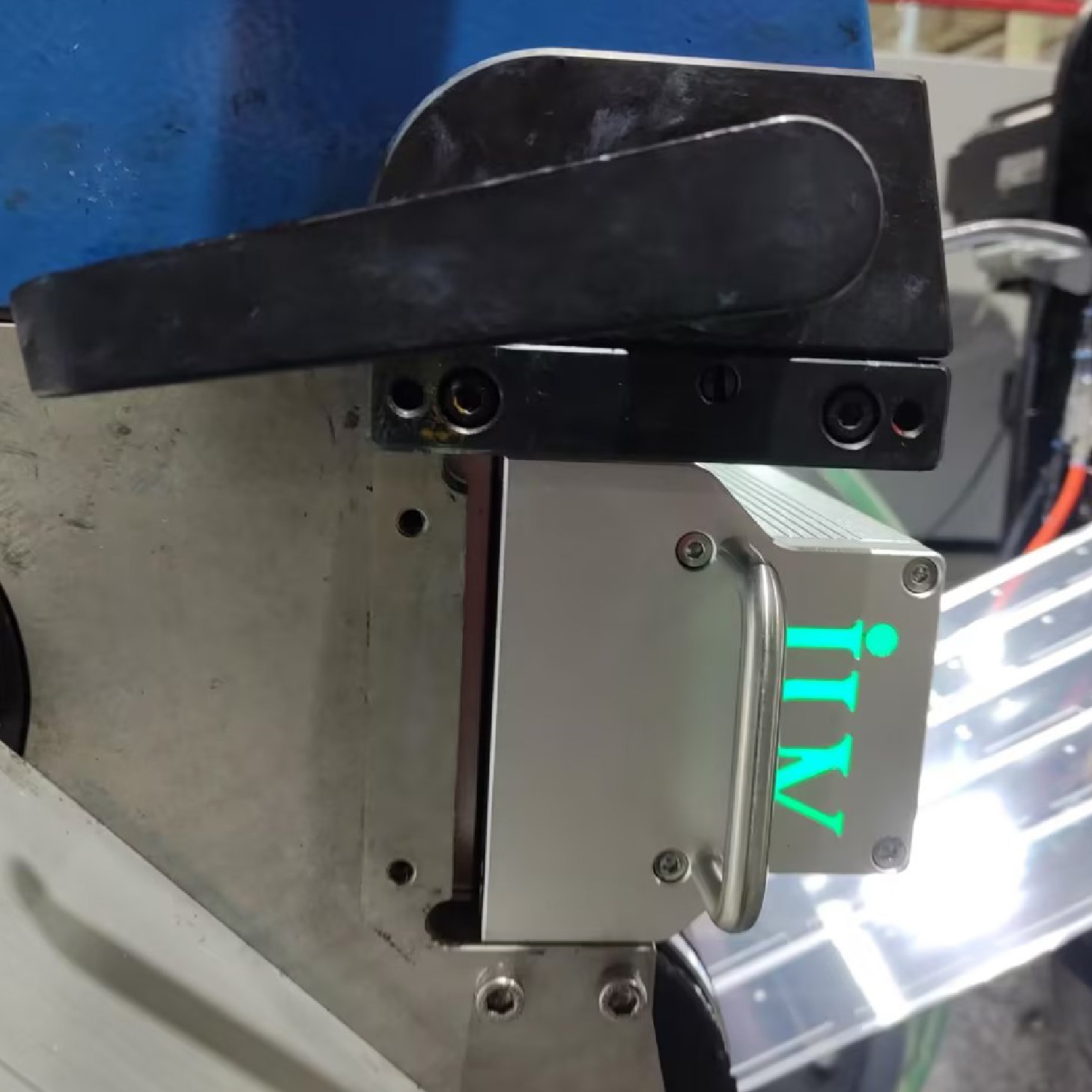
The label printing industry is currently navigating a significant transition. Brand owners now demand smaller order quantities, faster turnaround times, and higher SKU counts. This shift makes traditional long-run production methods less economical. To stay competitive, converters are adopting LED UV curing technology. This guide explores how LED UV systems optimize short-run and on-demand label printing across flexo, offset, and narrow-web platforms.
Understanding the Shift to On-Demand Label Production
The rise of e-commerce and personalized marketing has fundamentally changed order patterns. In the past, label converters focused on “long runs” where a single design was printed in the millions. Today, “short-run” printing is the standard. This involves printing smaller batches of labels, often with variable data or multiple design iterations.
Traditional mercury vapor UV lamps present challenges in this environment. They require long warm-up and cool-down periods. These delays eat into production time, especially when switching between jobs. LED UV technology addresses these inefficiencies directly. By providing instant on/off capabilities, LED systems allow printers to move from one job to the next without waiting for the lamps to reach operating temperature.
The Mechanics of LED UV Curing Technology
To appreciate the benefits, one must understand the physics of the curing process. Traditional UV lamps use an electric arc through mercury vapor to generate light across a wide spectrum. This includes UVC, UVB, UVA, and significant infrared (heat) radiation.
In contrast, LED UV lamps use Light Emitting Diodes. These semi-conductors emit a narrow band of UVA light, typically centered at 365nm, 385nm, or 395nm. Because the output is monochromatic, the energy is concentrated exactly where the photoinitiators in the ink need it.
This precision results in several mechanical advantages:
- Zero Heat Transfer: LED lamps do not emit infrared radiation. The substrate remains cool, which is vital for thin films.
- Consistent Output: Unlike mercury bulbs that degrade over 1,000 to 2,000 hours, LEDs maintain stable intensity for over 20,000 hours.
- No Ozone Generation: LED wavelengths do not produce ozone, eliminating the need for complex exhaust ducting.
Enhancing Narrow-Web Flexo Performance
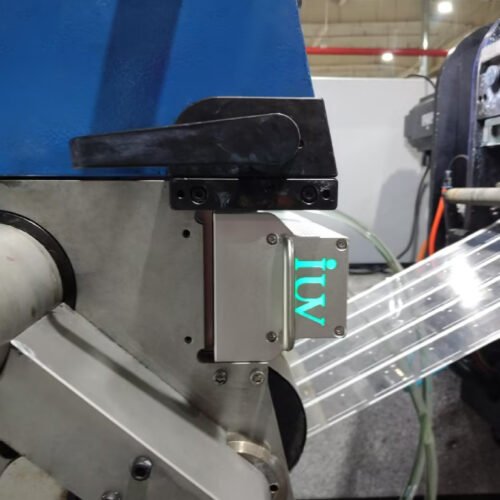
Flexography remains the workhorse of the label industry. When integrating LED UV into narrow-web flexo presses, the primary goal is maximizing press speed while ensuring ink adhesion.
Short-run jobs require frequent plate changes and ink wash-ups. In a mercury-based setup, the heat from the lamps can cause ink to dry on the plates or the anilox rolls during downtime. LED UV eliminates this “stray heat.” The plates stay cool, and the ink remains stable in the fountain.
Furthermore, the high peak irradiance of LED lamps allows for deeper penetration through thick ink layers. This is particularly useful for opaque whites and dense blacks often used in high-end beverage or cosmetic labels. Converters find that they can run their narrow-web presses at higher speeds without risking “under-cured” sticky labels.
Integrating LED UV into Offset and Hybrid Presses
Offset printing, or lithography, is prized for its fine detail and color transitions. However, traditional offset inks dry through oxidation, which takes hours or days. This is unacceptable for on-demand delivery.
By using LED-curable offset inks, printers achieve “instant dry” results. The printed sheets or webs can be sent immediately to the die-cutting and finishing department. For short-run labels, this removes the bottleneck of waiting for ink to dry.
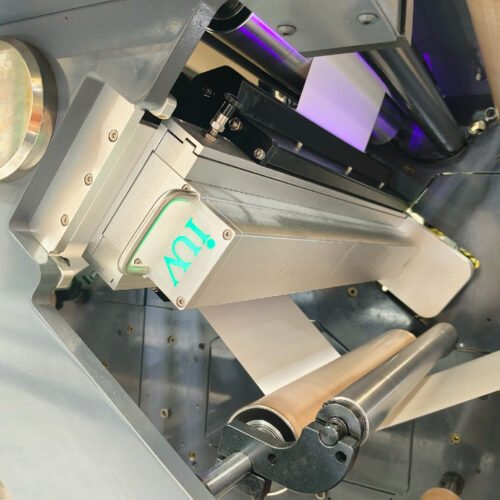
Hybrid presses, which combine digital inkjet with flexo stations, also rely heavily on LED UV. The LED units are compact enough to be placed between print heads. They “pin” the inkjet droplets in place, preventing them from spreading before the final cure. This results in sharper text and more vibrant images on the label.
Solving Substrate Challenges in Label Printing
One of the biggest hurdles in short-run label printing is the variety of substrates. Modern brands use everything from ultra-thin PE films to textured wine papers and heat-sensitive thermal papers.
Traditional UV lamps generate enough heat to warp or melt thin films. This leads to registration issues and web breaks. Because LED UV is a “cold” curing process, it expands the range of materials a converter can handle.
- Heat-Sensitive Films: You can print on 20-micron films without shrinkage.
- Shrink Sleeves: LED prevents the film from shrinking prematurely on the press.
- Thermal Labels: LED does not trigger the chemical coating on thermal paper, which would otherwise turn black under mercury lamps.
This versatility is a cornerstone of on-demand printing. A single press can now handle a diverse portfolio of materials without changing the lamp configuration.
Operational Efficiency and ROI
The economic argument for LED UV in short-run environments is compelling. While the initial investment in LED heads may be higher than mercury systems, the operational savings are immediate.
Energy Consumption
Mercury lamps must stay on even when the press is idle to avoid warm-up delays. They often run at 50% power in “standby” mode. LED UV lamps are only active when the press is moving. For a typical label converter, this reduces energy costs by 50% to 80%.
Maintenance and Uptime
Changing mercury bulbs is a frequent task that requires stopping production. There are also reflectors to clean and shutters to maintain. LED systems are solid-state. They require almost no maintenance. For short-run shops where every minute of press time counts, this increased uptime directly boosts the bottom line.
Waste Reduction
In short-run printing, waste is the enemy of profit. Because LED UV provides consistent curing from the first second the press starts, there is no “setup waste” caused by fluctuating lamp intensity. The first label is cured just as well as the last one.
Ink Chemistry and Curing Quality
Transitioning to LED UV requires a switch to LED-specific inks. These inks contain photoinitiators tuned to the narrow UVA output of the LEDs.
Some operators worry about “surface cure” versus “through cure.” Surface cure refers to the ink being dry to the touch, while through cure ensures the ink is bonded to the substrate. Modern LED ink formulations have solved early issues with surface tackiness. By matching the ink’s absorption spectrum with the lamp’s output, converters achieve superior rub resistance and chemical resistance. This is vital for labels used in industrial or outdoor environments.
Environmental and Safety Benefits
Sustainability is no longer a buzzword; it is a requirement from major retailers. LED UV technology aligns perfectly with “green” initiatives.
- Mercury-Free: Eliminating mercury bulbs removes a hazardous waste stream.
- Reduced Carbon Footprint: Lower energy usage translates to fewer CO2 emissions.
- Healthier Workspace: Without ozone or UVC radiation, the pressroom environment is safer for operators.
These factors can be a selling point when bidding for contracts with environmentally conscious brands.
Implementation Strategy for Label Converters
Switching to LED UV should be a calculated process. For those focused on short-run and on-demand work, a phased approach often works best.
- Audit Your Substrates: Identify which materials currently cause the most heat-related issues.
- Evaluate Ink Compatibility: Work with ink suppliers to ensure your color library can be matched in LED-curable versions.
- Retrofit vs. New Equipment: Many narrow-web presses can be retrofitted with LED curing systems. This is often more cost-effective than buying a new press.
- Training: Ensure operators understand the difference in lamp intensity and how to monitor cure levels using solvent rub tests.
The Future of On-Demand Printing
As LED technology continues to evolve, we will see even higher power outputs and lower costs. The integration of “smart” curing systems that communicate with the press speed will further refine the process.
For the label converter, the message is clear. Short-run and on-demand printing require a level of flexibility and efficiency that traditional curing cannot provide. LED UV technology is the bridge to that future. It offers the speed, consistency, and material versatility needed to thrive in a high-mix, low-volume market.
By adopting LED UV, label printers are not just changing a lamp; they are upgrading their entire production philosophy. The result is a more responsive, profitable, and sustainable printing operation.