In the dynamic world of label printing, the quest for efficiency and quality is constant. For printers working with heat-sensitive materials, this quest presents unique challenges. Traditional methods often rely on heat to cure inks and coatings, but this can lead to material degradation, warping, or color shifts. This is where LED UV curing systems emerge as a superior solution, offering a cooler, more precise, and highly effective way to achieve robust prints on even the most delicate substrates.
The selection of the right curing technology is paramount, especially when dealing with materials that cannot withstand high temperatures. Think of thin films, certain plastics, or even some specialized papers. These substrates are the backbone of many product labels, from food packaging to cosmetic containers, and preserving their integrity is non-negotiable.
The Limitations of Traditional Curing Methods
Historically, thermal curing, which uses heat to evaporate solvents or cross-link inks, has been a staple in the printing industry. While effective for many applications, it carries inherent risks when heat-sensitive materials are involved. The application of significant heat can cause:
- Material Distortion: Thin films can shrink or warp, leading to registration issues and a compromised final product appearance.
- Adhesive Degradation: The adhesive layer itself can be affected by heat, potentially weakening its bonding capabilities.
- Color Shift: Pigments within the inks might react to heat, altering the intended color profiles and brand consistency.
- Increased Energy Consumption: Thermal ovens often require substantial energy to maintain high temperatures, impacting operational costs.
- Longer Drying Times: The process of heating and cooling can extend the overall production cycle.
Understanding UV Curing Technology
Ultraviolet (UV) curing is a photochemical process. Instead of relying on heat to evaporate solvents, UV curable inks and coatings contain photoinitiators. When exposed to specific wavelengths of UV light, these photoinitiators trigger a rapid polymerization reaction. This reaction transforms the liquid ink or coating into a solid, durable film almost instantaneously.
The benefits of UV curing over thermal drying are numerous: they include faster cure speeds, enhanced scratch and chemical resistance, and the ability to print on a wider range of substrates. However, not all UV curing technologies are created equal, especially when delicate materials are in play.
Enter LED UV Curing: The Cooler, Smarter Approach
Traditional UV curing often employed mercury vapor lamps. While powerful, these lamps emit a broad spectrum of UV light and, crucially, generate a significant amount of heat as a byproduct. This heat can still be detrimental to heat-sensitive label materials, negating some of the core advantages of UV curing for these applications.
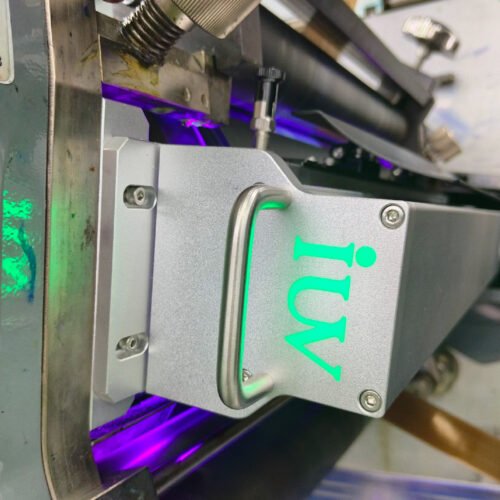
Light Emitting Diode (LED) UV curing technology represents a significant advancement. LEDs emit UV light at very specific wavelengths, tuned to efficiently cure the photoinitiators in the inks and coatings. The key difference lies in their heat output. LEDs produce a much narrower spectrum of light and generate substantially less heat compared to mercury lamps. This makes them ideally suited for printing on materials that are susceptible to thermal damage.
Key Advantages of LED UV for Heat-Sensitive Labels
The benefits of employing LED UV curing systems for heat-sensitive label materials are compelling:
- Minimal Heat Generation: This is the most critical advantage. LED systems emit very little infrared radiation (heat), significantly reducing the thermal load on the substrate. This allows for printing on delicate films, foils, and thin papers without fear of warping, shrinking, or degradation.
- Precise Wavelength Control: LED systems can be configured to emit specific wavelengths, optimizing the curing process for particular ink formulations. This leads to more efficient and complete curing.
- Instant On/Off Capability: LEDs can be switched on and off instantaneously. This means they only generate heat when the printing is actually passing under them, further minimizing thermal exposure. This also translates to energy savings when the press is not running.
- Longer Lamp Life and Reduced Maintenance: LED lamps have a much longer operational lifespan than traditional mercury lamps, often lasting tens of thousands of hours. They also do not contain hazardous materials like mercury, simplifying disposal and reducing environmental impact.
- Consistent Output: LED systems provide a stable and consistent UV output over their lifespan, ensuring reliable curing performance job after job. This consistency is vital for maintaining print quality.
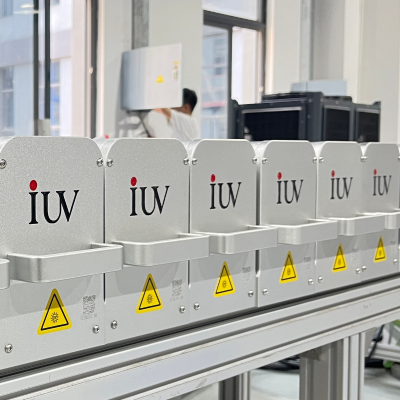
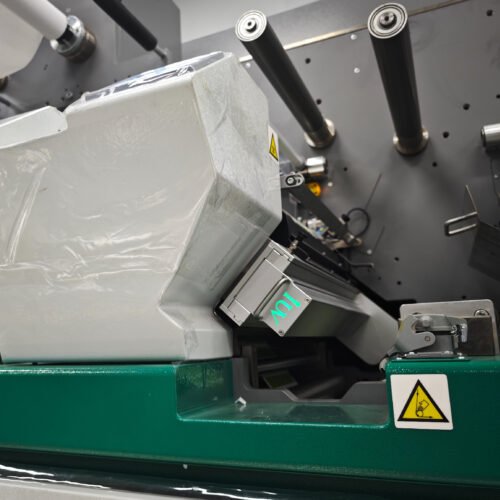
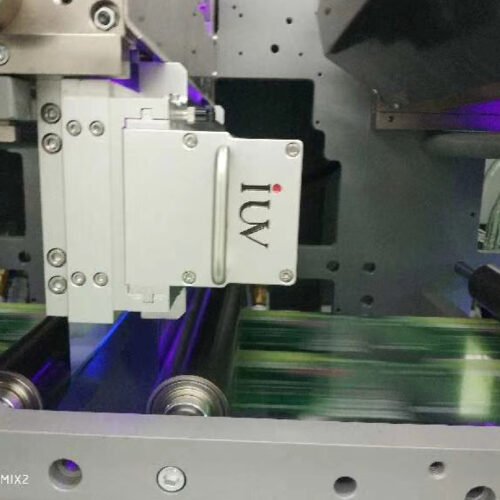
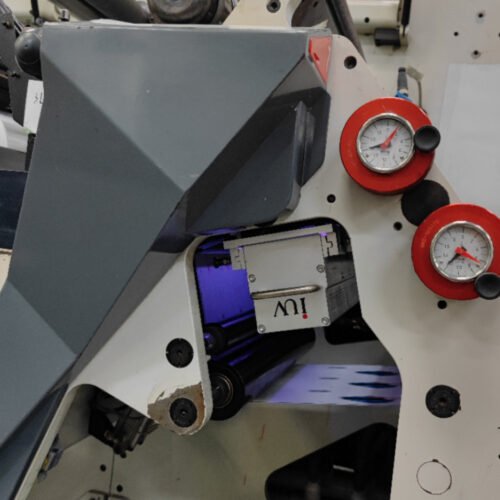
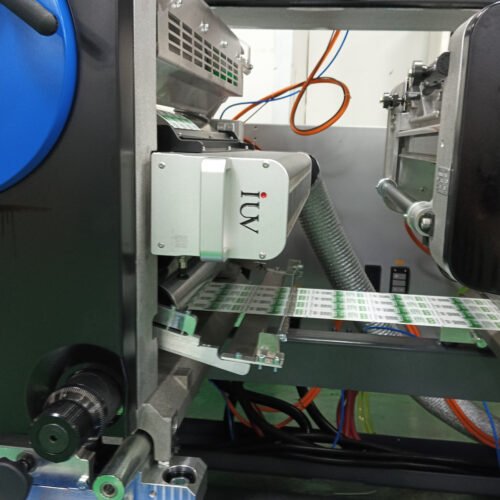
- Compact Design: LED UV systems are typically more compact than traditional mercury lamp systems, making integration into existing printing presses, including narrow-web flexographic and offset presses, much easier.
Applications in Narrow-Web Printing
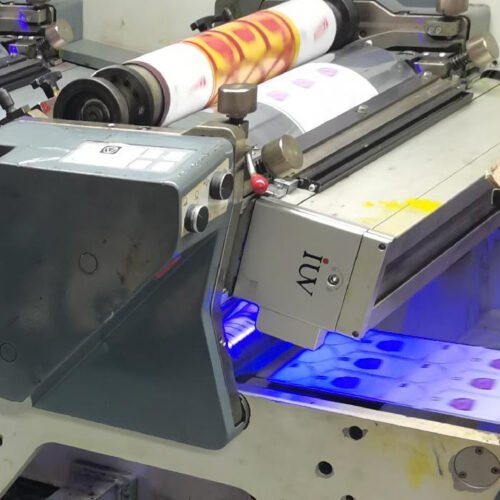
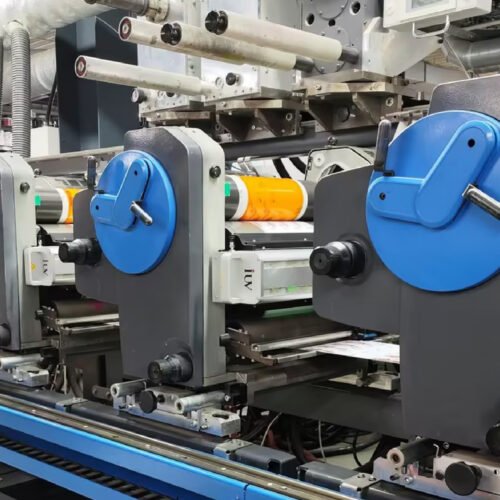
Narrow-web printing, commonly used for labels and flexible packaging, is a prime area where LED UV curing shines. Whether employing flexographic or offset printing methods, achieving high-quality results on heat-sensitive substrates is crucial.
- Flexographic Printing: In flexo, LED UV units can be placed between printing stations or at the end of the press. For heat-sensitive materials, placing them between stations allows for immediate curing of each color before the next is applied, without overheating the substrate. This is invaluable for multi-color jobs where ink layers build up.
- Offset Printing: Similarly, in narrow-web offset presses, LED UV curing offers a cooler alternative to thermal drying for heat-sensitive labels. The precision of offset printing combined with the gentle curing of LEDs ensures sharp graphics and vibrant colors on challenging materials.
Considerations for Implementation
When transitioning to or specifying LED UV curing for heat-sensitive label applications, several factors are important:
- Ink Formulation: Not all UV inks are optimized for LED curing. It’s essential to select inks specifically formulated for LED UV lamps, as they contain photoinitiators that respond efficiently to the specific wavelengths emitted by LEDs. Your ink supplier can guide you on the best options.
- Wavelength Compatibility: Different LED systems emit light at different peak wavelengths (e.g., 365nm, 385nm, 395nm, 405nm). Ensure the chosen LED system’s wavelength matches the spectral sensitivity of the photoinitiators in your inks.
- Irradiance and Dose: The intensity of the UV light (irradiance) and the total energy delivered (dose) are critical for proper curing. This needs to be set appropriately for the ink, substrate, and press speed. Your LED UV system provider can assist with these calculations.
- Press Integration: The physical size and power requirements of the LED UV system need to be considered for seamless integration into your existing press configuration.
The Future of Label Printing is Cool
As label converters increasingly work with advanced materials and face demands for faster turnaround times and superior print quality, the need for efficient and gentle curing solutions becomes more pronounced. LED UV curing systems are not just an alternative; for heat-sensitive label materials, they are the optimal choice.
By minimizing heat exposure, offering precise control, and delivering energy efficiency, LED UV technology empowers printers to overcome the limitations of traditional methods. It opens doors to new material possibilities and ensures that delicate label designs are reproduced with clarity and durability, without compromise. Embracing LED UV curing is a strategic move that enhances quality, reduces operational costs, and positions your business at the forefront of modern label printing technology.